

New letter shares a message for Dubai’s citizens, residents, visitors and everyone who loves the city.
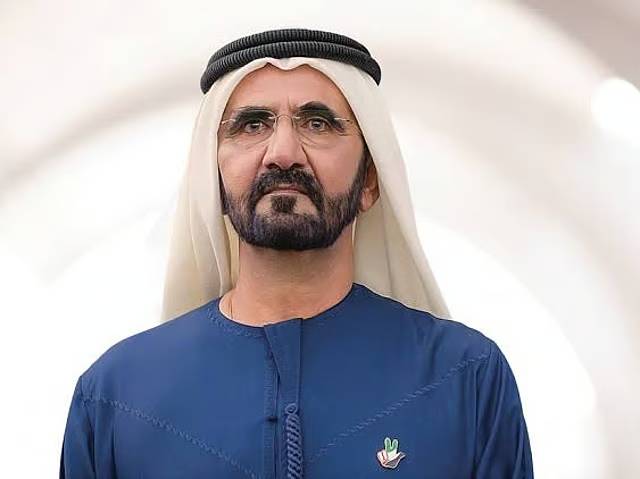
Dubai: His Highness Sheikh Mohammed bin Rashid Al Maktoum, Vice President and Prime Minister of the UAE and Ruler of Dubai, has outlined seven principles for life in Dubai, urging citizens, residents, visitors and everyone connected to the city to help protect the values that have guided its growth.
The message, titled “A Letter to the Dubai Community”, is the latest reflection shared from Sheikh Mohammed’s recently released book, The Letters, the second part of Lessons from Life.
The book features 26 letters addressed to his family, his team, UAE citizens and readers around the world, drawing on experiences and lessons from nearly six decades of public service.
Introducing the latest letter, Sheikh Mohammed reflected on Dubai’s journey, saying the emirate had created “a beautiful city, a harmonious society and an example for the world”.
“Dubai is a home for the world, a home for people and a home for life,” he wrote, describing the emirate as a human experience that he hopes will continue to endure and inspire future generations.
The letter is directed at Dubai’s citizens and residents, those who have chosen to make the emirate their home, its visitors and people around the world who share an affection for the city.
“Everyone who lives here feels that they are at home,” Sheikh Mohammed wrote.
He explained that the seven principles are intended to help Dubai retain the qualities that make it distinctive, continue inspiring others and remain an exceptional place for people to live.
1. Life is responsibility, and responsibility gives it meaning
Sheikh Mohammed’s first principle highlights personal responsibility as an essential part of Dubai’s continued progress.
He wrote that maintaining the position Dubai has achieved comes with a responsibility that begins with every individual.
An employee is responsible for carrying out their duties, a leader for their team, a father for his family and every individual for their city. The same principle applies to keeping one’s word, conducting business with integrity, teachers taking responsibility for their students and doctors caring for their patients.
Responsibility also extends across generations, with older people having duties towards the young and younger generations carrying responsibilities towards their elders.
At the highest level, Sheikh Mohammed said the government carries responsibility for every person, including their wellbeing, security, rights and happiness.
“We are all responsible, and always will be,” he wrote, emphasising that every person is entrusted with responsibilities for which they are accountable.
When individuals fulfil those responsibilities, he said, society is able to function with dignity and balance.
2. Respect recognises the value of every person
The second principle focuses on the importance of human dignity and mutual respect.
Sheikh Mohammed wrote that respect for people lies at the foundation of civilisation. This includes respecting their faith, values and culture, as well as their time, feelings and lives.
At the heart of peaceful coexistence, Sheikh Mohammed wrote, is the ability to see every individual first as a human being, with their own identity, dignity and rights.
That respect should extend to everyone in society. Women should be valued and respected, older people honoured, workers appreciated and those with different views treated with fairness.
Drawing on his experience, Sheikh Mohammed said the true measure of an exemplary city is not its buildings or physical development, but the way it respects and protects human dignity.
3. Excellence is the finest message we can send the world
The third principle focuses on Itqan, an Arabic concept centred on carrying out work with precision, care and mastery.
Sheikh Mohammed wrote that excellence is built over time and can be seen throughout a city — from the cleanliness and beauty of its surroundings, parks and facilities to its buildings, services, experiences and, ultimately, its people.
The world’s impression of Dubai, he said, is shaped by the quality of work people encounter across the emirate. This includes employees at airports, workers maintaining roads, engineers responsible for infrastructure and companies providing services.
“Excellence is the finest message we can offer the world,” he wrote.
Excellence earns respect, he said, but also requires people to give their full attention and effort to every task, role and responsibility they undertake.
“To pursue excellence is to put something of ourselves into our work.”
Sheikh Mohammed stressed that excellence is achieved through consistent attention to detail. Small acts of quality, repeated every day, can collectively strengthen society and contribute to civilisation, much like countless drops of water coming together to form a river.
The reverse can also happen, he warned, with small instances of disorder gradually accumulating and weakening achievements that have already been made.
Dubai, he wrote, is therefore more than simply a place. It represents a culture and spirit carried by its people — reflected in how they work, the quality of what they produce and the belief that every task completed well contributes another building block to civilisation.
4. Humility elevates us
“We rise through humility,” Sheikh Mohammed wrote in his fourth principle.
He explained that humility can elevate people in different aspects of life. Showing humility towards others earns their respect, while remaining humble after achieving success encourages people to aim higher. Humility in the pursuit of knowledge strengthens the desire to continue learning, while accepting the truth helps restore balance and uphold justice.
Sheikh Mohammed described humility as a sign of greatness and civilisation, as well as a way of overcoming ego and arrogance — qualities that can gradually weaken the foundations of societies and nations.
Dubai, he said, remains conscious of both where it stands today and the modest circumstances from which its journey began.
“We began with nothing, and God blessed us,” he wrote.
That history, he said, should serve as a reminder that there is always more to learn, that knowledge is never complete and that the journey towards further progress remains a long one.
Despite everything Dubai has accomplished, Sheikh Mohammed said the city should continue to view itself as being only at the beginning of its journey.
5. Optimism is our way of life
The fifth principle focuses on optimism — not simply as a positive outlook, but as an approach to work, challenges and the future.
“We believe that what lies ahead will be more beautiful and our future will be better, because we never stop working and we never stop hoping,” Sheikh Mohammed wrote.
He said every challenge can bring an opportunity, while crises can become occasions to encourage creativity, strengthen skills and renew energy.
Young people provide a source of optimism through their energy and potential, while the experiences of others offer valuable lessons. The future may bring significant changes, he said, but it also presents enormous opportunities.
Sheikh Mohammed also reiterated a principle that has long shaped his approach: that what people consider impossible can ultimately be a matter of perspective.
Sheikh Mohammed wrote that experience has shown how determination, confidence and belief can help people overcome challenges that may once have seemed impossible.
Optimism, he explained, also involves being able to envision an achievement before it becomes reality — imagining its details, beauty and impact, and then working towards turning that vision into something tangible.
Dubai’s community, he said, is optimistic by nature. Its people are confident in their capabilities, believe in themselves and remain determined to move forward rather than hesitate or simply wait for opportunities to arrive.
6. Doing good is both our path and our way
The sixth principle centres on kindness, generosity and helping others.
Sheikh Mohammed described Dubai as a community that values doing good, extending a helping hand and supporting friends, neighbours and people in need.
Doing good brings happiness, he wrote. Helping others is a virtue, while meeting people’s needs brings blessings and mercy.
The blessings enjoyed by the community also come with a responsibility to become “a bridge for good, a river that gives people water and a source of hope”.
He stressed, however, that generosity should not be limited to occasional charitable contributions.
A kind word can be an act of goodness, as can a smile, removing something harmful from a road, helping someone who has lost their way or offering encouragement to a young person.
Life, Sheikh Mohammed wrote, presents countless opportunities to do good. A society that loses sight of the meaning of goodness risks losing part of the meaning of life itself.
7. A country that embraces us deserves our loyalty
The seventh and final principle focuses on loyalty to the country that provides people with security, stability and a sense of belonging.
Sheikh Mohammed wrote that a nation that embraces and protects its people deserves their loyalty and sacrifice.
Loyalty, he explained, means respecting the country’s constitution and laws, protecting its achievements, honouring its flag and upholding values including sincerity, justice, truthfulness, integrity, respect, excellence and responsibility.
A country, he said, is more than its geography or national symbols.
“It is a heart beating within us and a spirit running through us.”
That connection is reflected in the values people uphold and in their willingness to protect their country’s security, institutions, achievements, reputation and standing.
Sheikh Mohammed wrote that life had taught him that serving one’s country is among the greatest responsibilities a person can undertake.
There is little stronger, he added, than a society whose people love their country, believe in it and dedicate themselves to its progress.
‘Society is built on meaning, not buildings’
Sheikh Mohammed concluded the letter by returning to the central message connecting all seven principles.
His experience, he wrote, had taught him that the strength and vitality of a society are not determined by its physical structures, but by the deeper values and meaning behind them.
Building towers and designing cities, he said, is not the greatest achievement.
“The true miracle is building a society founded on great meanings, principles and values.”
The Letters was launched by Sheikh Mohammed on September 6. The Arabic edition became available at major bookstores across the UAE on October 1, while the English edition is scheduled to be released on October 15.

