

Abu Dhabi’s Transport Sector Takes Digital Transformation to the Next Level.
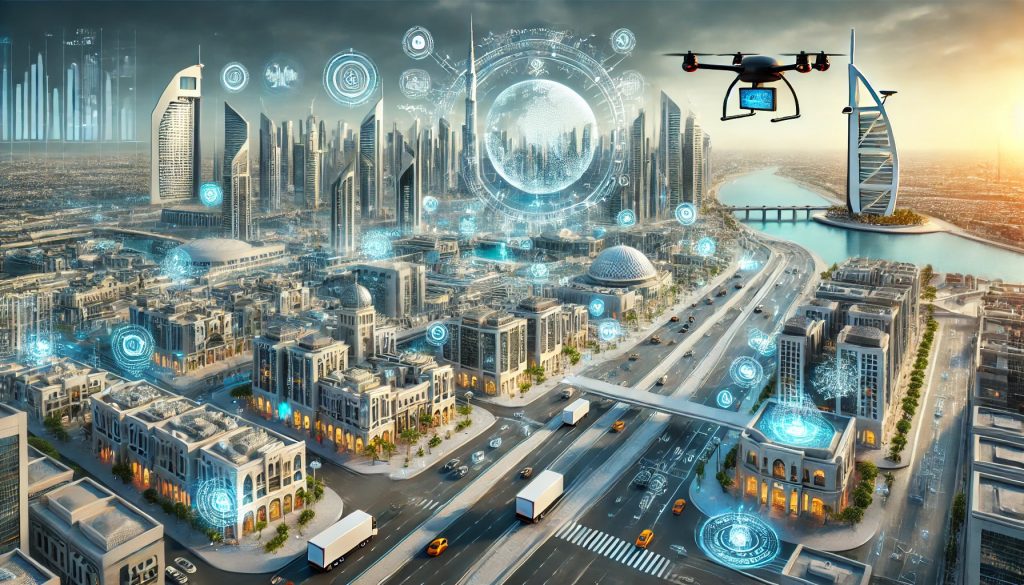
Under the “smart city” vision adopted by Abu Dhabi’s Department of Municipalities and Transport (DMT), a new approach to urban planning is taking shape. The emirate is increasingly measuring urban progress not simply by the number of buildings constructed, but by how effectively the city meets residents’ needs through services, mobility, public spaces and an environment that supports a high quality of life.
One of the most significant shifts is not only the scale of investment, but how technology and data are being incorporated into urban decision-making.
In June 2026, DMT introduced a series of digital planning technologies, including the Nabd platform, which brings together information from departmental systems, sensors and infrastructure within a three-dimensional digital model of the emirate.
The platform combines operational information from more than 70 data sources and over 15 interconnected systems, allowing authorities to monitor infrastructure, public services and quality-of-life indicators at neighbourhood level. The first phase is expected to become operational in early 2027.
More importantly, the technology is designed to do more than provide a real-time picture of what is happening across the city. It can also help planners address a critical question: where should resources and investment be prioritised?
By combining infrastructure data with resident satisfaction surveys and quality-of-life indicators, authorities can identify the needs of individual communities and direct capital spending towards projects expected to deliver the greatest improvements to residents’ quality of life.
Artificial intelligence enters the city’s ‘planning room’
In another significant step, Abu Dhabi is using artificial intelligence and digital modelling not only to manage the city as it exists today, but also to simulate how future developments could function before they are built.
Our Holographic Future, a real-time three-dimensional modelling system, allows planners to test different development scenarios before projects move into implementation.
The technology can simulate factors such as pedestrian movement, shadow patterns, sightlines, building heights, green spaces and public areas, while also examining how these different elements interact.
This marks a shift away from the traditional approach of building a project and then evaluating its impact. Instead, planners can simulate different options in advance and select designs that are better suited to residents and the surrounding urban environment.
This approach is further supported by BINAA, an AI-powered building permit platform launched in June 2025.
Since its introduction, BINAA has helped reduce the average time required to issue residential villa building permits by 57%, while cutting resubmission requests by 53% through the automation of complex technical reviews.
In 2025, DMT issued more than 11,000 building permits, representing a 15% increase compared with the previous year.
A ‘digital twin’ of Abu Dhabi’s transport network
In the transport sector, Abu Dhabi’s digital transformation is moving into an even more advanced phase.
The Integrated Transport Centre has launched the second version of its Fusion Smart Mobility Analysis System, which uses three-dimensional simulations of the real world to create a digital representation of Abu Dhabi’s transport network.
Powered by artificial intelligence, machine learning and big-data analytics, the system brings together transport networks and infrastructure across Abu Dhabi, Al Ain and Al Dhafra within an integrated digital model.
Fusion analyses billions of data points covering road traffic, public transport and road-user behaviour. The technology can reduce the time required to analyse traffic studies by up to 40%, allowing planners to test different urban expansion scenarios and identify potential transport challenges before they emerge.
Traffic management powered by 1,500 cameras and 253 vehicle sensors
Alongside Fusion, Abu Dhabi’s central traffic management platform uses more than 1,500 surveillance cameras, 253 vehicle sensors and 922 traffic signals.
The platform integrates information from more than 30 data sources, while 122 electronic signs across the road network provide information to motorists.
Here, data becomes part of daily traffic management. Congestion, accidents and major events can be monitored and analysed, allowing response plans to be activated automatically when required.
Measuring infrastructure by the time it saves residents
Abu Dhabi is also increasingly assessing infrastructure according to the amount of time it can give back to residents.
One example of this changing approach is the Dh450 million project to build two marine bridges connecting Al Reem Island with Sheikh Khalifa Bin Zayed Street.
The project is designed to accommodate up to 7,200 vehicles per hour. During peak periods, travel times are expected to fall by as much as 60%, potentially saving commuters up to 15 minutes.
However, the development is not focused solely on vehicles. It also includes two kilometres of pedestrian and cycling paths, landscaped spaces and smart lighting.
The project reflects a broader change in how the return on infrastructure investment is measured. Increasing road capacity remains important, but the benefits are also being assessed in terms of time saved, easier access and the ability of residents to walk, cycle and make greater use of public spaces.
From providing facilities to measuring their impact on people’s lives
The second phase of Abu Dhabi’s Quality of Life Strategy provides another clear example of how this approach to urban development is evolving.
While the first phase focused largely on delivering facilities and infrastructure, the second phase, launched in September 2026, shifts attention towards measuring their quality, efficiency and wider social impact through a five-year roadmap.
During the first phase, more than 60 major projects worth over Dh12 billion were delivered as part of an approved programme valued at Dh42 billion.
Over the same period, the neighbourhood completeness index increased from 67% to 84% in just two years. This reflects a broader shift from simply asking whether facilities are available to assessing how effectively neighbourhoods meet residents’ everyday needs.
The second phase also introduces a unified digital platform powered by intelligent analytics. It will monitor the condition of assets and infrastructure, assess the quality of facility operations and connect this information in real time with findings from resident satisfaction surveys.
This means residents’ feedback itself becomes part of the data used to help shape spending priorities and future investment decisions.
Quality-of-life data turns residents into a planning indicator
Results from Abu Dhabi’s quality-of-life surveys further demonstrate how community feedback is being incorporated into the planning process.
More than 100,000 people representing 190 nationalities participated in the fifth edition of the survey in 2024. It measured 14 social indicators covering areas including housing, healthcare, education, security, the environment, social relationships, digital quality of life, happiness and wellbeing.
The findings showed that 93.6% of respondents felt safe walking at night. The happiness index also increased to 7.74 out of 10, compared with 7.63 in the previous edition.
Participation expanded further in 2025, reaching 115,801 people and broadening the community data available to authorities when developing policies and public services.
A greener and more walkable city
Quality of life is closely linked to the design and accessibility of the urban environment.
In 2024, more than 200 parks and beaches were opened, while around 84% of respondents in the Smart Cities Index reported being satisfied with the availability and maintenance of green spaces.
Technology is also being integrated directly into Abu Dhabi’s green spaces. Across seven smart parks, 1,400 sensors have been installed to monitor indicators including soil moisture, energy consumption and air quality.
The technology effectively turns parks from purely recreational and aesthetic spaces into measurable urban assets that can be monitored and managed more efficiently using real-time data.
Previous quality-of-life initiatives have also delivered more than 120 kilometres of walking paths, 283 kilometres of cycling tracks and around 220 kilometres of new lighting, alongside approximately 200 urban landscaping and beautification projects.
A smart city measured by people: 82% satisfied with public transport
The results of Abu Dhabi’s integrated approach are increasingly reflected in international smart-city indicators.
Abu Dhabi ranked fifth globally in the 2025 IMD Smart City Index, improving from 10th place in 2024 and 14th in 2020.
The index, which assessed 146 cities and incorporates residents’ perceptions of infrastructure and technology, found that 82% of respondents in Abu Dhabi were satisfied with the public transport network.
Public buses recorded more than 90 million passenger journeys in 2024, while more than 168,000 passengers used the emirate’s marine transport network.
During the same year, DMT invested Dh3.4 billion in mobility and road projects. These included improvements on Al Khaleej Al Arabi Street that helped reduce average delays during the morning peak period by as much as 80%.
Investing in the future — not just in buildings
Together, these figures point to the emergence of a more integrated urban system in Abu Dhabi, where infrastructure investment is increasingly connected with data, artificial intelligence, private-sector participation, urban planning and quality of life.
The emirate’s Dh55 billion portfolio of public-private partnership projects extends well beyond roads. Around Dh35 billion is allocated to transport projects, Dh11 billion to water and environmental infrastructure, and another Dh9 billion to social infrastructure.
At the same time, the approval of 75 million square metres of urban development within a single year illustrates both the pace of Abu Dhabi’s expansion and the need for a planning system capable of keeping up with that growth.
This helps explain the increasing use of AI-powered tools and digital planning platforms across the emirate.
Artificial intelligence in Abu Dhabi is therefore not limited to highly visible technologies such as robots or autonomous vehicles. It is increasingly becoming part of the underlying decision-making process that shapes the city.
AI and data are being used to help determine where schools, parks and roads should be located, analyse traffic patterns, test development designs, streamline building permits and identify where future investment could have the greatest impact.
Towards a new model of the city
What is emerging in Abu Dhabi is a gradual evolution beyond the traditional idea of a “smart city” towards a broader model that could be described as a “human-responsive city”.
Under this approach, technology is used to better understand residents’ needs, data helps establish priorities, artificial intelligence allows planners to simulate future scenarios, and public and private investment turns those plans into physical infrastructure.
Success is therefore measured not simply by the amount of construction completed or the number of kilometres of roads added, but increasingly by the impact projects have on everyday life.
The questions become more focused on outcomes: How much time did a project save residents? Did schools and healthcare facilities become easier to reach? Did air quality improve? Were more green spaces created? Did neighbourhoods become easier to walk around? And are public facilities being used efficiently while delivering measurable social benefits?
This represents a fundamental shift in Abu Dhabi’s approach to urban development. Quality of life is increasingly moving from being an outcome of development to becoming a key consideration in deciding where investment should go, how neighbourhoods should be designed and what infrastructure should be built next.
With the second phase of the Quality of Life Strategy under way, AI- and data-powered planning platforms expanding, and a Dh55 billion infrastructure project portfolio taking shape, Abu Dhabi is entering a new stage of urban development.
The focus is no longer simply on building the city of the future, but on developing an urban system capable of identifying and responding to residents’ needs before they develop into wider urban challenges.

