

Vice President honours those who dedicated their lives to serving the people and driving the nation’s progress.
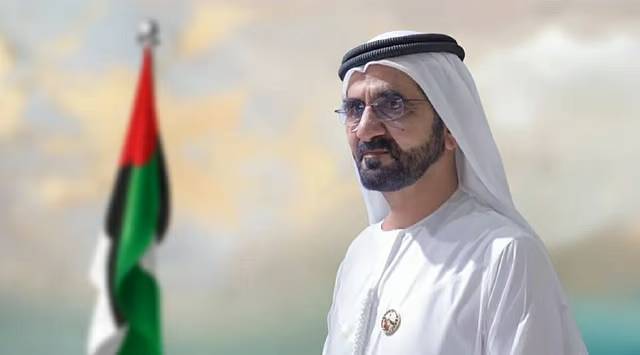
Dubai: His Highness Sheikh Mohammed bin Rashid Al Maktoum, Vice President and Prime Minister of the UAE and Ruler of Dubai, has identified three principles he believes will shape effective leadership in an increasingly fast-changing world: adapting to change, empowering people and accelerating decision-making.
In a letter titled “A Message to My Work Team”, featured in his new book “The Messages”, Sheikh Mohammed expressed his appreciation to those who have worked alongside him throughout the UAE’s development journey before sharing his vision for the next generation of leaders.
He paid tribute to those responsible for turning plans into action, improving people’s lives and contributing to the country’s progress, expressing his gratitude for their efforts and for the journey they have shared.
Sheikh Mohammed also recognised those who had shared the country’s development journey with him, praising individuals who dedicated their lives to serving others, worked tirelessly to improve people’s wellbeing and contributed to advancing the nation.
He said the message was directed specifically to government employees because their role extended beyond public service, describing them as leaders responsible for helping shape the country’s future.
Sheikh Mohammed then raised a key question: What qualities should a leader possess in this new era to navigate the challenges of the future, major transformations and an increasingly interconnected world?
World is changing rapidly
Sheikh Mohammed said the pace of technological change had accelerated dramatically, with developments now occurring every month and, in some cases, every week rather than once every decade.
Political and economic shifts have also become faster, he said. At the same time, climate change has emerged as an increasingly significant factor influencing politics, economies, production and labour markets, with wider implications for countries’ social and political stability as well as investment decisions.
Sheikh Mohammed said these forces are increasingly interconnected, meaning a development in one area can quickly have consequences across several others.
He said future leaders would need to do more than simply understand change. They must also be capable of operating effectively amid growing complexity, particularly as multiple transformations unfold simultaneously.
To illustrate this interconnectedness, Sheikh Mohammed pointed to a programmer at a startup whose decision to write a single line of code could potentially reshape the fortunes of a multibillion-dollar company, disrupt an entire industry and influence financial markets worldwide.
In an increasingly connected world, he said, the significance of an event is no longer determined only by its immediate impact, but also by how it interacts with the wider global system.
This changing environment, Sheikh Mohammed said, requires a leadership approach that differs from traditional models.
First principle: Adaptability over long-term planning
Sheikh Mohammed said the first principle for future leaders is to prioritise adaptability rather than relying heavily on long-term plans or rigid five- and 10-year strategies.
Instead, Sheikh Mohammed said effective leaders should focus on creating flexible institutions, developing teams that continuously learn and building systems capable of letting go of outdated knowledge and adapting to new realities.
He said future leadership would depend less on accurately predicting what comes next and more on ensuring organisations are prepared for different possibilities. While the future cannot be known with certainty, he stressed that institutions can prepare themselves to respond effectively.
The most successful organisations of the future, he added, may not necessarily be those with the most elaborate strategies, but those equipped to handle a range of possible scenarios. Resilience, he said, would ultimately depend on an institution’s ability to adapt as circumstances change.
Sheikh Mohammed also said a future leader’s strength would not come solely from accumulated knowledge or experience, but from the ability to identify and ask the right questions.
Leaders who assume they already understand everything about the future, he cautioned, risk being among the first to struggle when circumstances change.
Second principle: People are the most valuable resource
Sheikh Mohammed said the second principle focuses on people, describing an organisation’s team as its most important resource.
Sheikh Mohammed said that while technology can now handle tasks such as writing, storing information, archiving, programming and monitoring operations, people remain an organisation’s most valuable resource.
He described people as the driving force behind creativity, ideas and imagination, noting that any employee could come up with an idea capable of transforming an organisation’s future. The coming era, he said, would increasingly be shaped by the strength of ideas.
Sheikh Mohammed also highlighted the difference between conventional leadership and the approach he believes will be required in the future.
Rather than closely monitoring employees, future leaders should give them greater freedom and create opportunities for them to realise their potential, he said. Instead of fearing mistakes, leaders should foster an environment where employees feel able to experiment with new approaches and learn from their experiences.
He added that while traditional leadership often places a strong emphasis on discipline, future leadership should be built around trust and a willingness to encourage initiative.
Sheikh Mohammed warned that leaders who discourage employees from taking initiative risk undermining their organisation’s ability to innovate and succeed in the future.
Third principle: Faster decision-making
Sheikh Mohammed said his third principle focuses on how quickly institutions can respond to change.
He explained that when change happens faster than an organisation can react, it risks losing momentum and quickly falling behind.
While making the wrong decision was traditionally seen as one of the greatest risks facing an organisation, Sheikh Mohammed said delayed decision-making could pose an even bigger challenge in today’s rapidly evolving environment.
Sheikh Mohammed said future leaders may not have more time than others, but their advantage will lie in reducing the gap between developing an idea and putting it into action.
He highlighted artificial intelligence as a powerful tool that can help organisations save time and accelerate the journey from concept to implementation. He stressed that leaders must be prepared to act even when complete certainty is not possible, arguing that a good decision made today can be more valuable than a perfect decision delayed until later.
Concluding his message, Sheikh Mohammed summarised his guidance for future leaders in three points: remain adaptable, invest in people and make decisions faster.
He said the future would not wait for institutions to catch up, but expressed optimism that it could be better than the present if organisations develop a culture of adaptability, continually strengthen their teams and create environments that encourage imagination and innovation.
Sheikh Mohammed concluded the letter by expressing hope for continued success in the journey ahead.

