

Al Ain expansion to focus on local training, university partnerships and targeted overseas recruitment.
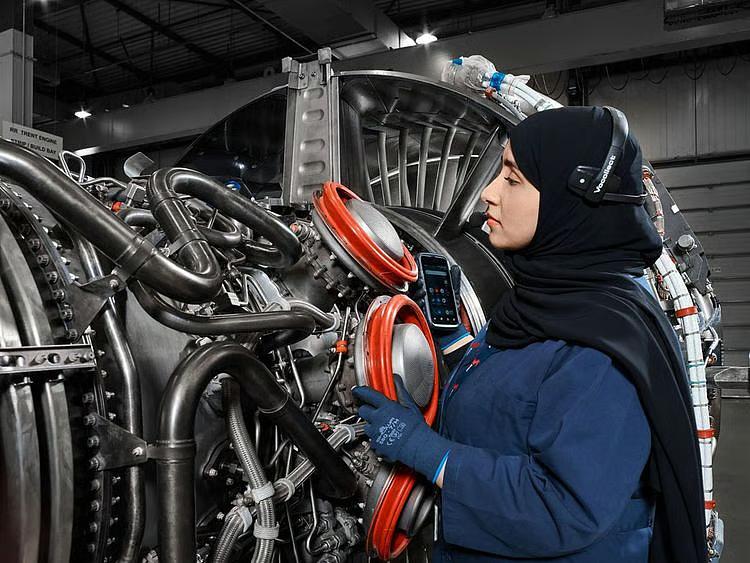
Dubai: Abu Dhabi-based aerospace company Sanad expects its new GTF engine maintenance facility in Al Ain to employ more than 1,000 technicians when it reaches full capacity. A significant portion of the workforce is expected to be developed within the UAE through university partnerships, trainee programmes and hands-on workplace training.
The recruitment drive comes as the global aviation industry faces a shortage of skilled professionals and is part of Sanad’s broader push to expand its capabilities across engine maintenance, repair, testing and asset management.
“GTF alone is expected to have 1000 plus technicians when it is fully operational, we are not expecting that these 1000 plus professionals are all going to be expats imported from overseas. It’s a global shortage. It’s a global issue that we are trying to address,” Kashish Kohli, Group Chief Financial Officer and SVP, Asset Management Division at Sanad, told Gulf News in an exclusive interview.
Sanad expanded its workforce by 44% year on year during the first half of 2026, bringing its total employee count to 898. Emiratisation stood at 36.9%, with UAE nationals holding 51.6% of senior leadership roles.
The next stage of Sanad’s expansion will require a significantly larger pool of skilled technical professionals.
Kohli said the company plans to meet this demand through a combination of selective overseas recruitment and a greater emphasis on nurturing talent within the UAE.
“So our approach is more homegrown talent. So working with the universities, on job training, trainee programs that we do, supported by hiring wherever it makes sense,” he said.
Sanad is also looking to build its future leadership pipeline from within, with more technical employees expected to progress into senior roles as the company expands.
“But there’s a strong focus on developing the leadership from the shop itself, from the country itself, by working locally with the universities,” Kohli said.
Sanad is currently developing two major facilities in Al Ain. The first, dedicated to GTF engines, is expected to begin engine inductions in 2028, while the second is the Dh480 million Repair Centre of Excellence.
The Repair Centre of Excellence is expected to create more than 350 jobs and will have the capacity to process up to 65,000 repaired parts annually once it reaches full operations. Spanning approximately 17,600 square metres, the facility is scheduled to become operational by 2030.
Kohli also confirmed that construction of the GTF Engine MRO Centre is moving ahead. Covering more than 64,000 square metres, the facility is planned to become the world’s second-largest maintenance centre dedicated to GTF engines.
Capacity becomes the constraint
Sanad’s focus on expanding its workforce reflects the same pressures driving its investment in infrastructure, as airlines worldwide seek greater engine maintenance capacity amid limited availability across the industry.
“We are benefiting from a generational super cycle in commercial aviation,” Kohli said.
Citing projections from Oliver Wyman, Kohli said the global commercial aircraft fleet is expected to grow from about 30,000 aircraft today to nearly 41,000 by 2035-2036. The Middle East is expected to record annual growth of around 5%, while Boeing forecasts that the region’s fleet will more than double by 2044.
“Demand is not our bottleneck. Capacity and capability are,” Kohli stressed.
To address that challenge, Sanad has invested more than Dh800 million in UAE aerospace infrastructure over the past two years, strengthening its repair capabilities, testing infrastructure and capacity to service next-generation engines.
The company inducted 120 engines in the first half of 2026, up 33.3% year on year, while engine deliveries increased by 53.8%.
Before its new GTF facility begins operations in 2028, Sanad expects its existing network to scale up to an annual capacity of around 275 to 300 engine shop visits.
Bringing more work inside the UAE
Sanad’s expansion strategy is also focused on easing delays caused by persistent constraints across the global aviation supply chain.
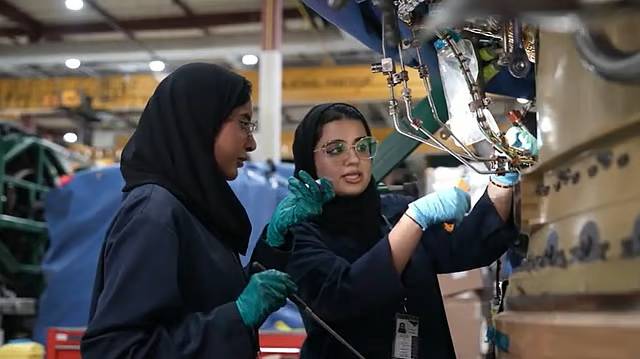
Kohli said engine turnaround times are influenced by more than just the availability of maintenance bays. Access to manufacturer-supplied parts, material availability and capacity at third-party repair facilities can also affect how quickly engines are returned to service.
To gain greater control over the process and reduce its reliance on external providers, Sanad is bringing more repair and testing capabilities in-house.
“Our response has been vertical integration to insulate as much as possible our operations,” Kohli said.
The company has also introduced a Trent 700 rebuild programme through its Asset Management division. Under the model, engines acquired by the division can be repaired and restored through Sanad’s MRO operations, creating a pool of serviceable engines and materials that can be deployed when customers need replacement parts or spare-engine support.
The strategy is intended to shorten material-related waiting times and provide airlines with greater flexibility when maintenance capacity and spare parts are limited.
Asset management becomes part of the model
Sanad is also broadening its business beyond conventional engine MRO by integrating maintenance with asset management, component repair, testing and material support.
The Asset Management division deployed around AED165 million in the first half of 2026 across engine acquisitions, repair and rebuild programmes, and asset optimisation initiatives.
During the period, the division acquired 11 engines, expanding its active portfolio to 17 assets.
Kohli said Sanad’s MRO expertise gives the company an advantage when evaluating potential engine investments, providing direct insight into repair costs, maintenance requirements and the economics of individual assets.
“MRO remains our operational backbone, but asset management, advanced component repair that we announced this year, expanded engine testing capability that we will have in Al Ain. These all gives us multiple highly complementary value streams from a financial perspective or balance sheet perspective,” Kohli said.
Sanad currently supports major engine platforms including the Trent 700, V2500, GEnx and LEAP, with GTF capabilities expected to be added to its network in 2028.
International business from Abu Dhabi
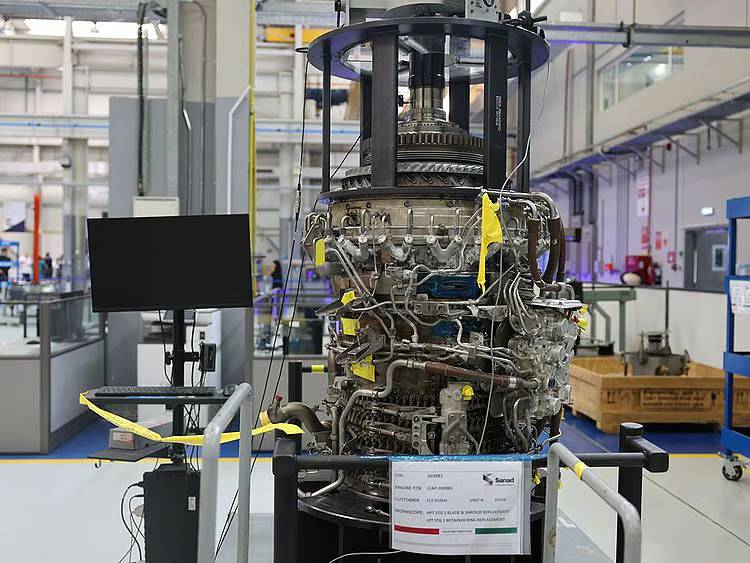
Sanad’s business remains overwhelmingly international, with overseas customers accounting for 99% of its revenue in the first half of 2026. The company serves more than 80 airlines, lessors and original equipment manufacturers worldwide.
Revenue climbed 35% year on year to AED4.31 billion during the period, while Sanad secured eight new commercial agreements valued at AED95.5 million.
Kohli said the company continues to assess opportunities to establish a presence closer to customers in international markets, although no specific overseas expansion plans have been announced.
“We have always been open, Nivetha, that we want to look at markets where we can be closer to the customers,” Kohli said.
For now, however, Sanad’s priority is to deliver the infrastructure already under development in Abu Dhabi and Al Ain while building the skilled workforce needed to support its growing operations.
Kohli said the next few years are expected to mark Sanad’s evolution from a traditional engine MRO provider into a broader engine solutions business.
“By 2028, we will have the GTF Center operational. We would hopefully have progress on the engine asset portfolio through asset management. Our component repair network would have been scaled a bit,” he said.
The broader goal is to provide airlines with technical, financial and material support through an integrated platform, while developing the skilled workforce in the UAE needed to sustain Sanad’s next phase of expansion.

