

Brent’s climb above $100 adds pressure on October fuel prices despite improving supplies.
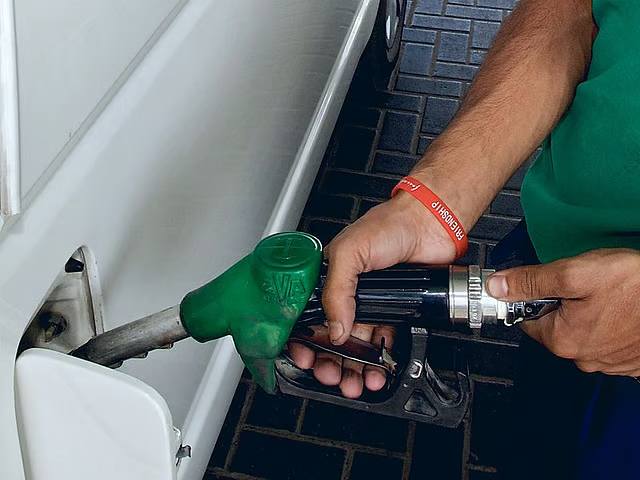
Dubai: Motorists across the UAE could face higher fuel prices in October after global oil prices remained elevated for much of September, though improving regional supply flows may help limit the increase.
Brent crude climbed 2.3% to $101.52 a barrel on Wednesday, rebounding after a recent pullback. Earlier in the trading session, the global benchmark had fallen as low as $98.99.
At its latest level, Brent is roughly 41% higher than the $72 a barrel recorded in late February, before the Iran war began. Prices are also around $30 a barrel higher than they were at the same time last year.
The latest increase comes after another volatile stretch for oil markets. Brent climbed close to $110 a barrel last week amid concerns that disruptions to Middle East energy exports could continue, before retreating from those highs.
For UAE motorists, October fuel prices will depend less on Brent’s movement on any single day and more on the broader price trend throughout September. With crude trading at elevated levels for much of the month, upward pressure on the UAE’s next fuel-price review has strengthened.
Where UAE fuel prices stand
UAE fuel prices increased slightly in September, with Super 98 priced at Dh3.80 per litre, Special 95 at Dh3.69 and E-Plus 91 at Dh3.61. Diesel currently costs Dh4.30 per litre.
Despite the increase, petrol prices remain below their 2026 peaks. Super 98 reached Dh3.95 per litre in June, while Special 95 climbed to Dh3.83 and E-Plus 91 to Dh3.76. Diesel recorded its yearly high of Dh4.69 in April and May.
To return to its June peak, Super 98 would need to increase by 15 fils, or around 3.9%. Special 95 would require a 14-fils rise, equivalent to about 3.8%, while E-Plus 91 would need to climb by 15 fils, or roughly 4.2%.
Current oil-market trends therefore suggest that October petrol prices could move closer to the higher levels seen earlier this year.
How a price increase could affect motorists
UAE retail fuel prices are influenced by international market conditions, although refined-product costs and other factors also play a role in determining the monthly adjustment. For motorists, however, the impact of any increase can be calculated easily.
A 10-fils-per-litre increase would add Dh6 to the cost of filling a 60-litre tank and Dh8 for an 80-litre tank. A 20-fils increase would raise the cost of those fill-ups by Dh12 and Dh16, respectively.
For illustration, a 20-fils increase would take Super 98 to Dh4 per litre, Special 95 to Dh3.89 and E-Plus 91 to Dh3.81. These figures are examples only and should not be taken as forecasts of the UAE’s official October fuel prices.
Saudi supply offers some relief
One factor that could ease pressure on oil markets is the reported restart of Saudi Arabia’s East-West Pipeline, a key export route that allows crude to reach the Red Sea without travelling through the Strait of Hormuz.
Saudi Arabia is reportedly working to resume exports through the pipeline, while Saudi Aramco has informed Asian refiners that they may soon be able to collect crude from the Red Sea port of Yanbu. The development has helped ease some concerns about global oil supplies.
However, the recovery remains limited. Bloomberg reported that European customers have been told they will not receive crude allocations through the route in October.
The additional supply could therefore help moderate international oil prices, but it may not be enough to immediately offset the broader pressure caused by disruptions to Gulf exports.
Diplomacy remains another variable
US-Iran negotiations are continuing through mediators, but no concrete agreement has yet emerged that would significantly reduce uncertainty over regional oil supplies. The lack of a breakthrough has contributed to sharp swings in crude prices.
Brent was trading at around $72 a barrel before the Iran war began, before surging above $100 and nearing $110 last week. Although prices later retreated, Wednesday’s rebound above $101 highlights how sensitive the oil market remains to developments in the region.
What to expect for October
Based on the oil-price trend throughout September, the likelihood of higher UAE fuel prices in October has increased compared with the outlook a month earlier.
Brent’s rise above $100 a barrel is particularly significant because crude prices have remained elevated for a substantial part of September, rather than climbing because of a short-lived spike.
However, it is still too early to determine the exact direction or size of October’s fuel-price adjustment. The final days of September could prove important, especially whether Brent holds near $100, retreats towards the low $90s or moves higher again.
Improving Saudi export capacity could help ease pressure on global prices, while progress in US-Iran diplomacy may further reduce concerns over oil supplies. Any renewed disruption to regional exports, however, could push prices in the opposite direction.
For UAE motorists, current market conditions therefore suggest stronger upward pressure on October fuel prices, although the final adjustment will depend on how international energy markets perform through the remainder of September.

