

UAE premarital genetic testing has been mandatory since January 2025, screening more than 570 genes in Abu Dhabi and 782 in Dubai.

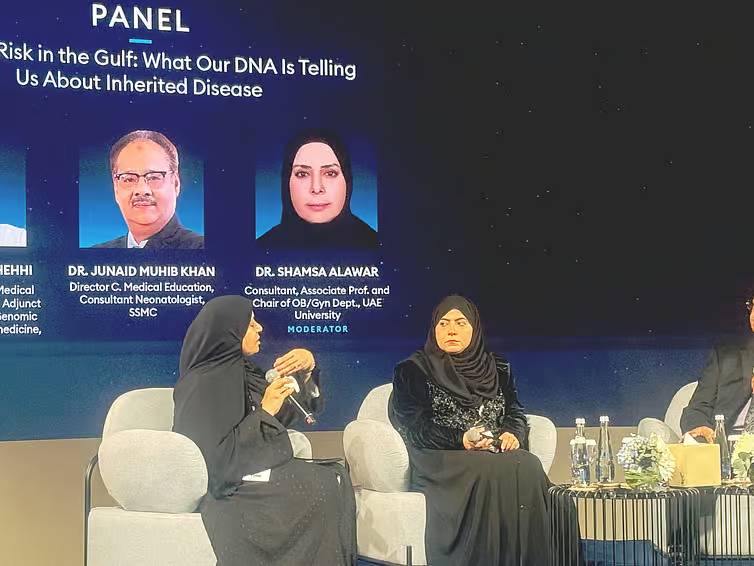
The Gulf population has a distinct genetic profile shaped by shared ancestry and founder variants, making the region an important focus for genomic medicine, doctors said during a discussion titled ‘Genetic Risk in the Gulf: What Our DNA Is Telling Us About Inherited Disease’.
During the session, Dr Maryam Alshehhi, Consultant Physician Medical Geneticist at SKMC/SEHA and Adjunct Assistant Professor of Genomic Medicine at UAEU’s College of Medicine, said the region has higher rates of consanguineous marriage, contributing to a greater prevalence of recessive genetic disorders.
She cited a study published in Nature Medicine and led by Dr Ahmad Abou Tayoun, Director of Dubai Health’s Genomic Medicine Centre. The study found that 8 per cent of the first 1,000 couples screened through Dubai’s mandatory premarital screening programme were carriers of the same pathogenic variant — a rate higher than those reported in comparable international studies.
She also cited a separate study from Oman, which found that 80 per cent of metabolic disease cases among children involved parents who were closely related.
Premarital genetic testing has been mandatory in the UAE since January 2025, screening for more than 570 genes in Abu Dhabi and 782 in Dubai. Dr Alshehhi said the UAE has what she described as the world’s first comprehensive premarital genetic screening programme, while newborn screening has since been introduced as an additional layer of prevention.
Faster diagnosis, earlier treatment
The discussion was moderated by Dr Shamsa Alawar, Consultant, Associate Professor and Chair of the OB/Gyn Department at UAEU.
Dr Junaid Muhib Khan, Director of Medical Education and Consultant Neonatologist at SSMC, said newborn genetic screening is already helping change clinical outcomes.
Citing a Dubai-based study from May 2026, he said the median turnaround time for results was 3.4 days, with 53 per cent of screened babies found to have a genetic condition. Of those cases, 47 per cent resulted in a change in clinical management, while 36 per cent led to the use of precision pharmacotherapy.
He said the field is moving from evidence-based medicine towards precision medicine, with a goal of completing the transition by 2030. Early genetic diagnosis, he added, can help avoid unnecessary tests and provide families with greater clarity when a baby is unwell.
Cultural sensitivity and literacy gap
Both doctors said the biggest challenges extend beyond the laboratory. Dr Alshehhi said clinicians frequently encounter couples distressed by positive screening results and stressed that genetic screening in the UAE must remain aligned with cultural and religious norms. This rules out approaches such as public carrier registries used in some other countries.
Dr Khan emphasised that carrying a genetic variant “is not a disease” and should not result in individuals or communities being labelled.
“We have already reached a stage where people understand what genome sequencing is and its benefits,” Dr Alshehhi said. “But we are still far away from full literacy on genomic medicine, and there is a lot of work still needed in education.”
The doctors called for greater investment in training dedicated genetic counsellors who can help translate genetic information into practical clinical decisions. They also highlighted the importance of continued awareness campaigns and investment in screening infrastructure as the UAE expands its genomic health programmes.

