

Improved connectivity could reshape demand across Dubai’s outer and mid-market communities.
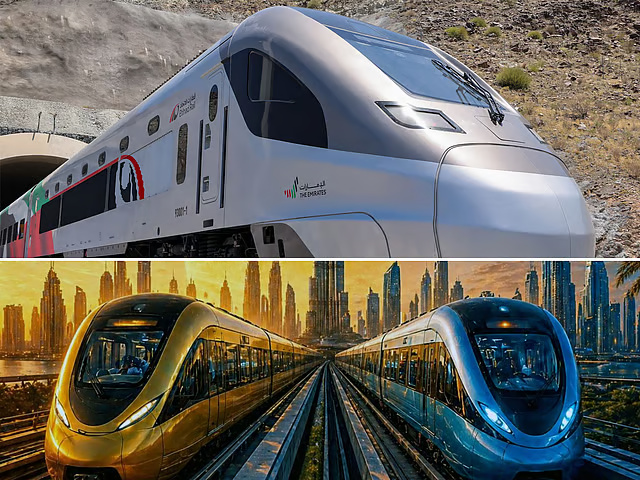
Dubai: Living farther from the workplace could become a more viable option for Dubai residents as Etihad Rail and the Metro Blue and Gold Lines improve direct connectivity between residential communities, business districts and major transport hubs.
International City, Dubai Silicon Oasis, JVC, Meydan, Dubai South, Jumeirah Golf Estates, Mirdif and Al Warqa are among the communities property executives expect to benefit, particularly in areas where residents currently rely heavily on private cars or buses.
Improved connectivity could give tenants and buyers greater choice beyond established hubs such as Downtown Dubai, Business Bay and Dubai Marina, where proximity to major employment centres has traditionally supported higher housing costs.
Fibha Ahmed, VP of Property Sales at Bayut, said improved transport connectivity could change that equation by cutting travel times between outer communities and major employment centres.
Traditionally, buyers and tenants paid a premium to live in central areas such as Downtown Dubai, Business Bay and Dubai Marina to avoid lengthy peak-hour commutes on Dubai’s highways.
Improved rail connectivity is not expected to reduce demand for prime central locations, according to property executives, but it could make more affordable communities increasingly attractive to residents who previously ruled them out because of long or difficult commutes.
International City and DSO gain prominence
The Dubai Metro Blue Line, scheduled to open in 2029, is expected to enhance the appeal of several communities in eastern Dubai.
International City, Warsan, Dubai Silicon Oasis, Academic City, Dubai Creek Harbour, Mirdif and Al Warqa are among the areas positioned to benefit from improved direct Metro connectivity.Many of these communities already have established residential, educational and employment hubs but lack the rail connectivity available in more central parts of Dubai.
Vivek Bhavsar, Director of Consulting at JLL MENA, said the impact could be most pronounced in areas receiving Metro access for the first time.
“Areas gaining Metro access for the first time will feel the impact most.”
International City stands out for its relatively affordable entry prices, while Dubai Silicon Oasis combines residential demand with a sizeable technology and employment base. Academic City, meanwhile, has a large student population, providing another potential source of rental demand across the wider corridor once the line becomes operational.
Ahmed expects high-density, mid-market communities that have historically lacked rail connectivity to see some of the strongest demand, particularly where a new station removes a key transport barrier for tenants.
International City Phase 2 and Dubai Silicon Oasis are also among the areas experts view as relatively affordable ahead of the planned connectivity improvements.
JVC, Meydan and Jumeirah Golf Estates gain new connectivity
The planned Gold Line is expected to shift attention towards JVC, Meydan, Mohammed Bin Rashid City, Nad Al Sheba, Al Barsha South and Jumeirah Golf Estates, potentially improving their appeal to residents seeking better access to employment centres and transport hubs.
JVC has grown into one of Dubai’s major residential communities without direct Metro access, making a future station particularly significant for residents who currently depend on road-based transport.
Mohammed Al Sari, CEO of HRE Development, said expanding transport connectivity is changing how residents assess location and accessibility.
“The market’s definition of a well-located property is shifting from proximity to the city centre towards proximity to the network.”
This shift could benefit communities where residents can access larger homes or more varied price points while still maintaining convenient connections to Business Bay, Meydan and other major employment centres.
Jumeirah Golf Estates could emerge as a particularly significant beneficiary, with the community expected to gain access to both the Gold Line and Etihad Rail. Meydan is also frequently highlighted by developers and brokers due to its strategic position along the planned route.
Murad Saleh, Co-Founder and CEO of Amwaj Development, said improved transport connectivity could broaden the range of locations residents consider without making distance irrelevant.
“Dubai’s next phase of growth will be defined less by distance and more by connectivity.”
He added that transport infrastructure delivers the greatest impact when supported by quality housing, amenities and broader community planning. As a result, proximity to a future station alone does not necessarily guarantee stronger long-term property performance.
Dubai South gets a different kind of boost
Etihad Rail is putting Dubai South, Jebel Ali and Dubai Investments Park in the spotlight for a different reason.
These areas combine residential communities with logistics, industrial and employment activity, while Dubai South also benefits from its proximity to Expo City and Al Maktoum International Airport.
Improved inter-emirate connectivity could expand the pool of residents willing to live in these communities, particularly those whose jobs require regular travel between Dubai, Abu Dhabi and other emirates.
Salman Ali Khan, COO and Co-Founder of 3S Real Estate Brokers, expects rental demand to respond ahead of sale prices when new transport links significantly improve accessibility.
“Better connectivity drives higher demand. Rents usually rise first, followed by prices.”
He estimates that properties near major transport stations could command a premium of around 5% to 25%. He also identifies International City, Dubai Silicon Oasis, Al Warqa, Mirdif, Dubai South and selected parts of JVC and Meydan as areas that remain relatively discounted compared with the potential uplift from future connectivity.
Could residents move farther out?
The more immediate question for tenants is whether improved transport connectivity could make living in a larger home farther from Dubai’s city centre a more attractive option.
Property executives broadly expect better connectivity to widen the range of communities residents consider.
Someone working in central Dubai, for example, could increasingly look towards International City, Dubai Silicon Oasis or JVC while reducing reliance on lengthy highway commutes. Etihad Rail could further expand these options for residents who regularly travel between Dubai, Abu Dhabi and other emirates.

