

Ports, railways, aviation and free zones integrate to strengthen resilience and drive non-oil trade growth.
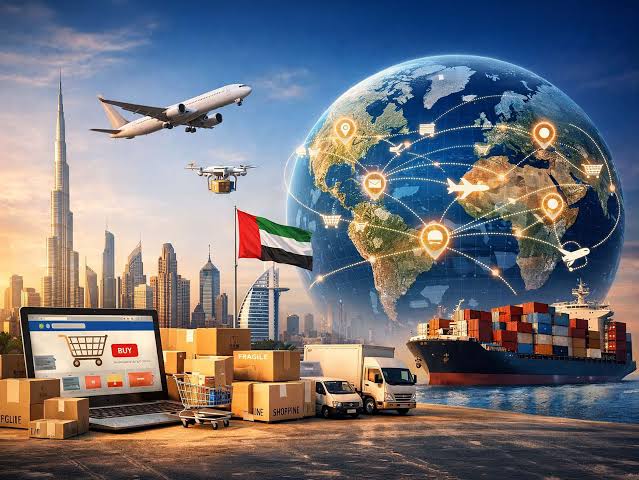
The UAE is expanding its integrated supply chain infrastructure in 2026, bringing maritime, road, air, rail and free-zone operations closer together to sustain global trade flows and improve the resilience of transit networks. Moving beyond its traditional role as an import-export hub, the country is developing an end-to-end logistics ecosystem that connects manufacturing and storage facilities directly with ports, airports and border crossings.
Regional developments are accelerating this multimodal integration.
The Sharjah Ports, Customs and Free Zones Authority, in coordination with Oman Customs, has established a logistics corridor linking Sharjah’s coastal ports—including Khorfakkan, which is targeting future capacity of 10 million containers—with Omani ports such as Sohar, Duqm and Salalah. Domestically, Sharjah is also developing the Al Dhaid Logistics Complex, covering more than 16 million square feet and planned to have an initial capacity of 1.5 million TEUs.
Rail freight is also expanding its cross-border reach following contracts signed by Hafeet Rail in February 2025 to design and build railway facilities in Oman. Within the UAE, Etihad Rail transported approximately 1.8 million tonnes of sulphur, more than 4 million tonnes of aggregates and 129,000 containers during 2026 across 11 terminals connecting major industrial hubs and ports, including Khalifa Port and Jebel Ali.
Air freight capacity is growing through the Abu Dhabi Airports Free Zone, which includes the 8.3-million-square-metre Al Falah Logistics Park and an East Midfield cargo terminal scheduled for completion in 2027, with an annual handling capacity of 1.5 million tonnes. On the east coast, Fujairah Terminals handled more than 70,000 TEUs and 100 cargo vessels during recent regional disruptions, providing an alternative trade route alongside planned developments at Rugeilat Port and Dibba Al Fujairah.
In Dubai, the Dubai Logistics Corridor continues to connect sea and air freight between Jebel Ali Port and Al Maktoum International Airport, strengthening the emirate’s multimodal trade network. At the same time, Jebel Ali Free Zone (Jafza) attracted AED854 million in new investments during the first four months of 2026, supporting the expansion of facilities across manufacturing, logistics, healthcare and food production.
Digital tracking systems and platforms such as ADDED are further strengthening supply-chain resilience. In 2026, ADDED expanded its partner network to more than 30 logistics operators, enabling real-time cargo rerouting and improved coordination during disruptions and emergencies.
These operational capabilities supported 3% growth in the UAE’s real GDP in the first quarter of 2026, reaching Dh485 billion at constant prices, while non-oil foreign trade hit a record Dh1.937 trillion in the first half of the year.
The UAE’s increasingly integrated logistics ecosystem is also attracting major multinational companies. Healthcare giant Novo Nordisk, for instance, established one of its three global distribution hubs in the country, reinforcing the UAE’s position as a strategic base for regional and international supply chains.
Together, these developments highlight the growing integration of ports, airports, railways, roads, free zones, storage facilities and digital systems. This multi-route logistics framework improves the ability to access, reroute, store, manufacture, re-export and distribute goods, placing supply-chain resilience at the heart of the UAE’s economic growth strategy

