

Regional drone attacks and escalating military threats heighten uncertainty across the UAE.
The Strait of Hormuz remains disrupted, with Washington and Tehran continuing diplomatic contacts but no clear agreement in sight.
Iran is strengthening its hard-line security leadership, while attacks elsewhere in the region underscore the growing risk of the conflict spilling across borders.
On Tuesday, August 18, 2026, the US-Iran conflict entered another uncertain phase after a 60-day diplomatic deadline expired, amid fresh indications that Tehran is preparing for a prolonged confrontation.
For UAE residents, the impact is being felt most directly through air travel, shipping, fuel prices and heightened regional security concerns.
Here are the key developments to know today:
1. The peace deadline has expired. What happens now?
The 60-day window for the US and Iran to reach a final agreement expired on Monday without a comprehensive settlement. Key elements of the June framework, including reopening the Strait of Hormuz and easing the US blockade, remain unresolved.
The breakdown does not necessarily signal an immediate return to full-scale war. Diplomatic channels remain open, but the absence of an extension has increased the risk of further escalation. Iran has warned of a more offensive military posture if negotiations fail, while Washington has rejected extending the existing framework.
2. Are the US and Iran still talking?
Yes — but the two sides remain deeply divided over the terms of any new agreement, particularly the future of the Strait of Hormuz, sanctions and the US military presence. Back-channel diplomatic efforts are continuing, including mediation involving regional partners, but there is still no clear breakthrough.
Jared Kushner, one of President Donald Trump’s senior envoys, said on Monday that Washington was engaged in what he described as “robust and positive” discussions with Iran. However, he acknowledged that Tehran had yet to accept the agreement sought by the US.
That leaves diplomacy in a familiar bind: talks continue even as military pressure intensifies.
Oman remains a key player in efforts to mediate between Washington and Tehran. However, Trump’s threats toward Oman over its role in the negotiations have added another layer of uncertainty to the diplomatic process.
3. Why is the Strait of Hormuz still the biggest concern?
Because developments there have consequences far beyond the US and Iran. The waterway is one of the world’s most important energy corridors, and its prolonged disruption has already affected oil flows, shipping costs and fuel prices.
Iran has maintained that the strait will not return to normal until changes are made to the US blockade and other disputed terms. Washington, meanwhile, continues to demand freedom of navigation.
The UAE has previously condemned Iranian actions involving the waterway, including the attacks on UAE-owned vessels, and has backed international efforts to safeguard freedom of navigation.
4. What does the latest military rhetoric mean?
The rhetoric is becoming increasingly aggressive. Iranian lawmaker and former foreign minister Manouchehr Mottaki said Iran could potentially end the conflict by capturing a single US military base in the region, pointing to possible targets in Iraq, Kuwait or Bahrain.
The remarks highlight how openly Iranian officials are discussing potential attacks on US positions in the Gulf. However, such comments should be viewed as political rhetoric rather than evidence that an attack on any specific base is imminent.
They nevertheless underscore how quickly the conflict could widen if diplomatic efforts collapse.
5. UAE condemns attack in Iraqi Kurdistan
Two drones struck the office of the Iraqi Kurdistan prime minister in Erbil on Monday. Kurdish authorities said the drones were launched from Iranian territory and reported no casualties. The UAE strongly condemned the attack.
The incident highlights the wider risk of regional spillover, with the Gulf, Red Sea and other parts of the Middle East remaining vulnerable to attacks linked to the conflict. Iran has also denied responsibility for some attacks in the region, making questions over attribution another potential trigger for escalation.
6. What does Mojtaba Khamenei’s reshuffle mean?
Iran’s new Supreme Leader, Mojtaba Khamenei, has been consolidating his security establishment by bringing experienced hard-line commanders into key positions.
Among the changes are the elevation of senior figures with longstanding ties to Iran’s military and security establishment, including Ahmad Vahidi as head of the Islamic Revolutionary Guard Corps and Hossein Taeb as head of the Basij.
The appointments suggest Tehran is preparing its security institutions for a potentially prolonged confrontation rather than relying solely on the prospect of a quick diplomatic settlement. That makes a swift end to the conflict increasingly uncertain.
What air travellers could expect
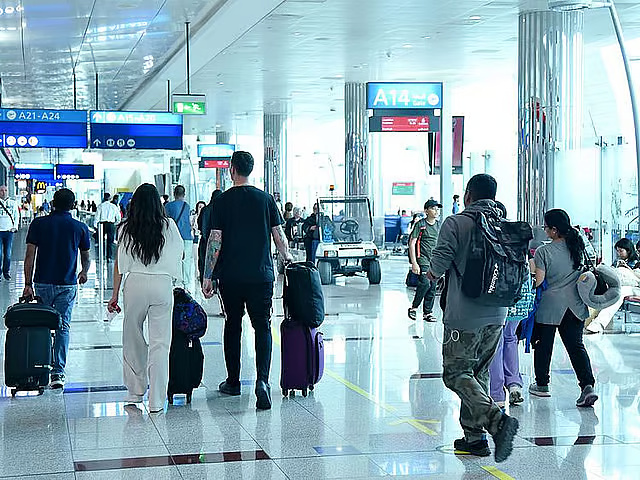
Expect flight schedules to remain fluid. Regional airlines continue to operate many services, but some routes have been cancelled, suspended or adjusted in response to the evolving security situation.
Recent updates have included cancellations affecting destinations such as Bahrain and Kuwait, although individual flights on those routes may continue to operate.
For passengers, the safest approach is straightforward:
- Check your airline’s flight status before leaving for the airport.
- Do not rely solely on an earlier booking confirmation.
- Allow extra time for airport procedures.
- Be prepared for possible rerouting or schedule changes.
- If connecting through another Gulf airport, check the status of both flights.
The regional aviation situation can change rapidly as airspace restrictions and military activity evolve.
Effect on oil prices
Global oil prices have already been affected by concerns over prolonged disruption, while higher insurance premiums and freight costs could also push up the cost of goods transported through the region.
For UAE residents, however, the immediate impact is unlikely to be uniform. The UAE has significant energy infrastructure and has spent years developing alternative export routes, reducing its reliance on the Strait of Hormuz for some crude shipments.
The bigger risk is duration. A prolonged crisis could place greater pressure on global energy markets, shipping and transportation costs.
The regional security environment also remains elevated. The UAE government has repeatedly condemned Iranian missile and drone attacks in the region while stressing the importance of sovereignty, security and diplomatic efforts.
For residents, the safest approach is to rely on official UAE authorities, employers, schools and airlines for operational guidance rather than unverified reports circulating on social media.
For now, the key question is no longer simply whether the US and Iran can reach a deal. It is whether diplomacy can move faster than the military escalation unfolding across the Gulf.

