

Muted trading follows a sharp sell-off earlier in the week driven by hopes of a US-Iran agreement.
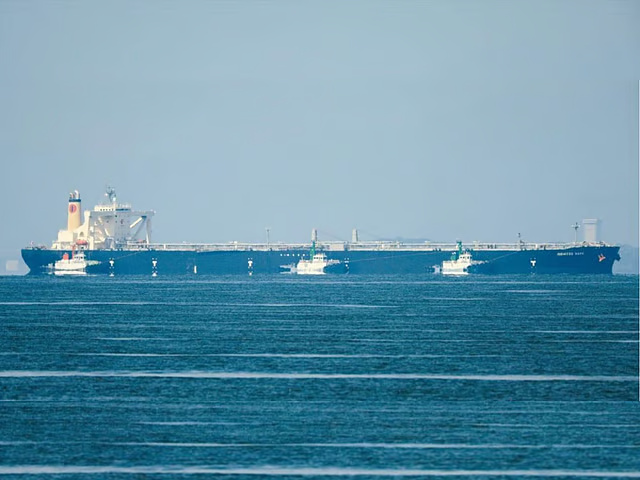
Oil prices were largely unchanged early Thursday as markets balanced rising hopes of a US-Iran diplomatic breakthrough against continued uncertainty over the reopening of the Strait of Hormuz, the world’s most critical oil shipping chokepoint.
At around 9:54am on Thursday, August 6, Tokyo time, Brent crude was trading at $79.38 a barrel, down 7 cents, or 0.09%, while West Texas Intermediate (WTI) stood at $75.01 a barrel, lower by 21 cents, or 0.28%.
The subdued trading followed a sharp sell-off earlier in the week after Qatar said draft proposals for a potential US-Iran agreement were being circulated.
Brent crude dropped 5.3% on Tuesday to settle at $79.36 a barrel, while WTI declined 5.7% to $75.77, with both benchmarks closing at three-week lows.
The latest price movements indicate that traders are assigning a higher probability to a diplomatic resolution, while remaining cautious that the crisis has not yet been fully resolved.
Qatar said on Wednesday that efforts to bring Washington and Tehran back to the negotiating table were making progress, with draft agreement language being circulated among mediators.
The potential deal, reported on Wednesday, is closely linked to arrangements aimed at restoring commercial navigation through the Strait of Hormuz.
The stakes are significant. The waterway typically handles a substantial share of global seaborne oil and LNG shipments, meaning any credible agreement that restores shipping activity could quickly boost available supplies and ease the geopolitical risk premium currently reflected in crude prices.
Hormuz remains the market’s biggest wildcard
The prospect of reopening the strategic waterway has emerged as the key driver of oil price movements, with markets closely watching developments around the Strait of Hormuz.
On Tuesday, optimism over a potential agreement sent crude prices sharply lower.
OilPrice.com reported that Brent later stabilised near the $80 level as traders evaluated the likelihood of a diplomatic resolution.
However, no agreement has been finalised yet.
The Associated Press reported on Thursday that Washington and Tehran appeared to be moving closer to an arrangement regarding the Strait of Hormuz, although significant differences remain unresolved.
A proposed mechanism could involve Iran overseeing inbound shipping and Oman managing outbound traffic — an arrangement that Washington has previously opposed.
This has left oil traders weighing two competing outcomes: a successful diplomatic breakthrough or a collapse in negotiations.
Why the market is not celebrating yet
The sharp decline in crude prices this week reflects, in part, the unwinding of a geopolitical risk premium rather than evidence that physical oil supplies have fully returned to normal.
The conflict led to a significant drop in tanker traffic through the Strait of Hormuz and pushed Brent crude above $100 a barrel during the initial supply shock.
This means oil markets are likely to remain highly sensitive to every development emerging from Washington, Tehran, Doha and Muscat.
For consumers, particularly across Asia, a sustained reopening of the Strait of Hormuz could eventually lead to lower import costs and ease pressure on domestic fuel prices. However, the impact may not be immediate, as refiners, traders and shipping companies will first need to see consistent and reliable flows through the waterway.
The bigger picture
Oil markets have effectively shifted from pricing in a war premium to factoring in a potential peace premium.Brent crude is now trading around $79 a barrel, compared with the triple-digit levels reached during the height of the crisis. Reuters reported that Tuesday’s settlement marked Brent’s lowest close since July 13.
However, the market remains vulnerable to a sharp reversal.
If the US-Iran draft agreement leads to a ceasefire and establishes a credible framework for reopening the Strait of Hormuz, Brent crude could face further downward pressure. Conversely, if negotiations collapse or shipping restrictions persist, the geopolitical risk premium could return just as quickly.
For now, the $80-a-barrel mark has become the market’s psychological battleground, with diplomacy increasingly taking precedence over traditional supply indicators such as inventory data in shaping oil traders’ decisions.

