

Authorities revealed that traffickers now rely on GPS drops and encrypted communication tools to evade capture.
Dubai Police have revealed further details of one of the force’s most complex anti-narcotics investigations, explaining how a five-year intelligence operation resulted in the conviction of a man described by investigators as a “drug emperor”. Authorities said he was allegedly responsible for managing an international trafficking network that moved tonnes of narcotics across international waters.
Brigadier Khalid bin Muwaiza, Director of the General Department of Anti-Narcotics at Dubai Police, said the suspect organised major drug shipments outside the UAE and did not conduct criminal activities within the country. He added that the network managed operations across international waters, with connections reportedly extending to Africa, Egypt, Sudan, and Yemen.
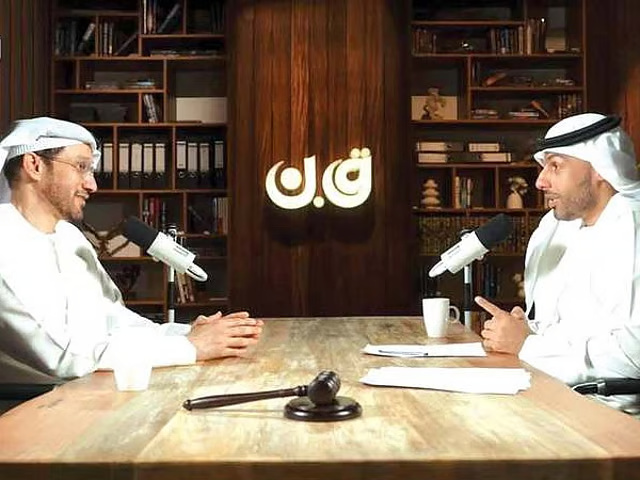
Speaking on the Q.N Podcast on ArabCast, Bin Muwaiza said the investigation was built on years of intelligence work, evidence gathered from several countries, and extensive coordination with international law enforcement agencies.
The operation involved multiple overseas missions by investigators, close coordination with foreign security agencies, and statements from suspects detained in connected cases.
Bin Muwaiza said undercover sources also spent several years inside the suspect’s residence without disclosing their identities, enabling investigators to monitor his activities and communications and compile a case file of more than 50 pages.
He added that the investigation also drew on evidence from Operation Ocean Coast, a 2016 mission carried out in coordination with the Australian Navy off the coast of Tanzania, which led to the seizure of one tonne of heroin.
The extensive evidence gathered during the investigation eventually resulted in the suspect confessing before being convicted by the UAE’s federal courts.
Bin Muwaiza explained that drug trafficking methods have evolved significantly over the past decade, with criminals moving away from traditional face-to-face deals towards technology-based distribution networks. He said dealers increasingly receive payments electronically before sending buyers GPS locations through smartphone applications, directing them to hidden drug stashes without any direct contact between the two parties.
He added that Dubai Police have closed down 1,291 websites and online accounts used to advertise or support drug trafficking activities through a specialised cybercrime unit. The force not only removes these platforms but also identifies those operating them, conducts controlled operations to apprehend suspects, and refers them to judicial authorities.
The senior officer warned that one of the most worrying developments is the shift from drug consumption to drug trafficking, noting that some addicts eventually turn to selling narcotics to fund their own substance use.
He highlighted cases where entire families, including parents and children, became involved in drug-related activities after initially being exposed to narcotics, underlining the serious social consequences of addiction.
Bin Muwaiza emphasised that Dubai Police’s approach focuses not only on enforcement but also on supporting treatment and rehabilitation. Under UAE law, individuals facing addiction issues can voluntarily seek treatment or be referred by close family members without being subject to criminal prosecution under Article 89 of the country’s anti-narcotics legislation.
He added that Dubai Police also follow the “spirit of the law” by accepting referrals from friends, encouraging individuals to seek help and rehabilitation before addiction develops into criminal behaviour.
He added that individuals admitted for treatment typically complete a four- to six-week initial rehabilitation programme, followed by outpatient support and random drug testing. He warned that failing to comply with follow-up testing requirements could result in imprisonment of up to two years.
Bin Muwaiza said the creation of the National Anti-Narcotics Agency, chaired by Sheikh Zayed bin Hamdan bin Hamdan Al Nahyan, reflects the UAE leadership’s continued efforts to strengthen measures against drug-related crimes.
He added that the agency has already helped introduce stricter penalties for offences such as secretly giving drugs to others and forcing individuals into drug use, while also enhancing coordination with Interpol and international partners to target major traffickers operating beyond the UAE’s borders.

