

Oil tops $100 as Red Sea tensions intensify, clouding outlook for another petrol price cut.
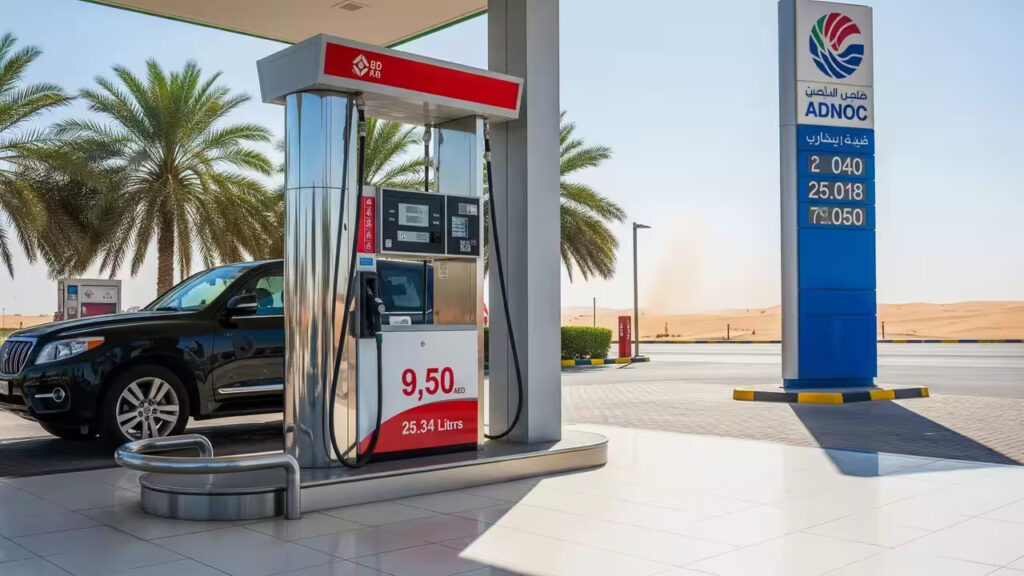
Dubai: UAE motorists could face another change in fuel prices this August after global crude oil climbed above $100 a barrel, reducing the likelihood of a second consecutive month of lower petrol and diesel prices.
International benchmark Brent crude briefly jumped nearly 7% to $100.78 a barrel on Thursday, while US benchmark West Texas Intermediate (WTI) gained up to 5% to $91.78. Murban crude, Abu Dhabi’s key export benchmark, surged 15% to $105.40 a barrel.
Oil prices have now increased for five consecutive trading sessions, reversing much of the earlier decline that helped drive July’s fuel price reductions. The July adjustment lowered prices to Dh3.40 per litre for Super 98, Dh3.29 for Special 95, Dh3.21 for E-Plus 91, and Dh3.60 for diesel, following a period of softer global crude prices.
Under the UAE’s monthly fuel pricing system, retail fuel rates are determined by average global crude oil and refined fuel prices. This means any prolonged increase in international oil markets could influence upcoming fuel price adjustments.
Why this matters for motorists
The UAE reviews petrol and diesel prices every month based on the average international oil prices recorded during the previous month.
This means August fuel prices will not be determined by a single day’s surge, but by the overall trend in crude markets through the rest of July.
If Brent crude continues trading around $95-$100 a barrel until the end of the month, the higher average could put upward pressure on August fuel rates.
However, if the recent price jump proves short-lived and oil prices retreat towards the $80-$85 range, the impact on UAE motorists could be more limited.
What is pushing oil prices higher?
The latest surge in oil prices has been driven by renewed concerns over Middle East energy supplies. Reported attacks on Saudi-linked tankers have heightened fears that key shipping routes connecting the Gulf with global markets could face further disruptions.
Markets are also reassessing geopolitical risks after a period when investors had become more optimistic that regional tensions were easing.
Earlier this month, Brent crude dropped to around $73 a barrel as expectations grew that a US-Iran ceasefire framework and improved shipping conditions would help stabilise oil flows. However, the latest escalation has challenged that outlook and revived supply concerns.
Could July’s outlook be reversed?
Just weeks ago, most major market forecasts suggested that oil prices would continue trending lower during the second half of 2026.
The US Energy Information Administration (EIA) had projected Brent crude would drop below $80 a barrel in the third quarter and move closer to $70 by the end of the year.
Meanwhile, Goldman Sachs expected Brent to average around $80 in the fourth quarter, while Morgan Stanley forecast prices at $90 in the third quarter and $80 in the fourth quarter. Citi maintained one of the most cautious outlooks, predicting Brent would fall to $75 in the third quarter and $70 in the fourth.
These projections were based on expectations of stronger Gulf oil exports, easing geopolitical tensions and continued production increases from OPEC+.
The recent attacks do not necessarily overturn existing oil forecasts, but they have increased uncertainty in the short term. If elevated prices continue, analysts may need to reassess their projections and adjust their market assumptions.
What could happen in August?
The outlook for August fuel prices will largely depend on how long the current oil price surge continues.
Most likely scenario
- Brent crude retreats below $95 a barrel after the initial market reaction fades.
- UAE fuel prices in August remain broadly stable or see only a limited increase.
Higher-price scenario
- Oil prices remain near $100 a barrel or climb further.
- Concerns over supply disruptions intensify.
- UAE fuel prices could increase in August after the reductions announced in July.
Lower-price scenario
- Regional tensions ease rapidly.
- Disruptions to shipping routes remain limited.
- Brent crude falls back towards the low $80s.
- UAE fuel prices stay close to July levels.
What motorists should monitor
Three key factors are expected to influence August fuel prices:
- Whether Brent crude continues trading above the $95-$100 a barrel range for the remainder of July.
- The impact of attacks on oil tanker movements through the Red Sea and Strait of Hormuz.
- Whether OPEC+ proceeds with planned production increases despite renewed geopolitical uncertainties.
Bottom line
July’s fuel price reduction came as global oil markets had largely stabilised after recovering from earlier supply disruptions.
However, renewed geopolitical tensions and rising crude prices have introduced fresh uncertainty over whether motorists will see further relief at the pump in August.
The latest surge above $100 a barrel highlights how quickly geopolitical developments can alter the oil market outlook.
For UAE motorists, it remains too early to confirm whether fuel prices will increase in August, as the country’s pricing system is based on the monthly average of oil prices rather than short-term daily fluctuations.
However, if crude prices remain at current levels throughout the rest of July, the likelihood of higher petrol and diesel prices next month has risen significantly compared with the situation just a week earlier.

