

Aircraft movements increased by 6.8% as the UAE further solidified its position as a leading global aviation hub.
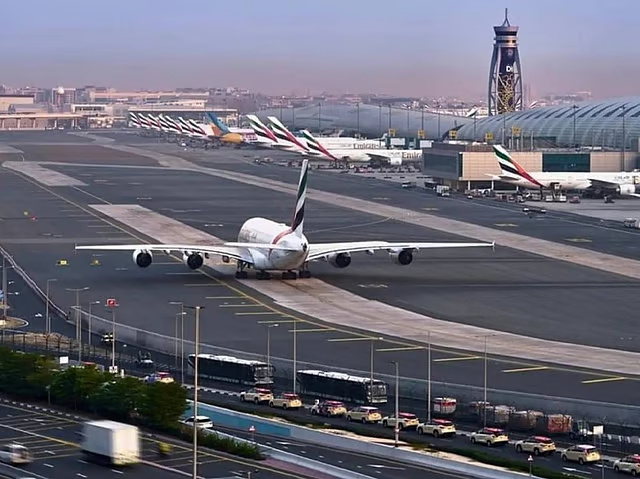
Abu Dhabi: The UAE further strengthened its position as one of the world’s leading aviation hubs in 2025, with passenger traffic across the country’s airports reaching a record 156.8 million — a 6.1 per cent increase from 147.8 million passengers in 2024. Aircraft movements also grew by 6.8 per cent, reaching 855,300 during the year.
The figures, released by the Federal Competitiveness and Statistics Centre (FCSC), underscore the success of the UAE’s long-term aviation strategy, driven by continued investment in airports, infrastructure and logistics capabilities. The growth reinforces the country’s role as a global air transport hub connecting East and West while contributing to economic expansion and sustainable development.
Abdulla bin Touq Al Marri, Minister of Economy and Tourism and Chairman of the General Civil Aviation Authority, said the sector’s strong performance reflects the leadership’s forward-looking vision to develop an advanced and sustainable national aviation ecosystem. He highlighted the role of world-class airports, alongside robust regulatory and operational frameworks aligned with international best practices, in driving the UAE’s continued aviation growth.
He said the results highlight the aviation sector’s increasing contribution to the competitiveness of the UAE’s national economy and further reinforce the country’s position as a major global air transport hub connecting East and West, as well as North and South.
Bin Touq added that national efforts would continue, in collaboration with local and international partners, to strengthen one of the world’s most advanced logistics infrastructures, encompassing airports, airlines and air navigation networks. He noted that the UAE remains focused on developing national talent, improving the passenger experience, expanding strategic global partnerships and providing high-quality transport, travel and logistics services in line with the goals of the ‘We the UAE 2031’ vision.
Hanan Mansour Ahli, Managing Director of the Federal Competitiveness and Statistics Centre, said the aviation figures reflect the efficiency of the UAE’s national ecosystem in supporting the sector’s growth. She noted that the data also demonstrates the country’s ability to leverage statistics as a tool for policymaking, informed decision-making and sustainable economic development.
She added that the centre continues to enhance the national statistical system by delivering high-quality official data aligned with international best practices. These efforts support national performance measurement, strengthen the UAE’s standing in global competitiveness rankings and provide a comprehensive knowledge base for future planning.
According to the centre, total passenger traffic — including arrivals, departures and transit passengers — reached 156.8 million in 2025, an increase of 9 million passengers compared with 147.8 million in 2024.
The number of arriving passengers rose 6.1 per cent to 44.2 million, up from 41.6 million the previous year. Departures increased 3 per cent to 43 million, compared with 41.7 million in 2024, while transit passenger numbers grew 8 per cent to 69.5 million, up from 64.3 million.
By emirate, Dubai’s airports handled 104.5 million passengers in 2025, compared with 100.9 million in 2024, representing a 3.5 per cent increase. The figure included 30.2 million arriving passengers, 29.5 million departing passengers and 44.7 million transit passengers.
Abu Dhabi’s airports recorded 34.2 million passengers during the year, up 10.7 per cent from 30.8 million in 2024. The total comprised 8.3 million arrivals, 7.9 million departures and 17.9 million transit passengers.
Sharjah International Airport also reported 10.7 per cent growth, handling 16.9 million passengers in 2025 compared with 15.2 million the previous year. Passenger traffic consisted of 5 million arrivals, 5 million departures and 6.8 million transit passengers.
Ras Al Khaimah International Airport recorded the highest growth among the UAE’s larger airports, with passenger numbers surpassing one million for the first time. Traffic rose 56.8 per cent to reach more than one million passengers, compared with 639,300 in 2024. The total included 513,900 arriving passengers, 451,400 departing passengers and 37,500 transit passengers.
Fujairah International Airport also recorded notable growth, with passenger traffic rising 170 per cent to 164,600 in 2025, compared with 61,100 the previous year. The airport handled 90,200 arriving passengers, 70,600 departing passengers and 3,700 transit passengers.
The increase extended beyond passenger volumes, with total aircraft movements — including arrivals, departures and domestic connecting flights — rising to 855,300 in 2025 from 801,000 in 2024, marking a 6.8 per cent increase. The growth highlights the capacity of the UAE’s airports and their role as key gateways in global air connectivity.
Incoming aircraft movements increased 7.3 per cent to 414,300, up from 385,900, while departing movements also grew 7.3 per cent to 414,100, compared with 385,800 in the previous year.
The results further reflect the UAE’s strong standing in global aviation competitiveness rankings, with the country securing the top position worldwide for air transport quality in the 2026 IMD World Competitiveness Yearbook.
The UAE also ranked third globally for the efficiency of air transport services and the availability of airline seats per kilometre per million people — key indicators that measure service quality, flight frequency, operational efficiency and international connectivity.
In addition, the country secured eighth place worldwide for the number of operating airlines and ranked 10th for the number of air service agreements in the World Economic Forum’s 2024 Travel and Tourism Development Report, reflecting the strength and reach of its international aviation network.
The UAE further ranked sixth globally in the Air Connectivity Index of the 2023 Future Readiness Economic Index, published by the Institut Descartes for the Future, highlighting the country’s strong integration into the global aviation system.

