

Geopolitical tensions push crude higher, but Fed expects supply strength to limit gains.
Oil prices moved higher in Asian trading on Friday as renewed fighting in the Middle East kept geopolitical concerns in focus. However, a senior US Federal Reserve official said energy prices are expected to moderate over the coming year despite the latest escalation.
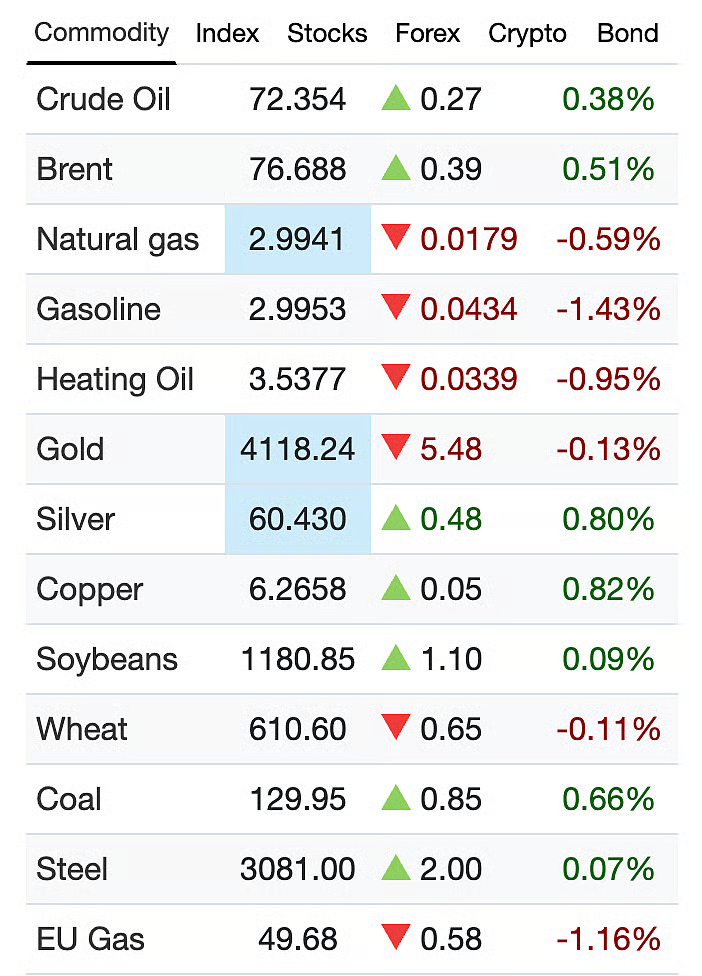
As of 1:27pm Tokyo time, Brent crude gained 52 cents, or 0.68%, to trade at $76.82 a barrel, while West Texas Intermediate (WTI) rose 46 cents, or 0.64%, to $72.54, according to OilPrice.com.
Abu Dhabi’s Murban crude declined 2.99% to $71.37, while natural gas prices edged down 0.13% to $3.008.
US natural gas later slipped 0.59% to $2.99, while European natural gas fell 1.16% to 49.68, suggesting traders remain confident that inventory levels are adequate despite the rise in geopolitical uncertainty.
Refined fuel markets also weakened, with gasoline futures falling 1.43% and heating oil declining 0.95%.
The drop suggests that concerns over near-term fuel demand outweighed some of the upward pressure on prices from higher crude markets.
Markets weigh geopolitical risks against supply fundamentals
Commodity markets have spent much of the past week moving between concerns over potential supply disruptions and confidence that global production remains resilient.
Renewed military activity in the Middle East has added a geopolitical risk premium to oil prices, but traders have so far avoided driving crude sharply higher as exports from major Gulf producers continue largely uninterrupted.
Friday’s trading highlighted the delicate balance currently shaping global commodity markets. While geopolitical tensions are supporting energy prices, expectations of sufficient supply, easing inflation pressures and steady global growth are limiting the scope of a broader commodity rally.
Oil expected to decline over the next 6 to 12 months: New York Fed
Despite renewed hostilities in the Middle East, New York Federal Reserve President John Williams said the central bank still expects energy prices to ease over the next six to 12 months, arguing that underlying market fundamentals remain stable.
“I still feel … the fundamentals are that energy prices are likely to be around their peak and then to come down over time,” Williams said during a conference, even as the US-Iran ceasefire effectively collapsed and military exchanges resumed across the region.
His comments reflect the Fed’s view that global oil supply will eventually outweigh geopolitical disruptions, reducing one of the key risks to inflation.
However, that outlook is now facing renewed pressure as tensions in the region continue to escalate.
Over the past week, crude markets have swung between optimism over diplomatic developments and concerns that the conflict could escalate further.
Traders have reassessed supply risks following attacks on commercial shipping linked to Iran, US strikes inside Iran and growing fears that a prolonged conflict could disrupt traffic through the Strait of Hormuz. The key energy corridor handles around one-fifth of global oil consumption and roughly one-third of the world’s seaborne crude trade.
So far, however, no lasting disruption to the waterway has occurred, helping to limit further gains in crude prices.
Metals show mixed performance
Precious and industrial metals moved in different directions during the session.
Gold, often considered a safe-haven asset during periods of geopolitical uncertainty, slipped 0.13% to $4,118.24, suggesting investors were not moving aggressively into defensive assets despite renewed military activity.
Meanwhile, silver gained 0.80% and copper rose 0.82%, reflecting optimism around industrial demand and expectations that infrastructure spending and artificial intelligence-related investment will continue to support consumption of key industrial metals.
Inflation risks remain
Energy prices continue to be a major focus for policymakers, as higher crude costs can eventually feed through to gasoline, diesel, aviation fuel, freight expenses and broader consumer prices.
A prolonged rise in oil prices could complicate the Federal Reserve’s efforts to bring down inflation by delaying interest-rate cuts or potentially prompting a more restrictive monetary policy stance.
Williams avoided indicating how the Federal Open Market Committee may act at its next meeting, stressing that future decisions will depend on incoming economic data.
He added that strong investment in artificial intelligence infrastructure is supporting economic activity and could keep inflation pressures elevated in the near term, even as productivity improvements may eventually help offset some of those effects.
Market caught between geopolitics and fundamentals
Analysts say oil traders remain positioned between two competing forces.
On one side, expectations of higher production from major exporters and a recovery in Gulf supplies point towards a more balanced market later this year.
On the other hand, renewed military exchanges between Washington and Tehran have brought back a significant geopolitical risk premium that investors had started to remove after earlier ceasefire efforts.
For now, crude prices remain well below the triple-digit levels briefly reached during the peak of the conflict earlier this year, indicating that markets still expect any supply disruptions to be temporary.
In the days ahead, oil markets are likely to be driven less by economic forecasts and more by developments in the Middle East, where diplomatic efforts continue alongside ongoing missile and drone threats that could challenge expectations that energy prices have already reached their peak.

