

Philippine passport appears in different positions across global rankings due to varying methods.
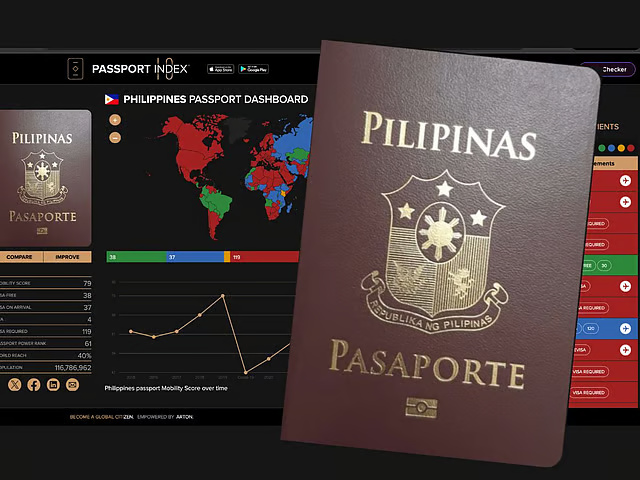
Manila: The Philippine passport has recorded another modest improvement in global travel mobility, according to the latest Passport Index dashboard.
The data highlights gradual gains in visa access, even as Filipino travellers continue to face visa requirements across much of Europe—particularly the 29-member Schengen area—North America and other major destinations.
The latest dashboard shows the Philippine passport with a Mobility Score of 79, granting access to 79 destinations through a mix of 38 visa-free destinations, 37 visa-on-arrival countries and 4 electronic travel authorisation (eTA) destinations.
Passport Index also ranks the Philippine passport 61st in its Passport Power Rank.
The Henley Passport Index ranked the country 66th in May, with visa-free or visa-on-arrival access to between 67 and 75 destinations at that time.

Visas are still required for 119 destinations for Filipino passport holders, reflecting a global reach of around 40 per cent.
The dashboard figures point to a slight improvement from Passport Index’s published 2026 listing, which shows a mobility score of 78 and a rank of 62, indicating that the platform has updated its real-time database following recent changes in bilateral visa policies.
The Passport Power Rank measures the level of travel freedom a passport provides its holder. The Philippine passport offers relatively strong mobility within Southeast Asia, along with expanding access across parts of Latin America, the Middle East, Africa, Oceania and the Caribbean.
Filipino passport holders can travel visa-free within ASEAN, as well as to Hong Kong and Macau, while several other destinations also offer convenient visa-on-arrival or eVisa options.
| Category | Territories/Countries | Notes |
|---|---|---|
| Visa-Free | Barbados, Bolivia, Brazil, Brunei, Cambodia, Colombia, Costa Rica, Côte d’Ivoire (Ivory Coast), Dominica, Fiji, Haiti, Hong Kong, Indonesia, Kazakhstan, Kiribati, Laos, Macao, Malaysia, Micronesia, Mongolia, Morocco, Myanmar, Paraguay, Peru, Rwanda, Singapore, St. Vincent and the Grenadines, Suriname, Taiwan (extended to July 31, 2026), Tajikistan, Thailand, Vanuatu, Vietnam, Cook Islands | Direct entry with a valid passport; no prior application or fee required. Durations vary, making it suitable for spontaneous travel. |
| Visa on Arrival (VOA) | Burundi, Comoros, Djibouti, Ethiopia, Guinea-Bissau, Madagascar, Maldives, Marshall Islands, Mauritius, Nicaragua, Palau, Saint Lucia, Samoa, Senegal, Timor-Leste, Trinidad and Tobago, Tuvalu, plus hybrids such as Iran, Kyrgyzstan and Nepal | Issued at the airport or port upon arrival, often requiring a fee, onward ticket and proof of funds or accommodation; typically allows stays of 30–90 days. |
| eVisa/eTA/Entry Clearance | Armenia, India, Nepal, Sri Lanka, Uzbekistan, Gabon, Guinea, Mauritania, South Sudan, Tanzania, Togo, Uganda, Ukraine, Papua New Guinea (eVisitors), Seychelles, Gambia | Requires online application before travel; generally quick approval and low or no fees. Some destinations also allow a choice between eVisa or VOA. |
When Passport Index places the Philippine passport at 61st globally, it indicates that Filipino travellers enjoy relatively broad access compared to many other nationalities, although it still trails the world’s most powerful passports.
Passport Index regularly updates its rankings as countries revise visa policies or introduce new travel agreements.
The index’s latest “dashboard” also reflects the Philippines’ broader recovery in international mobility following the pandemic and amid the Middle East conflict.

After mobility scores fell sharply during the global travel shutdown in 2020, the country’s travel access has steadily rebounded since 2021, before reaching one of its strongest performances in recent years.
Challenge for Filipino diplomats
The Philippine passport still ranks behind several of its Southeast Asian neighbours.
Countries such as Singapore, Malaysia and Thailand generally offer broader visa-free access to their citizens, reflecting long-standing diplomatic agreements and reciprocal travel arrangements.
Travel analysts note that passport rankings are shaped by international diplomacy, reciprocal visa waivers, security cooperation and immigration policies, rather than economic strength alone.
While new visa exemptions or electronic travel authorisation systems can quickly improve mobility scores, geopolitical developments such as conflicts or trade tensions can reduce travel access just as rapidly.
Economic gains
The Philippine economy, despite reports of large-scale infrastructure-related corruption allegations and geopolitical challenges, has recorded notable improvements. Within Southeast Asia, the Philippines’ GNI per capita currently sits around the middle of the developing market range.
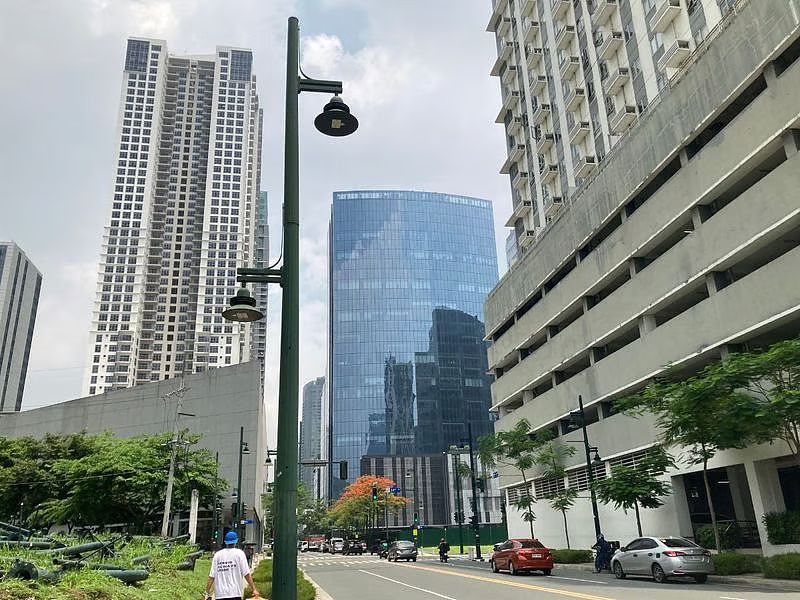
The Philippines came close to reaching Upper-Middle-Income Country (UMIC) status, falling short by just $26, according to World Bank data for fiscal year 2026.
Different methodologies
Comparisons between global passport rankings should be made with caution, as major indexes rely on different methodologies.
Passport Index, operated by Arton Capital, calculates mobility by combining visa-free, visa-on-arrival and other entry arrangements into its proprietary scoring system.
By contrast, the Henley Passport Index ranks passports primarily based on the number of destinations accessible without obtaining a visa prior to departure, using data from the International Air Transport Association (IATA).
Because of these methodological differences, the same passport can appear at different positions across competing global rankings.
Recent media reports have also shown varying figures for the Philippine passport, reflecting updates published at different times throughout the year.
Some reports previously cited a mobility score of 77 with slightly different rankings, before later Passport Index revisions updated the country’s score upward.
For Filipino travellers, the latest dashboard nevertheless points to a positive trend of gradual gains in international mobility.
While visas are still required for many high-demand destinations, including much of the Schengen Area, the United States and Canada, the latest Passport Index data suggests that Philippine passport holders now enjoy their broadest level of travel access in several years, highlighting steady progress in the country’s global mobility profile.

