

EV sales are rising rapidly in the UAE, but buyers are advised to look beyond price and driving range.
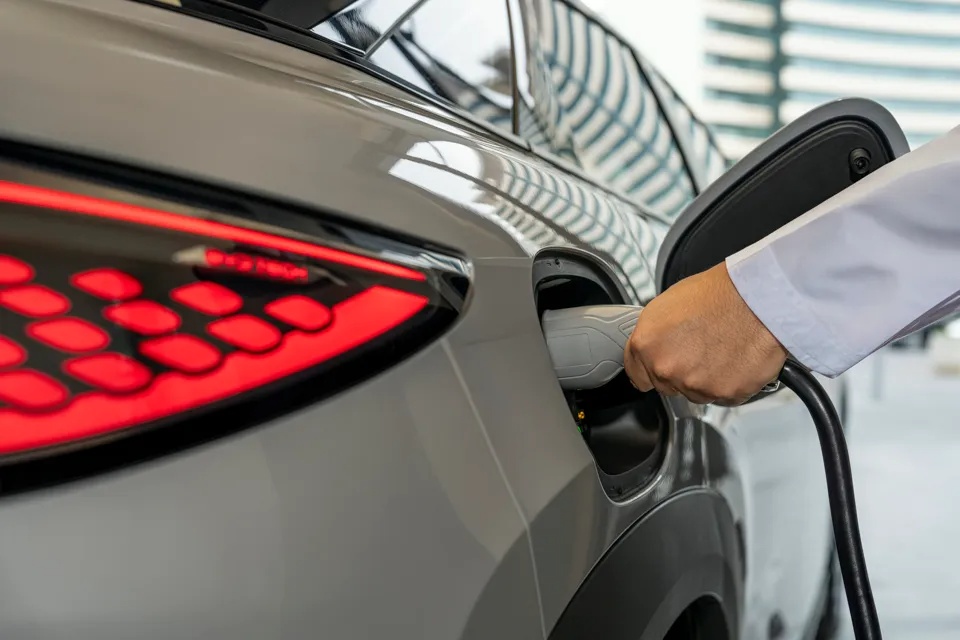
Dubai: A few years ago, electric vehicles (EVs) in the UAE were considered a niche choice, but today they are firmly moving into the mainstream.
In 2021, fewer than 3,000 new EVs were registered in the UAE. By 2024, annual registrations had risen to over 16,000, marking a nearly sixfold increase. Including hybrids, there are now more than 147,000 electric and hybrid vehicles on UAE roads, with registrations growing by over 25% year-on-year.
This acceleration is not happening by accident. Government sustainability targets, continued investment in charging infrastructure, rising fuel prices and a growing number of competitively priced EV models—particularly from newer global manufacturers—are all driving adoption. The UAE’s long-term ambition to have 50% of vehicles electrified by 2050 further underscores the scale of the transition underway.
Yet while buying an EV is becoming easier, ownership is not always straightforward.
Get it right, and you’ll enjoy a smooth, cost-efficient, future-ready driving experience. Get it wrong, and you could face challenges related to servicing, insurance, and long-term ownership costs.
Not all EVs are equal
The expanding range of EV options is good news for consumers, but it also brings significant variation in quality, aftersales support and long-term reliability.
For today’s buyers, the questions are no longer limited to affordability or range. The key consideration is whether a particular model is adequately supported in the local market.
EVs are often described as lower-maintenance vehicles, and in many ways this is true. Fewer moving parts reduce the need for routine servicing. However, when issues do arise, the repair process is very different.
Some vehicles benefit from established service centres, readily available parts, and technicians trained to handle high-voltage systems. Others are newer to the region and are still developing that support ecosystem. For owners, this can result in longer repair times, higher costs, and uncertainty around resale value.
This is particularly relevant in the UAE, where high temperatures, long-distance driving and daily usage patterns place additional demands on batteries and electronic systems. Where local servicing capability does not keep pace with vehicle adoption, ownership friction can emerge.
How the market is evolving and where insurance fits in
Specialist service providers such as EVS are beginning to help bridge this gap by focusing on electric vehicle diagnostics, repairs and high-voltage systems tailored to local conditions. However, consumer awareness of these differences remains limited, and many buyers only recognise their importance after experiencing a fault or service delay.
Battery systems, high-voltage components and advanced electronics require specialised equipment and trained technicians. Not every workshop is equipped to handle them safely or efficiently. As EV adoption grows, confidence in aftersales capability has become a key factor in ownership decisions.
The insurance ecosystem is also evolving. Repair complexity, battery-related risks and limited long-term claims data mean premiums and coverage terms can vary significantly.
Some insurers have already begun refining EV coverage structures to better reflect real-world driving conditions, repair practices and parts availability. At the same time, digital insurance aggregators are helping drivers compare policies more clearly and understand the practical differences between them.
This shift is further supported by the expansion of charging infrastructure in the UAE, with plans to grow beyond 1,000 charging stations in the near term. The country already ranks among the more advanced EV markets globally in terms of charging accessibility, but for buyers it remains a key consideration in purchase decisions.
Access to home charging, driving habits and daily mileage all play an important role in the ownership experience. An EV with strong specifications on paper may feel impractical if it does not align with how and where it is used. Inconsistent access to charging can quickly erode the benefits of electric mobility, and for many first-time buyers, this only becomes apparent after purchase.
Where the market still needs to catch up
Buying an EV today is no longer just about selecting a vehicle; it is about choosing an entire ecosystem that includes charging access, servicing capability and insurance protection.
Get it right, and ownership can be smooth, cost-efficient and genuinely rewarding. Get it wrong, and drivers may face delays, higher costs and ongoing inconvenience.
The good news is that the UAE market is evolving rapidly. Charging infrastructure is expanding, specialist service providers such as EVS are strengthening technical support, and insurers are adapting products to better reflect the realities of EV ownership. In parallel, digital platforms such as Shory are enhancing the insurance experience by enabling seamless policy comparisons through a single, intuitive interface, while also allowing users to secure coverage instantly, bringing greater transparency and convenience to EV owners.
As adoption accelerates, the EV ownership experience is expected to improve further. For now, taking the time to understand the full journey—from purchase to maintenance and insurance—remains the key difference between a seamless experience and a frustrating one.

