

Approved cargo vehicles on Oman corridor routes to benefit from Sharjah toll exemptions.
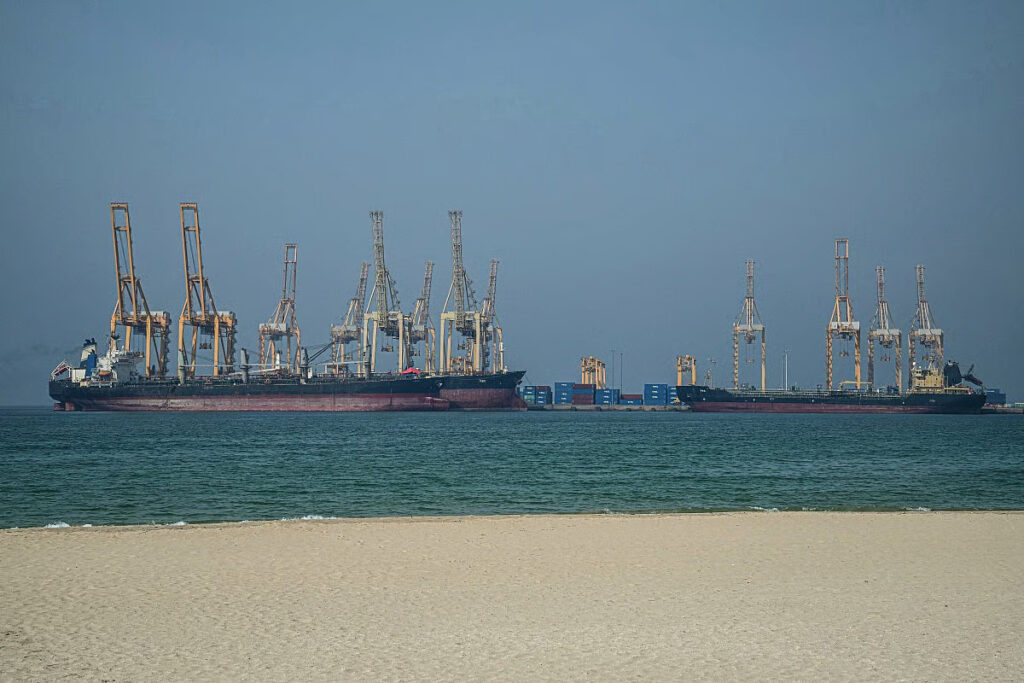
Sharjah: Sharjah’s newly launched integrated logistics corridor with Oman has reduced cargo transit times from approximately three months to just 35 days. As part of the initiative, trucks operating on approved routes from Oman through Sharjah will also be exempt from toll gate charges across the emirate.
The initiative is expected to reduce costs for importers, exporters, manufacturers and logistics providers, while offering faster and more reliable supply chain solutions at a time when businesses across the Gulf are increasingly seeking greater efficiency and resilience in regional trade networks.
Abdul Aziz Al Shamsi, Assistant Director-General for Communication and Business Sector at the Sharjah Chamber of Commerce and Industry, told Gulf News that the corridor was established to streamline cargo movement, reduce transit delays and support businesses trading between the UAE, Oman and other regional markets.
“The transit time used to be around three months, and with the new services, including Khorfakkan Port and this corridor, it has been reduced to 35 days,” Al Shamsi said.
He noted that the initiative is designed to enhance supply chain efficiency, strengthen regional trade connectivity and provide businesses with faster access to key markets across the Gulf and beyond.
Al Shamsi said authorities expect transit times to improve further as the corridor becomes fully operational and logistics processes are refined.
“We expect that number to come down further,” he said.
Toll exemption to reduce transport costs
As part of the initiative, Sharjah has introduced a toll exemption for cargo trucks arriving from Oman via the approved logistics corridor. The exemption applies to vehicles entering through the Khatmat Malaha Border Crossing and Al Madam Border Crossing, provided the shipments are registered on designated corridor routes.
The measure forms part of a broader logistics package aimed at improving efficiency and lowering costs. Additional benefits include faster customs clearance procedures at border crossings, fewer cargo transfer stages and smoother movement of goods between ports, border checkpoints and inland container facilities.
The Khatmat Malaha Border Crossing is located about 70 kilometres from Port of Sohar, providing cargo operators with a shorter overland route into Sharjah and onward to UAE ports, free zones and industrial hubs. Meanwhile, Al Madam Border Crossing connects directly with the Wilayat of Mahdha, further strengthening the corridor’s role as a strategic regional trade link.
Al Shamsi said the new system offers greater operational flexibility by allowing companies to defer customs clearance until cargo reaches designated inland facilities.
“They do not have to clear the goods at the border immediately. They can move them to one of the inland container terminals in Sharjah and complete the clearance there later,” he said.
He added that the approach is expected to make cargo movement more efficient and cost-effective, with businesses potentially achieving cost savings of around 15 per cent, although the exact reduction will depend on factors such as cargo type, route and logistics operator.
Al Shamsi said the savings will vary depending on the nature of the shipment and the logistics arrangements involved, but businesses can generally expect meaningful reductions in transport and handling costs.
“I cannot give a specific number, but in general, we are talking about around 15 per cent,” he said.
Why the route matters now
The logistics corridor links Sharjah with Oman’s key maritime gateways — Port of Sohar, Port of Duqm and Port of Salalah — through a network of land border crossings, with Sohar serving as the primary hub due to its close proximity to the UAE. Operating mainly through the Khatmat Malaha Border Crossing and Al Madam Border Crossing, the corridor creates direct logistics links between ports, industrial zones and commercial centres in both countries.
Live operations began on May 14 following the completion of technical and coordination procedures between the relevant authorities. The first shipments were transported from Port Khalid to Sohar Port via the Khatmat Malaha crossing in Kalba, and cargo movement is now taking place in both directions, supporting faster and more integrated trade flows between the UAE and Oman.
When asked whether recent geopolitical developments had accelerated the rollout of the corridor, Al Shamsi said they had played a role, although the route itself was not new and had previously been in use.
“This is one of the reasons, of course,” he said. “We were already using it before, but what we have done now is build a better infrastructure and a clearer process for how the goods should be cleared.”
He explained that the latest phase of the project focused on enhancing infrastructure, streamlining procedures and strengthening coordination with Omani authorities to improve the movement of cargo across the border.
“What we did was refurbish this route and reach a new understanding with the relevant government entities in the Sultanate of Oman to make customs clearance much smoother,” he said.
According to Al Shamsi, the upgraded corridor is designed to provide businesses with a more efficient and predictable logistics route, reducing administrative bottlenecks and improving cross-border trade between the UAE and Oman.
Manufacturers set to benefit
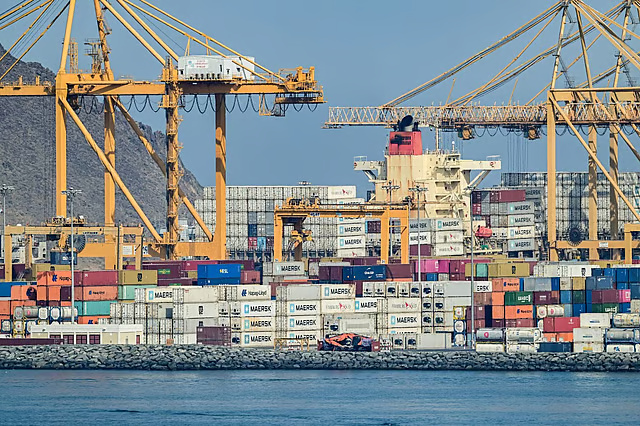
The new logistics corridor is expected to provide significant advantages for manufacturers in Sharjah by enabling faster access to raw materials and reducing delays in the export of finished products, particularly for businesses operating within the emirate’s free zones and industrial areas.
Al Shamsi said the route offers companies greater flexibility by allowing goods to be imported from Oman into the UAE, transported through Sharjah as a transit hub, or exported from the UAE into Oman and onward to regional and international markets.
“That is exactly what this corridor is meant for. It is designed to make logistics easier,” he said. “Companies can import from Oman and use Sharjah as a transit point into the UAE, or move goods from the UAE through this route.”
He added that faster and more efficient movement of raw materials would help manufacturers maintain production schedules, reduce supply chain disruptions and improve the efficiency of their export operations.
“This reduces transit time and makes the process more efficient,” Al Shamsi said.
The initiative is also intended to strengthen Sharjah’s position as a regional logistics and manufacturing hub. According to Al Shamsi, the emirate is home to more than 3,000 factories, with the industrial sector accounting for around 25 per cent of Sharjah’s gross domestic product (GDP).
He noted that manufacturing remains a key economic priority for the emirate, supported by strong international demand for products made in Sharjah.
“We have prioritised manufacturing and the industrial sector because it is one of the main pillars of Sharjah’s economy,” he said.
By improving connectivity with Oman and streamlining cargo movement, the corridor is expected to enhance the competitiveness of local manufacturers, support export growth and reinforce Sharjah’s role as a strategic gateway for regional trade and industry.
Sharjah seeks larger role in regional trade
The logistics corridor forms part of Sharjah’s broader strategy to strengthen its position as a regional trade and logistics hub, particularly for companies seeking efficient access to markets in East and West Africa, India and other parts of Asia.
Al Shamsi said the emirate has seen growing interest from international investors, including those from China and India, who view Sharjah as an attractive base for regional export operations.
“We have been to several places, including China and India, and they are all looking to have a hub here to export to East and West Africa,” he said.
He noted that Sharjah’s strategic location, established industrial base and expanding logistics infrastructure are helping to attract businesses looking for a gateway to key growth markets across Africa, the Gulf and Asia.
Al Shamsi said India remains one of Sharjah’s most important trading partners, with significant volumes of lubricants, food products and other goods moving between the two markets through major Indian ports.
“India is one of our main markets, with a lot of our exports and imports moving to and from there,” he said.
He noted that a substantial share of these trade flows passes through Mundra Port and Jawaharlal Nehru Port (Nhava Sheva), with some product categories seeing as much as 60 per cent of shipments routed through the two gateways.
Al Shamsi added that Sharjah already has logistics arrangements in place through Nhava Sheva, enabling goods to move in transit to the emirate, while other shipments are transported directly depending on shipping line operations.
“We already have logistics arrangements through Nhava Sheva, where goods can move in transit from there to Sharjah, while some shipments move directly depending on shipping line operations,” he said. “There will be an announcement soon on how this will be structured.”
The planned framework is expected to further strengthen trade links between Sharjah and India, while supporting the emirate’s ambition to serve as a regional distribution and export hub connecting Asia, the Gulf and Africa.
Built for daily cargo movement
During the Introductory Seminar on the Integrated Logistics Corridor held on Tuesday, officials said the route has been developed as a unified operational ecosystem linking ports, border crossings, customs systems and transport services.
Sharjah’s strategic access to both the Arabian Gulf and the Gulf of Oman, along with direct land connections into Oman, gives the emirate a strong geographic advantage in building regional logistics corridors.
Authorities noted that thousands of vehicles already cross the border daily, supported by advanced infrastructure, integrated road networks and coordinated border operations.
Customs clearance can now be carried out directly at border points, supported by faster procedures and closer coordination between relevant authorities on both sides. The system also features fast-track shipment lanes, pre-processing of cargo data, supervised direct transport under customs oversight and real-time data exchange to streamline cargo movement and reduce delays.
The corridor is expected to facilitate import, export and re-export operations, while providing companies in Sharjah’s free zones and industrial zones with quicker access to regional and international markets.
Al Shamsi said the objective is to develop a long-term logistics platform that supports business continuity and growth beyond the current period of regional uncertainty.
“This may be a temporary period, but we are looking beyond that. Having a logistics hub in Sharjah and the UAE will always attract investors,” he said.

