

Set to begin operations in 2032, Al Maktoum International will feature a 14-station underground multi-track train system. Here’s what a passenger journey could look like.

Dubai’s future airport is being built around a simple concept: eliminating queues from the passenger journey.
At Al Maktoum International Airport, travellers may be able to check in before reaching the terminal, with luggage dropped off in advance and processed automatically. Inside the airport, automated people movers will connect terminals and concourses, while advanced baggage systems are designed to handle tens of thousands of bags per hour. The wider hub will integrate road, rail, and air transport into a single seamless network.
This is the vision being developed at the Dh128-billion project at Dubai World Central, which is expected to start operations in 2032 and eventually grow into the world’s largest aviation hub.
Check-in before reaching the airport
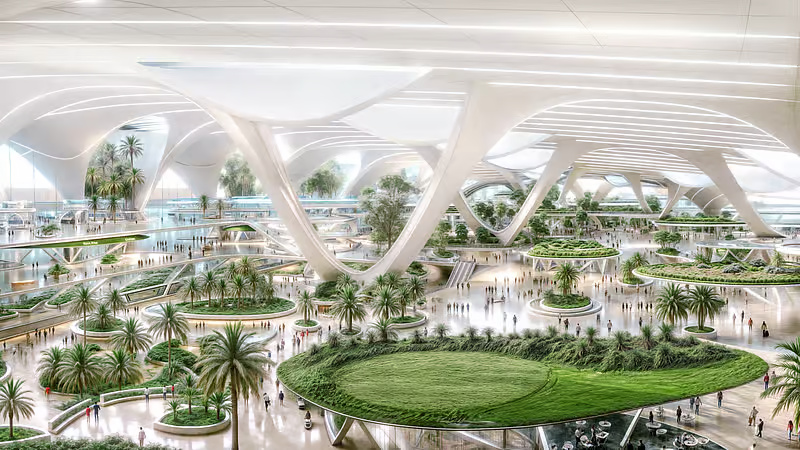
Passengers using Al Maktoum International Airport may be able to complete most travel formalities before arriving at the terminal.
In an earlier interview with Paul Griffiths, he said the future airport would be built around a “no red lights” concept, designed to eliminate queues for check-in, immigration, security, customs, and other processes after arrival.
Instead, travellers could check in and drop off luggage before or during their trip to the airport, arriving at DWC ready to proceed quickly through the terminal.
Griffiths said the goal is to give passengers greater control over their journey, allowing them to spend more time in shops, restaurants, or lounges rather than waiting in processing lines.
Given the scale of Al Maktoum International Airport, passengers will not depend solely on walking to move between its key zones.
The airport is planned to include an integrated underground Automated People Mover (APM) system featuring a multi-track, 14-station network. This system will transport passengers between terminals and concourses, enabling faster and more seamless transfers, particularly for connecting travellers who need to reach onward flights efficiently.
The wider design also includes multimodal connectivity, linking air, rail, and road transport into a single integrated ecosystem rather than a standalone airport.
Etihad Rail may include a stop at Dubai World Central, potentially allowing passengers to check in at train stations before reaching the airport.
A separate Airport Express Line is also being studied to enhance connectivity between Dubai’s two airports. According to a MEED report based on an RTA tender, consultants are exploring a 55km link between Dubai International Airport and Al Maktoum International Airport, running from the Red Line Metro station at DXB in Al Garhoud to DWC in Jebel Ali, with five stations planned along the route.
The airport’s baggage handling system will be designed to process tens of thousands of bags per hour.
Automated systems will move, screen, and distribute luggage across the airport, streamlining departures, arrivals, and transfer processes.
For arriving passengers, the goal is to significantly reduce waiting times, with baggage expected to be delivered within minutes of landing.
A vast passenger terminal zone
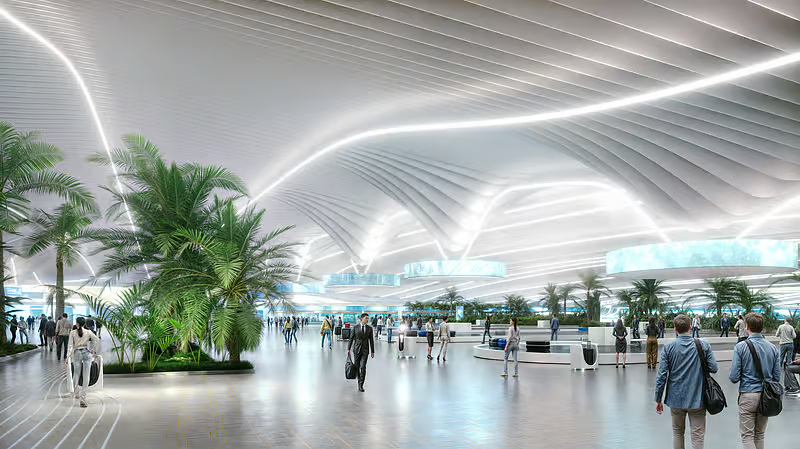
The airport will also feature a large passenger terminal area designed to support high volumes of travellers while maintaining fast, automated processing throughout the journey.
Once fully developed, Al Maktoum International Airport is expected to become the world’s largest aviation hub.
The airport is planned to accommodate more than 260 million passengers annually and handle around 12 million tonnes of air cargo once its final phase is complete.
Its long-term design includes five parallel runways capable of operating independently, along with two passenger terminals and seven concourses connected to over 430 aircraft stands.
Together, these elements are intended to support very high levels of passenger, cargo, and aircraft movement, reinforcing Dubai’s position as a global hub for travel, trade, tourism, and logistics.
All operations to move to Al Maktoum airport
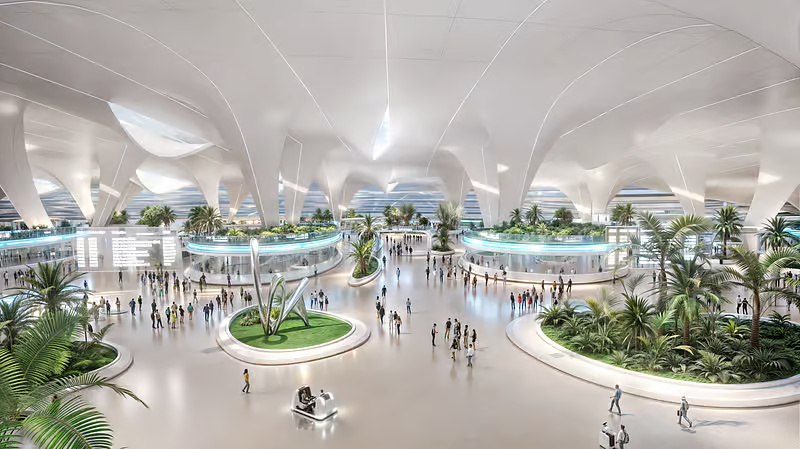
In the final phase of development, all aviation operations are expected to be transferred to Al Maktoum International Airport, consolidating Dubai’s airport activity into a single, large-scale aviation hub.
Officials say preparations are underway to ensure a smooth and carefully managed transfer of operations from Dubai International Airport to the new airport, while maintaining the service standards associated with Dubai’s aviation sector.
Sheikh Mohammed bin Rashid Al Maktoum previously stated that the new airport would be five times the size of DXB, with all operations set to be relocated in the coming years.
Paul Griffiths also told that the Dh128-billion terminal at Al Maktoum International Airport would increase annual capacity to around 260 million passengers, enabling it to fully absorb DXB’s operations within roughly a decade.
Once the transition is complete, DXB is expected to close, with Griffiths noting there would be little business case to operate both airports due to DXB’s proximity to the city.

