

UK firms are leveraging Dubai as a gateway to new markets as Europe becomes more difficult to navigate.
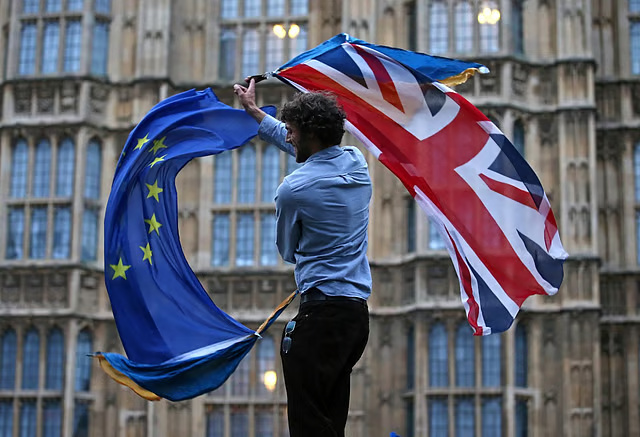
Dubai has emerged as a key beneficiary of the UK’s post-Brexit shift beyond Europe, with UK–UAE trade reaching £25 billion in the four quarters to Q4 2025, a decade after the referendum.
Increased friction in UK–EU trade—from customs processes and rules-of-origin requirements to regulatory checks—prompted many firms to rethink where they could most efficiently grow, raise capital and serve clients.
That shift has played to Dubai’s advantage. Over the years, the emirate has developed key strengths that internationally mobile companies seek, including global connectivity, free-zone infrastructure, tax competitiveness, advanced professional services, financial regulation via the Dubai International Financial Centre (DIFC), and access to markets across the Gulf, Africa and South Asia.
Brexit pushed companies to think beyond Europe
Before Brexit, many UK firms viewed Europe as the natural starting point for international expansion. The referendum and subsequent trading changes altered that assumption, particularly for businesses exposed to goods trade, supply chains and EU regulations.
The UK’s post-Brexit trading arrangements have increased paperwork, extended lead times and raised administrative costs for many exporters. The Office for Budget Responsibility estimates that the new relationship will reduce long-run UK productivity by around 4% compared with remaining in the EU.
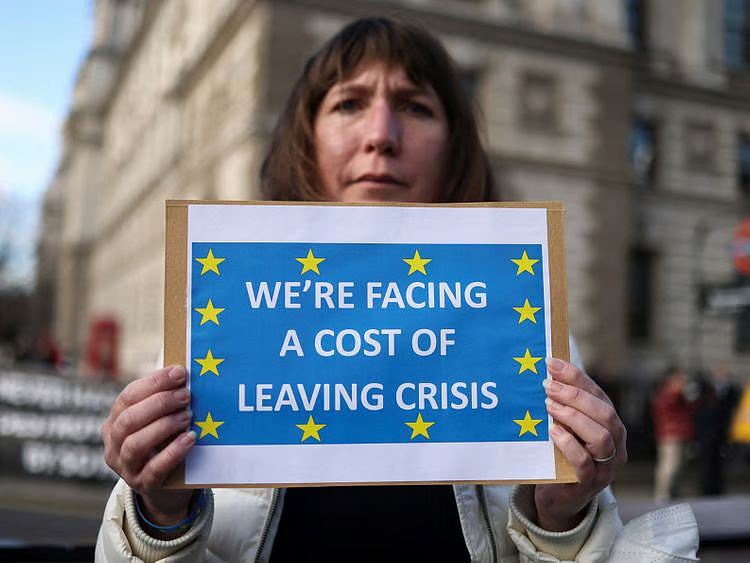
Larger companies have generally been better positioned to adjust, restructuring supply chains, establishing EU entities, adapting logistics and expanding into non-European markets. Smaller firms, however, have faced greater strain, as compliance and market-entry costs weigh more heavily on them.
Brexit introduced new layers of complexity for many companies trading with Europe, particularly in areas such as regulation and supply chain management. At the same time, it prompted many businesses to take a more proactive approach to global expansion beyond traditional European markets.
Katy Keenan, CEO of the British Chamber of Commerce Dubai, noted that Brexit has reshaped how UK firms approach international growth, making overseas expansion more deliberate and strategically targeted.
Dubai became part of the answer
Dubai’s advantage has emerged from the convergence of two trends: Brexit encouraging British businesses to look beyond Europe, and the UAE’s long-standing strategy of positioning itself as a global business hub with world-class infrastructure, a diverse international workforce and direct access to fast-growing markets.
The city has become especially attractive for UK firms seeking to maintain strong links with London while operating closer to clients, investors and decision-makers across the Middle East, Africa and South Asia.
As a result, many businesses are increasingly adopting a dual-base model, retaining London as a core headquarters while using Dubai as a strategic hub for regional expansion.
Dr Jelena Janjusevic, Associate Professor of Finance at Heriot-Watt University Dubai, said Brexit accelerated a broader shift of capital, companies and talent towards globally connected business hubs.
Dubai has clearly benefited from this realignment. The UAE has emerged as one of the UK’s most significant non-European commercial partners, with total UK–UAE trade reaching £25 billion in the four quarters to Q4 2025.
UK exports to the UAE stood at £14.9 billion in the four quarters to Q1 2025, ranking the UAE as the UK’s 18th largest export market. This positions the country as a key non-European trading partner as the UK seeks to deepen commercial ties with faster-growing global regions.
Finance and services leading the shift
The strongest post-Brexit UK–Dubai connections have developed in finance, fintech, professional services, real estate and entrepreneurship—sectors where the UK has established expertise and Dubai continues to see strong demand and investment growth.
According to industry experts, London provides depth in capital markets, legal services, consulting, insurance and advisory expertise, while Dubai offers access to regional capital pools, family offices, sovereign wealth funds, regional headquarters and high-growth emerging markets.
Fintech has emerged as a key growth channel, supported by Dubai’s innovation-focused agenda and rising regional demand for digital finance, payments, wealth technology, regtech, sustainable finance and AI-driven financial services. The expansion of the Dubai International Financial Centre (DIFC) into fintech, innovation and wealth management has further strengthened this position.
Professional services have expanded alongside the movement of capital and companies. As firms scale across borders, demand has grown for legal, accounting, consulting and advisory services, while real estate continues to attract British investors seeking diversification, lifestyle advantages and long-term wealth preservation.
Dubai has attracted more than Dh426 billion in foreign direct investment (FDI) since 2015, with over half of those inflows directed into high- and medium-technology sectors. This reinforces its positioning as a hub where companies can raise capital, access talent and scale operations across multiple regions.
UK trade strategy shifts towards the Gulf
While the post-Brexit adjustment phase has largely stabilised, the strategic reorientation it triggered continues to evolve. The UK has joined the Comprehensive and Progressive Agreement for Trans-Pacific Partnership, which came into force for Britain on 15 December 2024, and concluded negotiations on a UK–GCC Free Trade Agreement in May 2026.
These developments reflect a broader UK strategy to expand trade links beyond Europe, with the Gulf emerging as a central focus. Within this context, Dubai is particularly well positioned to benefit, given its role as a regional headquarters hub for multinational companies.
The proposed UK–GCC agreement is expected to enhance trade and investment certainty between Britain and Gulf economies, supporting longer-term commercial engagement across the region. For Dubai, this could further strengthen its position as a key bridge connecting UK firms to high-growth markets across the Middle East, Africa and Asia.
Katy Keenan said the Gulf is increasingly becoming a strategic platform for British companies seeking growth beyond Europe.
She added: “For Dubai, this creates an opportunity to strengthen its role as a bridge between the UK and the wider region. For UK companies, the Gulf serves as a launchpad for expansion across the Middle East, Africa and Asia.”
Brexit was the catalyst, not the whole story
Dubai’s emergence as a base for British businesses cannot be attributed to Brexit alone. The UAE’s long-term policy direction has played a central role, including pro-business regulation, sustained infrastructure investment, strong global connectivity, free-zone ecosystems, visa reforms, tax competitiveness and a lifestyle offering that continues to attract international talent.
Brexit encouraged British companies to diversify their global footprint, but Dubai gained an advantage because it already had the infrastructure and ecosystem in place. Firms seeking access to clients, capital and regional decision-makers increasingly view the emirate as part of a broader global operating model.
While Brexit prompted many companies to reassess their geographic priorities, Dubai’s strength lies in offering a practical and well-established base from which businesses can execute that strategic shift.

