

Global innovators and industry leaders to gather in Abu Dhabi for the Forbes Middle East Building the Future Summit 2026.
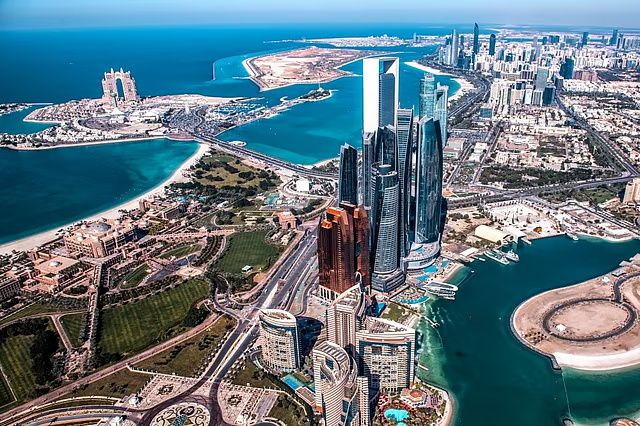
Abu Dhabi: The Abu Dhabi Projects and Infrastructure Centre (ADPIC) is spearheading one of the UAE’s largest government-led development initiatives, overseeing a capital investment portfolio exceeding Dh200 billion ($54.5 billion).
The portfolio encompasses more than 600 active projects across key sectors, including housing, transportation, healthcare, education, tourism and community infrastructure.
This expansive development pipeline underscores Abu Dhabi’s long-term vision to diversify its economy beyond oil, enhance residents’ quality of life and strengthen the emirate’s position as a leading global destination for business, tourism and innovation.
ADPIC is responsible for coordinating the planning, execution and monitoring of major public infrastructure projects, ensuring they support the UAE’s broader economic growth and urban development objectives.
Among its key projects are the development of new residential communities, expanded road and transport infrastructure, healthcare facilities, educational institutions, cultural destinations and public amenities aimed at meeting the needs of Abu Dhabi’s growing population while promoting sustainable urban growth.
Forbes Middle East Building the Future Summit 2026 opens in Abu Dhabi
The significance of Abu Dhabi’s ambitious infrastructure and development agenda was underscored as the second edition of the Forbes Middle East Building the Future Summit 2026 gets underway in Abu Dhabi on June 23, 2026. Held under the patronage of the UAE Ministry of Energy and Infrastructure, the two-day event is bringing together around 3,000 policymakers, business leaders and industry experts to explore the future of sustainable urban development across the Middle East and North Africa.
Organised by Forbes Middle East in partnership with One Development, the summit will focus on key themes including infrastructure, smart cities, clean energy, mobility and artificial intelligence.
Delegates are expected to examine strategies for creating more sustainable and resilient cities, accelerating the integration of digital technologies into urban planning and attracting investment into next-generation infrastructure projects as countries across the region advance economic diversification and net-zero ambitions.
The summit will also spotlight emerging technologies and innovative development models shaping the cities of the future, with discussions covering sustainable urban planning, intelligent transportation systems, advanced energy infrastructure and AI-powered urban services.
The summit will also emphasize the critical role of infrastructure in driving economic growth and sustainability, while examining how energy, mobility, housing, water resources, artificial intelligence and data centres can be integrated into a unified ecosystem that supports long-term development.
Developing future-ready communities
Summit sessions will explore a broad range of topics shaping the future of infrastructure, including project financing, smart technologies, innovative architectural designs and the creation of inclusive, people-centric communities.
Discussions will further focus on enhancing the UAE’s global competitiveness in the infrastructure sector and strengthening collaboration between government bodies and private-sector stakeholders to accelerate the delivery of strategic development projects.
Sharif Al Olama, Undersecretary for Energy and Petroleum Affairs at the UAE Ministry of Energy and Infrastructure, said: “The future of energy and infrastructure will be shaped by the integration of sustainability, innovation and advanced technologies. The UAE continues to pursue a forward-looking strategy that combines clean energy, digital transformation and resilient infrastructure to support economic growth and enhance quality of life.”
He added that through strong collaboration between the public and private sectors, efforts are being accelerated to build future-ready ecosystems that integrate artificial intelligence, renewable energy and smart technologies, enabling the development of sustainable cities capable of meeting the needs of future generations.
Khuloud Al Omian, CEO and Editor-in-Chief of Forbes Middle East, said the second edition of the Forbes Middle East Building the Future Summit 2026 comes at a time when the region is experiencing rapid urban and infrastructure expansion, driven by technological transformation, sustainability priorities and the growing demand for resilient, future-focused development models.
Ali Al Jebely, Founder and Chairman of One Development and One Holding Group, noted that amid evolving market conditions, the summit serves as a key platform to showcase the UAE real estate sector’s resilience, innovation and global attractiveness.
Future of infrastructure in Abu Dhabi
Abu Dhabi continues to reinforce its position as one of the world’s most advanced cities through large-scale infrastructure programmes spanning transport networks, housing, water systems, energy, education, healthcare and public utilities.
These initiatives are part of a broader strategic vision designed to support population and economic growth, advance sustainability goals and improve overall quality of life.
According to official data and recent economic reports, Abu Dhabi has transitioned beyond the phase of building basic infrastructure and is now entering a new era focused on smart, sustainable systems that support the future economy. This approach places strong emphasis on public-private partnerships and attracting both domestic and international investment.
More than Dh200 billion in active projects
The Abu Dhabi Projects and Infrastructure Centre (ADPIC) currently manages a capital investment portfolio exceeding Dh200 billion, covering more than 600 projects across housing, transportation, healthcare, education, tourism and community services.
This pipeline represents one of the largest infrastructure capital expenditure programmes in the region, reflecting the scale and ambition of Abu Dhabi’s long-term development strategy.
These projects encompass the development of new residential communities, expanded road networks, bridges and tunnels, as well as advanced education and healthcare facilities, along with broader infrastructure works supporting urban growth across Abu Dhabi, Al Ain, and the Al Dhafra Region.
Dh55 billion PPP programme for 2026–2027
Reflecting the scale of its upcoming expansion, Abu Dhabi has unveiled a Dh55 billion Public-Private Partnership (PPP) programme to fund 24 new infrastructure projects scheduled for implementation in 2026 and 2027. This initiative ranks among the largest PPP-driven development programmes in the Gulf region, reinforcing the emirate’s commitment to accelerating infrastructure delivery through collaboration between public and private sectors.
Transport and Road Projects
Around Dh35 billion has been allocated for 11 transport and road projects, covering the construction and expansion of more than 300 kilometres of roads, along with new bridges, tunnels and major intersections. These upgrades are aimed at strengthening connectivity between emerging residential zones and key development areas across the emirate.
Water and Flood Protection Projects
The plan also includes five projects worth Dh11 billion focused on water security and climate resilience. These initiatives involve the development of dams, water storage systems, stormwater drainage networks and flood protection infrastructure, designed to enhance Abu Dhabi’s preparedness for extreme weather events and climate change impacts.
Social Infrastructure
Approximately Dh9 billion has been allocated for the development of social infrastructure, including new schools, universities, hospitals, sports facilities and modern community amenities. These projects are designed to support anticipated population growth and enhance access to high-quality public services in the coming years.
Smart and Sustainable Infrastructure
Abu Dhabi’s long-term vision goes beyond traditional capital investment, aiming instead to build an integrated infrastructure ecosystem powered by advanced technologies, artificial intelligence and digital governance. This approach focuses on improving efficiency in project delivery and infrastructure management while advancing sustainability and smart city development across the emirate.
The emirate has also introduced a unified infrastructure governance framework involving 14 government entities, designed to speed up approvals, reduce project delivery timelines and strengthen coordination among stakeholders.
This framework is expected to lower operational costs, improve the efficiency of government spending and accelerate the delivery of strategic projects that support both economic expansion and urban development across Abu Dhabi.
Supporting population and economic growth
These large-scale investments align with strong growth across Abu Dhabi’s industrial, tourism, real estate, logistics and advanced technology sectors, all of which are driving increased demand for infrastructure capable of supporting future population growth, business expansion and foreign direct investment.
Economists note that sustained infrastructure investment remains a key contributor to Abu Dhabi’s GDP growth and continues to enhance its appeal to global investors. This is particularly evident through the use of innovative financing models such as public-private partnerships, which reduce reliance on traditional government funding while enabling faster and more efficient project delivery.
Vision 2030 and beyond
Current and upcoming projects underscore Abu Dhabi’s long-term development strategy focused on building smart, sustainable and globally connected cities. The vision aims to enhance quality of life for citizens and residents while strengthening the emirate’s competitiveness as a leading global hub for business, investment and innovation.
With more than Dh200 billion in ongoing projects and a newly launched Dh55 billion programme for future developments, Abu Dhabi is entering a new phase of urban and economic expansion. This growth is being driven by modern infrastructure investments that are expected to serve as the backbone of development over the coming decades.
Government leaders participating in the summit
The summit will convene a wide range of stakeholders, including government leaders, key industry players, global investors and sector pioneers, alongside representatives from ministries, sovereign entities, developers and infrastructure organisations.
Among the confirmed participants are:
Confirmed government and industry participants
The summit will feature a high-level delegation of government leaders, policymakers and industry executives, including:
Abdulla bin Mohammed bin Butti Al Hamed, Chairman of the National Media Office
Sharif Salim Al Olama, Undersecretary for Energy and Petroleum Affairs at the UAE Ministry of Energy and Infrastructure
Mohammed Al Mansoori, Undersecretary for Infrastructure and Transport Affairs at the Ministry of Energy and Infrastructure
Younis Haji Al Khoori, Undersecretary of the UAE Ministry of Finance
Ahmed Mohammed Balalaa Al Romaithi, Undersecretary at the Abu Dhabi Department of Energy
Rashed Abdul Karim Al Blooshi, Chief Executive Officer of the Registration Authority at Abu Dhabi Global Market
Eisa Mubarak Al Mazrouei, Director General of Infrastructure Development at the Abu Dhabi Department of Municipalities and Transport
Dr. Mohamed Al Kuwaiti, Head of Cyber Security for the UAE Government
Abdulla Mohammed Al Blooshi, Department of Municipalities and Transport
Ali Al Jebely, Founder and Chairman of One Development
Summary
Their participation reflects the summit’s high-level focus on infrastructure, energy, finance, urban planning, cybersecurity and investment strategy, reinforcing its role as a platform for shaping the future of sustainable development in the region.

