

The Dubai-based delivery platform recorded increased spending during Ramadan and Eid, as well as a rise in “eat-at-home” demand amid ongoing regional tensions.
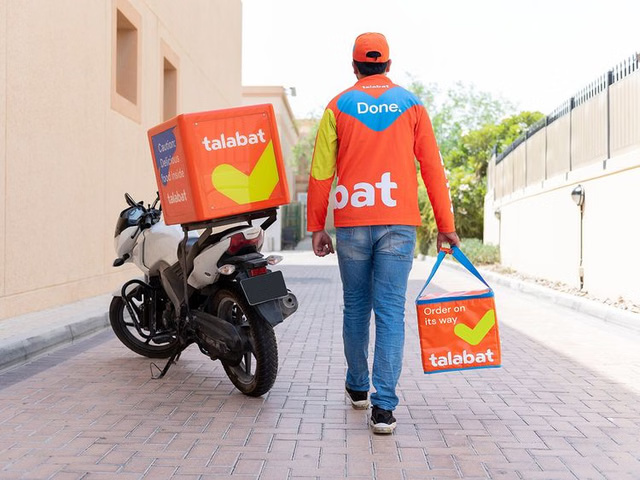
Dubai-based talabat raised its full-year net income guidance on Tuesday after posting strong first-quarter growth, supported by higher order volumes, customer growth, and rising demand across its grocery and multi-vertical delivery services.
The Dubai-based delivery platform reported that gross merchandise value (GMV) rose 19% year-on-year to $2.7 billion in the first quarter ending March 31, while revenue increased 23% to $1 billion.
talabat said the growth was driven by strong Ramadan performance, favourable Eid seasonality, and increased “eat-at-home” demand. The company also noted that ongoing regional tensions contributed to shifts in consumer behaviour, including more work-from-home arrangements and distance learning across several markets.
The company raised its full-year net income forecast by $20 million, bringing it to a range of $300 million to $330 million, while maintaining its guidance for all other key financial metrics.
Regional demand
talabat said GMV growth was supported by strong order volumes and continued customer acquisition across both Gulf and non-Gulf markets.
GMV in Gulf Cooperation Council (GCC) markets increased 12% to $2.1 billion, representing 79% of total GMV, while non-GCC markets grew 52% to $563 million.
The company said its positioning as a multi-vertical delivery platform helped sustain demand amid the current regional environment, particularly as more consumers shifted toward home-based consumption habits.
Revenue growth was also supported by a stronger contribution from talabat mart, its grocery delivery segment, which improved the GMV-to-revenue conversion ratio to 39%, up from 38% a year earlier.
However, talabat noted that this was partly offset by lower commission rates and higher customer incentives, which were introduced to retain medium- and high-value users.
Margins decline
Adjusted EBITDA fell 9% year-on-year to $130 million, representing 4.8% of GMV, compared with 6.3% in the same period last year.
Net income declined 18% to $87 million, or 3.2% of GMV.
The company said profitability was impacted by planned margin investments linked to its previously announced 2026 strategy, which focuses on expanding its “Everyday App” ecosystem.
talabat previously announced plans to invest around $120 million this year across grocery expansion, customer engagement initiatives, and new retail-related services.
The company said nearly $25 million of this had already been deployed in the first quarter through operating, capital, and lease-related expenditures.
The investment programme focuses on expanding talabat mart store density, strengthening supply chain infrastructure, and improving affordability to drive faster customer adoption.
Subscription focus
talabat also said it continues to scale talabat pro, its subscription-based service, by adding benefits such as discounts, priority customer support, dine-out offers, and partnerships with streaming and ride-hailing platforms.
The company is also investing in new retail and service categories aimed at boosting customer engagement across everyday consumer spending.
Chief Executive Toon Gyssels said the company maintained operational continuity during a “dynamic environment of heightened uncertainty,” while prioritising the safety of employees, riders, and partners.
“We delivered a strong start to the year, with performance ahead of expectations, underpinned by disciplined execution and the strength of our multi-vertical model,” Gyssels said.
The company reaffirmed its full-year guidance for:
- GMV growth of 11% to 14%
- Revenue growth of 14% to 17%
- Adjusted EBITDA between $510 million and $540 million
- Free cash flow between $370 million and $400 million
talabat reported free cash flow of $104 million for the quarter, marking a 7% year-on-year increase.
The company also said it expects to launch its recently approved share buyback programme shortly after the earnings release. The programme permits repurchases of up to 5% of issued share capital over a two-year period.
talabat added that its capital allocation strategy continues to balance ongoing investment with shareholder returns, including a 90% dividend payout ratio.

