

Hotels are taking advantage of slower occupancy periods to accelerate major refurbishment projects.
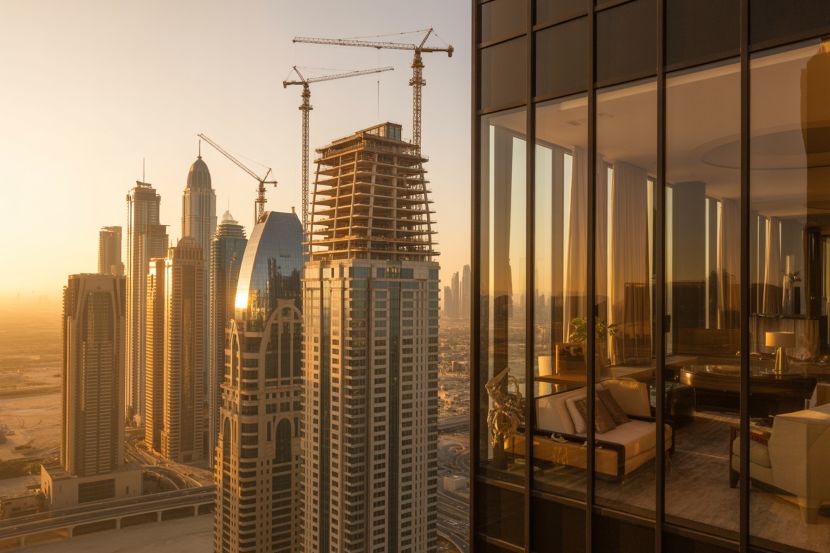
Dubai: Luxury hotels across the UAE are accelerating renovation projects, using softer occupancy periods to upgrade rooms, restaurants, and public spaces ahead of a rebound in travel demand.
Industry consultants say many refurbishment plans were already underway, but recent shifts in travel demand have prompted hotel owners to fast-track projects that might otherwise have been delayed.
The trend is reshaping some of Dubai’s best-known luxury properties, including Park Hyatt Dubai, Burj Al Arab, and Armani Hotel Dubai at Burj Khalifa, with upgrades ranging from room redesigns to large-scale repositioning projects.
More than cosmetic upgrades
Consultants say guests should expect more than simple visual refreshes. According to hospitality executives and designers, renovations are increasingly focused on smarter in-room technology, larger and more functional layouts, and residential-style interiors that create a more personalised guest experience.
Joao Cravo, Vice President of Asset Management at Trilight Hospitality Asset Management, said renovation decisions are influenced by factors such as a property’s age, market positioning, brand standards, and expected return on investment.
“Most of the hotels currently undergoing refurbishment already had plans and designs in motion,” he said.
“The current softer demand has simply accelerated those plans and, in some cases, prompted owners and operators to close and renovate earlier than they otherwise would have,” he added.
The renovations are also focusing on enhanced wellness features, improved acoustic comfort, higher-quality materials and finishes, and redesigned public spaces and restaurants.
Paul Clifford, a hospitality and design brand strategist, said luxury hotel renovations in the UAE are now largely focused on long-term competitiveness.
“Renovations are rarely just cosmetic anymore, especially in the UAE’s luxury hospitality sector,” he said. “With properties such as Burj Al Arab or Park Hyatt Dubai, it’s not simply about a fresh coat of paint — it’s about future-proofing the hotel.”
He added: “The broader trends in hospitality are moving toward more residential-style design, better materials, and greater comfort. Behind the scenes, hotels are also investing in smarter technology to deliver smoother service and reduce friction throughout the guest journey.”
What guests will notice
Design consultants say guests are likely to notice more discreet smart-room controls, enhanced lighting systems, and modernised bathrooms as part of the latest hotel upgrades.
Guests can also expect more comfortable room layouts and stronger local design influences that reflect the character of the destination.
At the same time, operators are working to preserve the identity of iconic hotels while bringing them up to modern luxury standards.
Somya Angolkar and Shanawas Moidu, co-founders and partners at IDA, said the focus is on “elevating the guest journey through more contemporary, locally contextual design narratives, refined material palettes, and a stronger sense of place.”
Why hotels are renovating now
Consultants say periods of market uncertainty often become the preferred window for renovations, allowing hotels to complete upgrades with less disruption to peak-season revenue.
Joao Cravo said owners are increasingly choosing to bring refurbishment projects forward rather than waiting for travel demand to fully recover.
Joao Cravo said: “The logic is straightforward—if you renovate now while demand is softer, you avoid displacing revenue during peak periods and you are ready to capture the upswing the moment it arrives.”
Paul Clifford added: “If occupancy softens, that’s actually when many owners move, because the upside post-renovation outweighs the short-term hit.”
Full closures versus phased renovations
Most luxury hotels have traditionally adopted a floor-by-floor approach to refurbishment to avoid fully shutting down operations. However, consultants say an increasing number of properties are now considering partial or even full closures to complete renovation projects more quickly and efficiently.
Joao Cravo said: “A phased approach, renovating a number of floors each year, is often still the right call. That said, the current environment has led a number of owners to think differently.”
Paul Clifford added that some hotels are adopting hybrid models, keeping restaurants and certain facilities open while temporarily closing rooms or suites during refurbishment.
He noted: “A full closure shortens timelines and avoids years of disruption.”
The biggest challenge?
Consultants say execution — rather than design — is now becoming the hardest part of luxury hotel renovations.
Delays in materials, reliance on imported finishes, and rising costs are all adding pressure to projects and tightening timelines.
Joao Cravo said: “The greater challenge lies in execution, particularly when supply chains are under strain or specialist materials carry long lead times.”
Interior designers also noted that lead times for luxury materials have stretched significantly, prompting hotels to explore more local sourcing and alternative procurement strategies.
IDA said: “Material lead times have stretched significantly, often doubling.”
Paul Clifford added that protecting the original luxury design vision has become more challenging as costs rise.
“It’s very easy for ‘value engineering’ or just the need to re-open and start making money again to dilute what was originally a very clear luxury vision,” he said.

