

Property owners are continuing to hold onto their assets, while buyers are prioritizing ready-to-move-in homes, as well as factors such as quality and pricing.
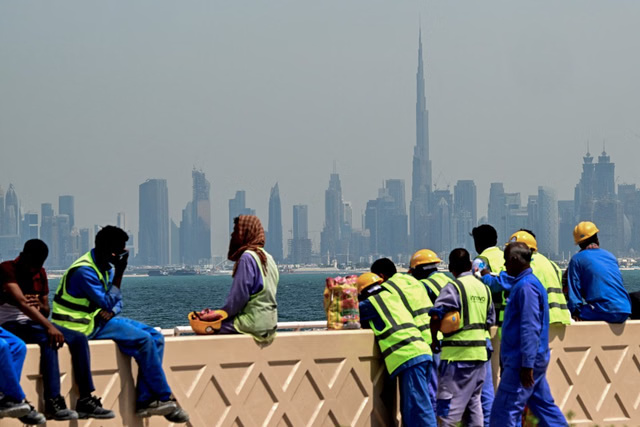
In Dubai, property buyers are taking longer to decide amid regional uncertainty affecting market sentiment, even as nearly 45% of participants still plan to purchase a home within the next 12 months.
A key signal for the market is that the slowdown is not being driven by distressed selling. Over 60% of existing property owners plan to either hold onto or expand their portfolios in the next six months, while only about 4% are considering selling.
That dynamic is helping prevent the market from entering a broad discount cycle, even as buyers become more selective about location, pricing, delivery timelines, and long-term value.
The findings are based on the latest Savills Middle East UAE Residential Investor Sentiment Survey, which gathered responses from investors, end-users, landlords, tenants, and prospective residents. The survey indicates that while regional geopolitical developments have introduced caution and slowed decision-making, they have not driven buyers out of the market.
Buyers are increasingly prioritizing certainty in the current market, with around 32% of respondents still undecided about purchasing property—indicating a longer decision-making period rather than a decline in interest.
In this environment, completed homes are gaining preference, with about 60% of respondents favouring ready properties compared to roughly 23% who prefer off-plan units. This shift reflects a stronger focus on delivery assurance, transparent pricing, and immediate usability.
Commenting on the trend, Andrew Cummings of Savills Middle East noted that while regional developments have introduced caution, underlying demand remains strong. He said the market is seeing a behavioural shift rather than a drop in interest, with buyers taking more time, becoming more selective, and focusing on fundamentals such as location, quality, and long-term value.
The buyer base is increasingly shifting toward end-user demand, with activity now largely driven by owner-occupiers and long-term investors rather than short-term speculation.
On the supply side, sellers are largely holding firm. The lack of widespread selling pressure is helping support prices across several segments, although the gap between buyer expectations and seller pricing has widened.
Commenting on this trend, Andrew Cummings of Savills Middle East said that continued confidence among existing property owners—many benefiting from strong recent performance—is keeping the market stable. He added that this is steering the market toward a more balanced and sustainable phase rather than a structural correction.
At the same time, sentiment around pricing has shifted, with over 80% of respondents expecting prices to soften or remain stable over the next 12 months. This has led to longer transaction timelines, increased negotiation, and a more selective approach from buyers.
Supply is emerging as a key concern, with more than 60% of respondents expecting a high volume of new units to enter the market. Apartments are seen as more exposed to this added supply pressure compared to villas and townhouses.
In Dubai, however, the residential market continues to show a mix of caution and sustained capital inflows. The city recorded 44,493 residential transactions in Q1 2026, a 4% year-on-year increase, according to Betterhomes. Total transaction value rose 21% to AED 139.2 billion, although volumes declined 17% quarter-on-quarter, reflecting slower decision-making during March.
Off-plan properties remained the main driver of activity, accounting for 68% of total transactions. Off-plan volumes rose 20% year-on-year, while transaction value increased by 35%. In contrast, secondary market transactions fell 19% year-on-year, indicating greater price sensitivity in the ready property segment.
Commenting on the trend, Louis Harding of Betterhomes said that some moderation in decision-making was expected given regional developments in March. However, he noted that underlying data still points to a resilient market, with transactions up 4% year-on-year and total value reaching AED 139.2 billion. He added that activity has become more measured, but continued capital inflows indicate a more disciplined rather than weakening market.
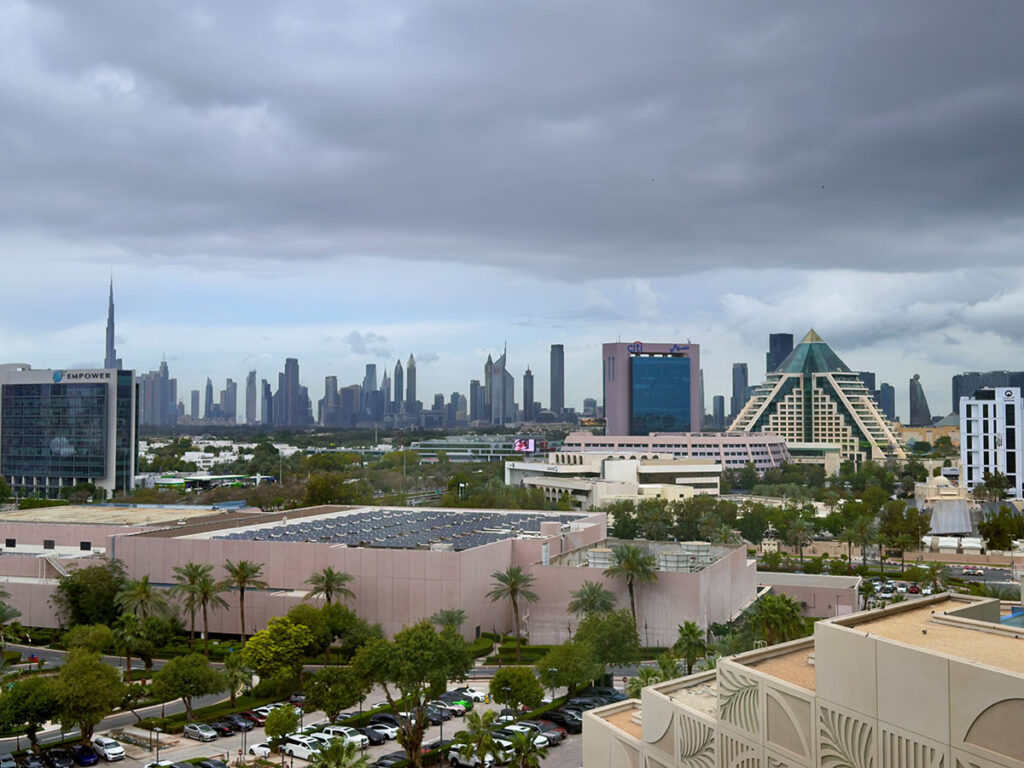
Buyer preferences are also shifting by property type. Overall enquiries declined 18% year-on-year in Q1, but demand is increasingly focused on larger, higher-value homes. Enquiries for villas and townhouses rose 15%, while apartment enquiries fell 31%. Investors also made up a larger share of activity, accounting for 57% of transactions, up from 50% in Q1 2025.
The prime segment continued to outperform the wider market, with transactions above AED 15 million rising 43% year-on-year to 1,214 deals, supported by an 84% increase in off-plan prime activity.
In the leasing market, conditions have become more competitive. Enquiries increased 7% year-on-year, but transactions fell 5% year-on-year and 26% quarter-on-quarter, as higher supply and more selective tenant behaviour slowed conversion rates. New rental listings in prime communities saw apartment prices decline by 10% to 20% year-on-year, widening the gap between existing tenants’ rents and new lease agreements.
In April, the market showed renewed momentum in Dubai, with 13,977 sales transactions worth AED 48 billion, according to fäm Properties. Sales volumes rose 3.5% from March, while total value increased 10.7%. Primary market sales dominated activity, accounting for 10,563 transactions worth AED 35.8 billion, compared with 3,414 resale deals valued at AED 12.2 billion.
In Dubai, the commercial property segment delivered the strongest growth, with 561 office and retail (shop) transactions worth AED 4 billion—up 33.9% year-on-year and 36.2% month-on-month.
Apartment sales also increased, rising 6.5% month-on-month to 11,377 transactions worth AED 24.1 billion, while plot sales climbed 34.7% to 237 deals valued at AED 6.6 billion.
Commenting on the latest performance in Dubai, Firas Al Msaddi of fäm Properties said the results reflect underlying market strength, with steady demand across both residential and commercial segments.
He noted that despite ongoing geopolitical tensions, Dubai continues to benefit from its reputation as a stable, transparent, and well-regulated investment environment. He also added that the continued dominance of primary sales signals strong long-term confidence in the emirate’s growth and development pipeline.
The United Arab Emirates residential market is entering a more balanced phase after a prolonged period of strong growth. According to Savills Middle East, regional and geopolitical uncertainty has become the primary barrier for many buyers, outweighing traditional concerns such as pricing and financing.
Market activity is expected to remain more measured in the near term, with softer transaction volumes and increased negotiation in certain segments. Secondary apartments are likely to face greater pressure, while villas and prime residential properties are expected to stay more resilient.
Overall, the market continues to attract buyers, but the earlier “easy-money” phase has cooled. Sellers offering realistically priced, well-located, and higher-quality completed assets are better positioned, as buyers are taking longer to make decisions before committing.

