

The system is implemented at the first entry point into the Schengen Area and is intended to monitor and track overstays.
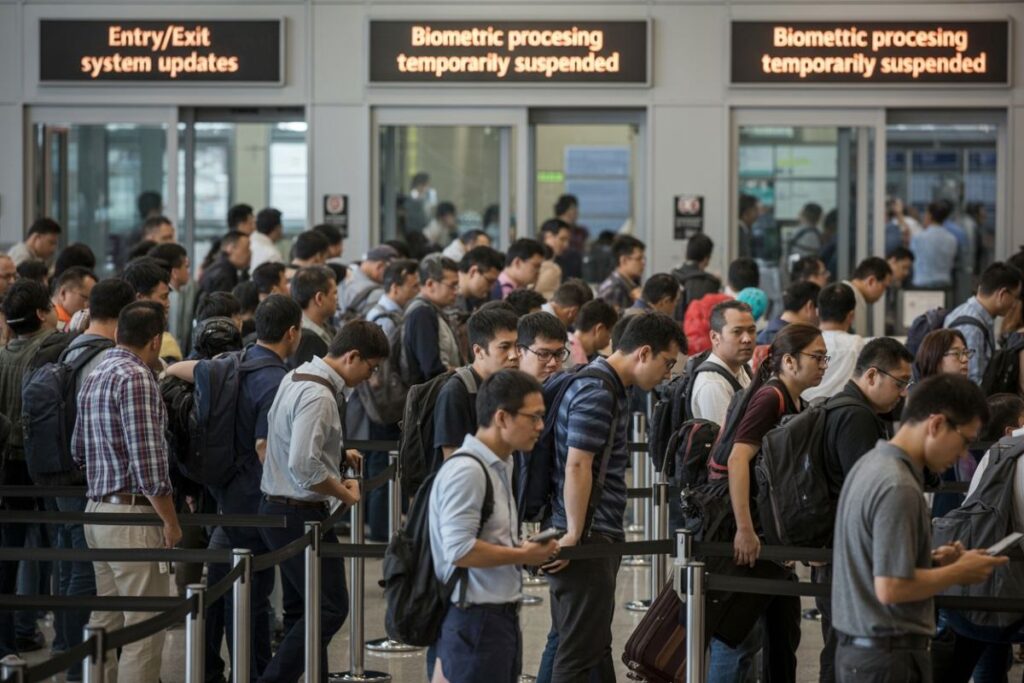
Dubai: Under the EU’s Entry/Exit System (EES), Schengen border authorities may temporarily relax biometric checks when congestion is heavy, as the rules allow member states to scale back or suspend certain procedures to avoid long queues, according to Reuters and guidance referenced by airport operators.
The EES, which became fully operational on April 10, 2026, replaces manual passport stamping with a digital system that records the entry and exit of non-EU nationals using biometric data such as fingerprints and facial images, according to the European Commission. The system is applied at the first point of entry into the Schengen Area and is intended to monitor overstays while strengthening border controls.
Under the framework, border authorities can also reduce biometric enrolment requirements in exceptional situations, particularly when high passenger volumes risk overwhelming airport operations. Reuters reported that these contingency provisions were included in the rollout to prevent disruption during peak travel periods, especially at major European hubs already facing heavy traffic.
How this affects UAE travellers
For UAE travellers, the changes mainly impact how border checks are carried out rather than the actual entry requirements. UAE passport holders will still enjoy visa-free access to the Schengen Area for short stays of up to 90 days within any 180-day period, while residents holding passports that require visas must continue to follow the standard Schengen visa application process. The EES does not change permitted stay durations; instead, it digitises the tracking and enforcement of compliance.
Airports and airlines have warned that processing times may remain uneven in the early phase of implementation. Industry bodies such as Airports Council International (ACI Europe) have raised concerns about longer queues as biometric systems are rolled out, particularly during peak travel periods. UK government travel advice also indicates that non-EU travellers may need to factor in extra time for border procedures under the new system.
Despite this flexibility, authorities emphasise that any easing of checks is temporary and depends on operational conditions. The EES database will continue recording traveller movements even if certain biometric steps are postponed. The European Commission has said the system remains a key part of the EU’s broader effort to modernise border management.
The next stage of this framework is the European Travel Information and Authorisation System (ETIAS), expected to launch in late 2026. Once introduced, visa-exempt travellers, including UAE nationals, will need to secure pre-travel authorisation before entering Schengen countries, adding an additional digital layer to border controls.

