

UNS Farms says its Al Ain facility can reduce water consumption by up to 90%.
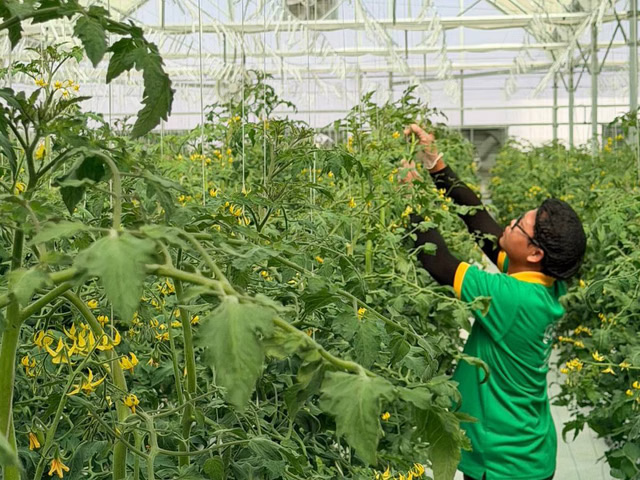
Dubai: A new tomato farm in Al Ain is set to produce 150,000kg of fresh tomatoes annually, supporting the UAE’s drive to boost local food production as global supply chains face ongoing risks from shipping delays, rising freight costs and regional disruptions.
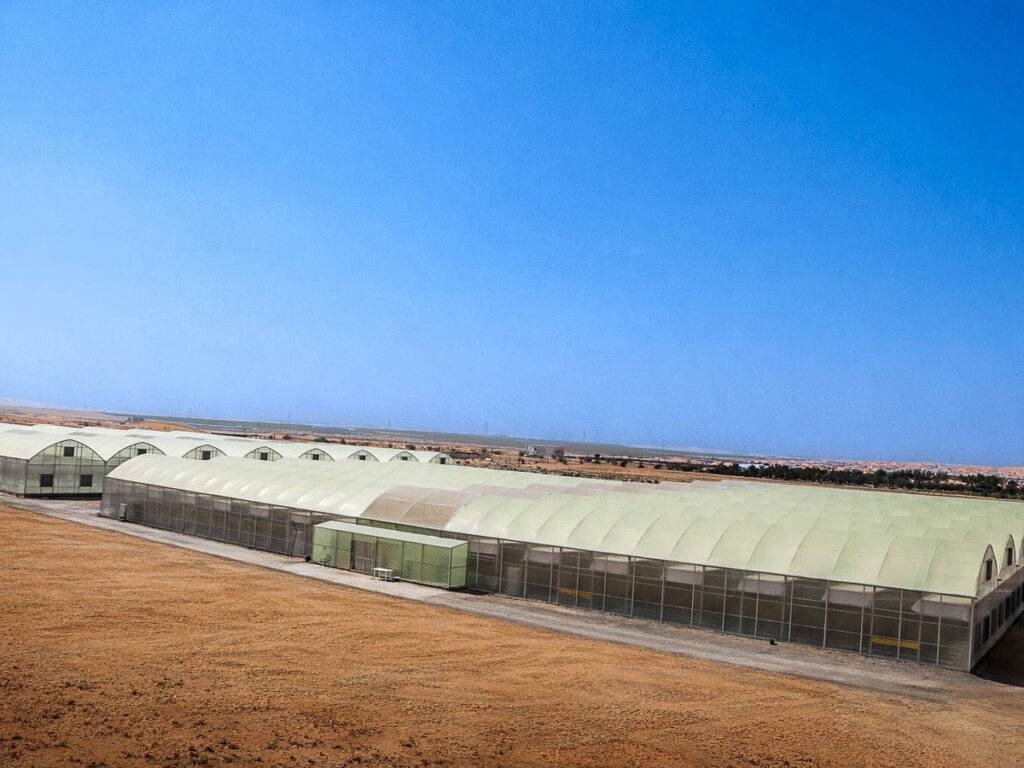
The 10,000-square-metre facility, developed by UNS Vertical Farms, uses controlled-environment agriculture, hydroponics, IoT and AI to grow tomatoes year-round in a country where arid conditions make traditional farming challenging. The company says the model can cut water use by up to 90% while supplying fresh produce to retail and HORECA (hotel, restaurant and café/catering) customers within 24 to 48 hours of harvest.
Tomatoes are a daily staple across homes, restaurants, hotels and retailers, yet much of the UAE’s supply still relies on imports. Expanding local production can improve freshness, cut waste and provide a more stable supply of a high-demand product.
“Tomatoes are one of the most widely consumed fresh produce items across households, retail and the HORECA sector in the UAE, making them a high-impact category for local production,” said Mehlam Murtaza, Director of UNS Vertical Farms.
“Focusing on tomatoes allows us to address an immediate and practical need. Even a moderate increase in local production can help reduce reliance on imports while improving freshness and availability,” he said.
Why tomatoes first
UNS Farms says tomatoes perform particularly well in controlled-environment agriculture, making them a strong candidate for commercial-scale production in the UAE.
At a national level, 150,000kg alone will not close the import gap. Mehlam Murtaza said the significance lies in demonstrating a model that can be replicated across the country.
“At a national level, 150,000kg is a relatively small contribution, but for a single controlled-environment facility it represents a strong and efficient output,” he said.
“More importantly, it demonstrates a scalable model. If similar facilities are replicated across the UAE, the cumulative impact could be significant in reducing import dependence and improving supply consistency.”
Imports will still be necessary, particularly for certain varieties and during peak demand periods. However, local production can take on a larger share of everyday consumption if more farms focus on high-demand crops suited to controlled environments.
Food security becomes practical
Food security is often discussed as a national strategy, but for consumers and retailers it becomes tangible during periods of disruption. Delayed shipments, rising freight costs and sourcing challenges can directly affect product availability, freshness and pricing.
“In periods of global uncertainty, local production becomes extremely important,” said Mehlam Murtaza.
“Farms like ours help reduce exposure to shipping delays, geopolitical disruptions and fluctuating freight costs. By producing closer to the point of consumption, we can ensure more consistent availability for retailers, restaurants and consumers.”
The farm’s shorter supply chain gives it an edge over imported produce, which is often harvested and packed for long-distance transport. UNS Farms says its tomatoes can reach shelves within 24 to 48 hours of harvest, helping to cut spoilage and improve shelf life.
“Yes, it makes a very tangible difference,” said Mehlam Murtaza. “Shorter delivery times mean produce reaches consumers much fresher, improving taste, texture and shelf life. It also reduces spoilage and waste across the supply chain, particularly for retailers and the HORECA sector.”
He added that cutting transit time from several days to under 48 hours can reduce post-harvest losses by an estimated 20% to 30%, depending on handling and storage conditions.
Water use is the bigger test
In the UAE, the key challenge for local agriculture is not just land or technology — it is water.
Traditional farming is difficult to scale in an arid climate without placing additional strain on limited water resources. Controlled-environment farming addresses this by recycling and reusing water through closed-loop systems.
“Water efficiency is critical in the UAE, both from a sustainability and a commercial standpoint,” said Mehlam Murtaza.
“Traditional farming methods consume large amounts of water, which is not viable in an arid climate. Controlled-environment systems can reduce water use by up to 90% by recycling and reusing water in closed-loop setups.”
That efficiency is key to making local farming commercially viable over the long term. A model that uses less water, delivers higher yields per square metre and supplies produce closer to the point of consumption presents a stronger business case than conventional farming, which depends heavily on climate, soil and long seasonal cycles.
Technology on the farm floor
UNS Farms uses sensors to monitor temperature, humidity, nutrients and light, while automated systems adjust growing conditions in real time. The company says this reduces variability and allows crops to grow under stable conditions year-round.
“These technologies fundamentally change how farming operates by introducing precision and control,” said Mehlam Murtaza.
“Sensors continuously track key environmental factors such as temperature, humidity, nutrients and light, while automated systems make real-time adjustments. This creates a highly controlled environment where crops can grow under optimal conditions throughout the year.”
The result, he added, is higher yields, more consistent quality and lower waste. Productivity per square metre can be two to three times higher than traditional farming in many cases, with significantly less variability.
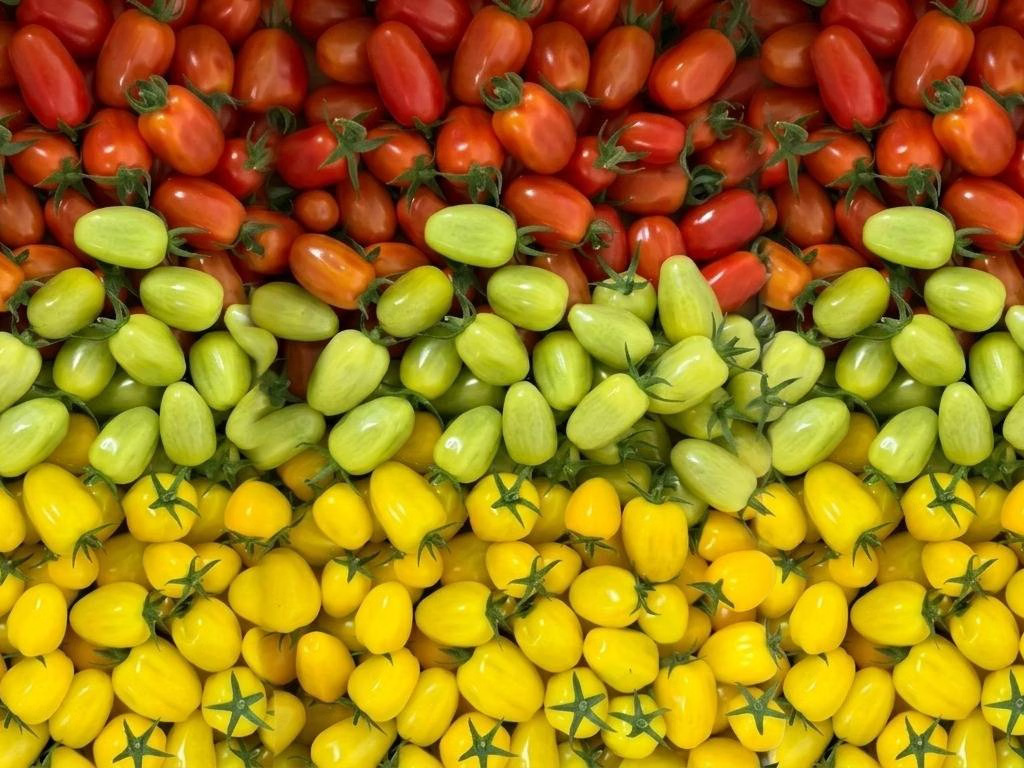
The farm grows non-GMO cherry and bunch tomatoes without the use of pesticides or herbicides, catering to households, retailers and the HORECA sector. Fresh produce is also sold directly to consumers through UNS Farms’ online platform.
Scaling beyond tomatoes
The bigger question is whether the model can expand into other food categories.
Mehlam Murtaza said scaling local production will require sustained investment, skilled operators, energy-efficient systems and closer alignment between farms, retailers, hotels and government entities.
“Scaling local production requires a combination of investment, expertise and strong ecosystem alignment,” said Mehlam Murtaza. “This is where UNS Farms’ practical, cost-effective and profitable infrastructure comes in, allowing us to deliver high-quality produce efficiently from both an operational and investment standpoint.”
Long-term sourcing commitments from retailers and the HORECA sector will be crucial, as they give farms the confidence to expand capacity. The company is also evaluating other high-consumption crops, including leafy greens and fresh produce suited to controlled-environment agriculture.
The Al Ain facility aligns with the UAE’s broader efforts to strengthen domestic food production, improve supply chain resilience and support the National Food Security Strategy 2051.

