

Labour shortages prompt Japan Airlines to trial AI-powered humanoid robots for ramp operations.
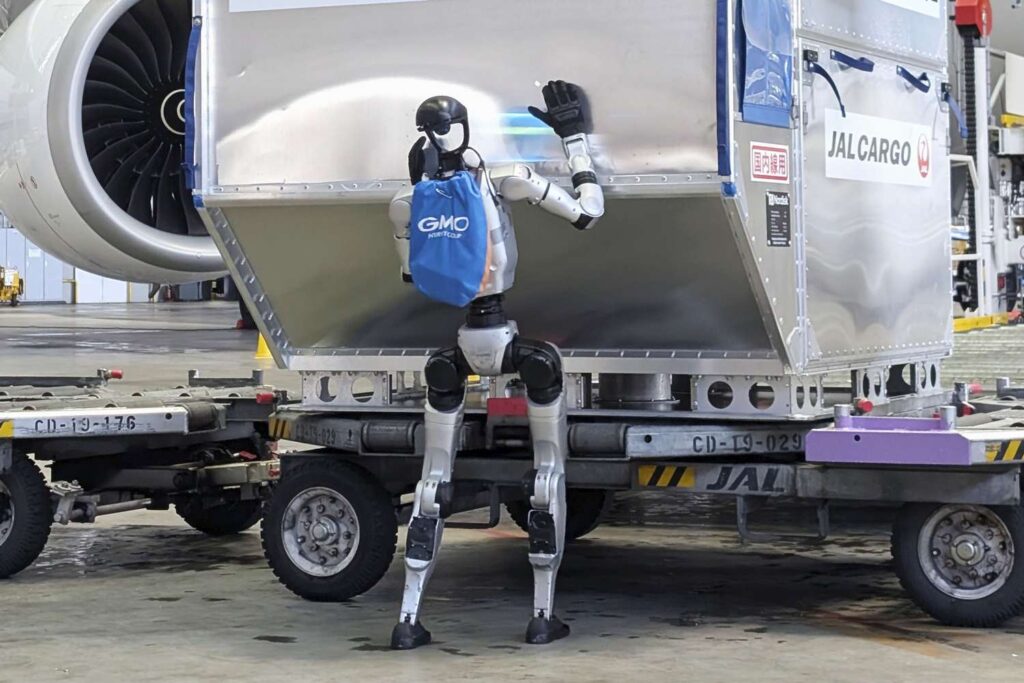
Tokyo: Japan Airlines is deploying humanoid robots on the ramp, tasking them with everything from handling baggage to cleaning aircraft cabins.
The airline, in partnership with GMO Internet Group, will begin trials at Haneda Airport in May—marking Japan’s first effort to introduce human-shaped robots into real-world airport operations. The initiative aims to address a growing labour shortage while keeping pace with rising travel demand.
In simple terms, “ground handling” refers to the behind-the-scenes work that keeps flights running smoothly. It includes physically demanding tasks such as loading baggage, towing aircraft and preparing cabins for the next flight.
While airports may appear highly automated to passengers, much of the behind-the-scenes work still depends on manual labour — and that’s where humanoid robots come in.
Unlike traditional machines designed for a single task, humanoid robots are built to mimic human movement, with arms, legs and flexible joints. This allows them to operate within existing airport environments without the need for costly infrastructure changes.
“This is likely to reduce workers’ burden, delivering significant benefits to employees,” said Yoshiteru Suzuki, referring to the physically demanding nature of ramp work.
However, he added that critical functions such as safety management will remain firmly in human hands, according to Japan’s Kyodo News.
The trial—set to run through 2028—will initially test the robots in controlled environments before gradually introducing them into live operations. At present, the machines can operate continuously for around two to three hours, a limitation engineers aim to improve over time.
“While airports appear highly automated and standardised, their back-end operations still rely heavily on human labour and face serious labour shortages,” said Tomohiro Uchida.
Japan’s ageing population is a major factor behind this shift. With fewer working-age people entering the labour force and inbound tourism rising sharply, airlines are under increasing pressure to maintain efficiency without overburdening staff.
Japan, long known for its restrictive immigration policies, has gradually expanded its foreign workforce, with the immigrant population reaching around 4 million as of a June 2025 census. Despite this, the country continues to face a demographic crisis and a shrinking labour pool.

