

Partnerships connect farms with retail networks while supporting and empowering Emirati women farmers.
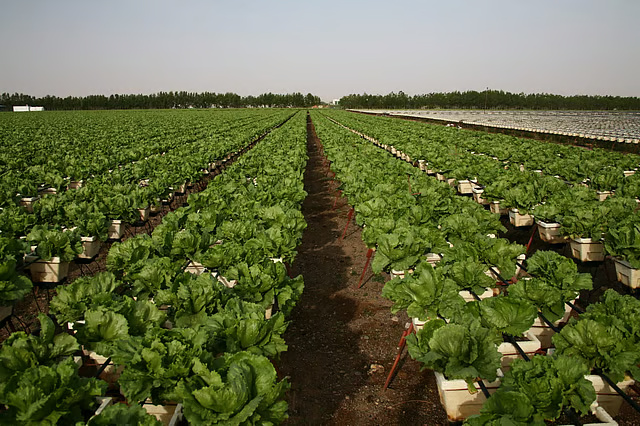
Dubai: A series of agreements and initiatives announced in Al Ain this week highlights how the UAE is broadening its food security strategy beyond production, with greater focus on market access, supply chain integration, and workforce participation.
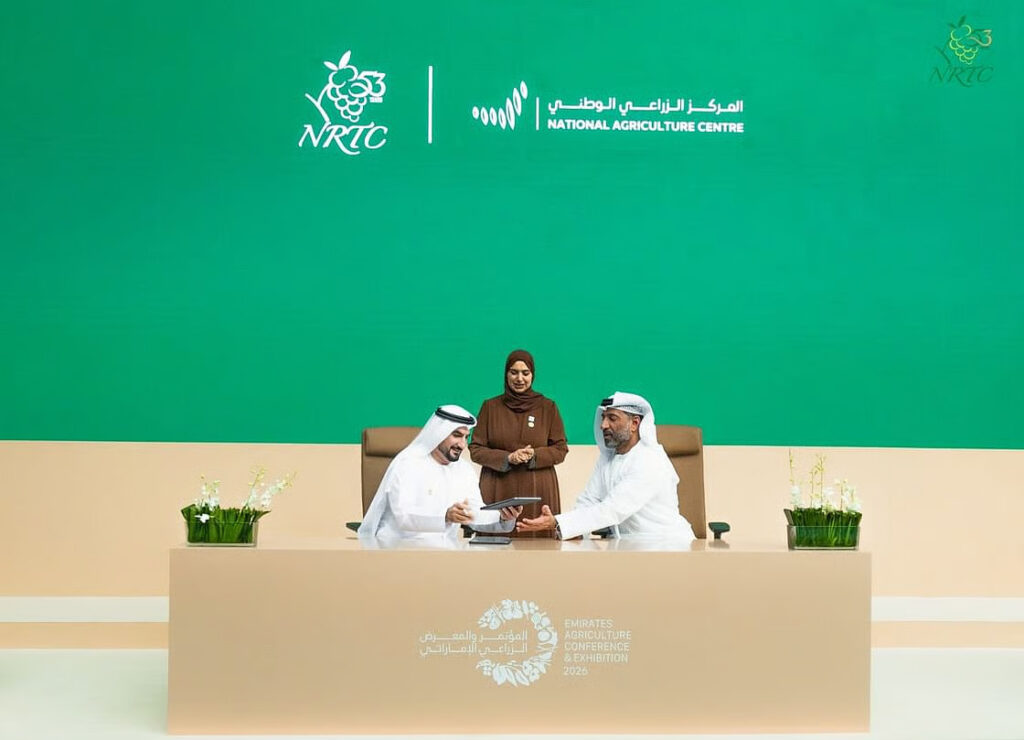
At the centre of the latest efforts is a Memorandum of Understanding between the National Agricultural Centre (NAC) and NRTC Group, a key subsidiary of Ghitha Holding and International Holding Company. Signed during the Emirates Agriculture Conference and Exhibition 2026 and witnessed by Minister of Climate Change and Environment Dr. Amna bint Abdullah Al Dahak, the partnership aims to integrate locally grown produce more effectively into mainstream retail and distribution networks.
The agreement seeks to address a long-standing gap between domestic production and market access by creating dedicated retail spaces for certified local produce and improving coordination across procurement, logistics, and distribution channels. It also includes training programmes to enhance grading, packaging, and quality standards, alongside joint marketing campaigns under the “Sustainable Product” initiative to boost consumer visibility and demand.
“This partnership represents a strategic milestone in advancing the UAE’s food security objectives,” said Sultan Salem Al Shamsi, Director of the National Agricultural Centre. “By linking local producers with established distribution networks, we are enhancing the competitiveness, resilience, and sustainability of the national agricultural sector.”
Linking farms to markets
The focus on connectivity reflects a broader shift in how food security is being approached in the UAE. The objective is no longer limited to increasing agricultural output, but also to ensuring that local produce moves efficiently through the value chain and competes effectively within established retail channels.
NRTC’s existing infrastructure plays a central role in this strategy. The company has developed an integrated agri-supply chain that connects farmers directly with distributors, retailers, and consumers. Its Mazraati initiative has worked to increase the visibility of local farms within this network, while recent acquisitions — including Ripe Organic, Mahsool, and Taaza — have strengthened its capabilities in sourcing, traceability, and direct farm-to-market connectivity.
“Our journey, from Mazraati to key acquisitions, has been focused on building an integrated, future-ready agri-supply chain,” said Mohammed Alrifai, CEO of NRTC Group. “This MoU with NAC is a natural extension of that strategy, enabling us to further support local farmers while contributing to the UAE’s long-term food security ambitions.”
A parallel agreement signed on the sidelines of the same event reflects similar priorities at the emirate level. The Dubai Environment and Climate Change Authority partnered with Silal to strengthen sustainable food security in Dubai by improving sourcing, logistics, and distribution systems, while also addressing food loss and waste and diversifying food sources.
Expanding system capacity
“Through this collaboration with DECCA, we are strengthening our ability to support local farmers across the agri-food value chain,” said Dhafer Al Qasimi, Group CEO of Silal. “By leveraging our capabilities in sourcing, logistics, and distribution, we aim to create more consistent pathways for locally grown produce to reach consumers, while contributing to a more efficient and resilient food system in the UAE.”
Beyond infrastructure and logistics, the conference also highlighted a parallel effort to expand participation within the agricultural sector, particularly among Emirati women.
The “Empowering Women Farmers” initiative, launched by Her Highness Sheikha Fatima bint Mubarak — Mother of the Nation, Chairwoman of the General Women’s Union, President of the Supreme Council for Motherhood and Childhood, and Supreme Chairwoman of the Family Development Foundation — and aligned with the ‘Year of Family’, positions women as active drivers of agricultural innovation and economic growth rather than solely contributors to production.
Announced at the First Emirati Women Farmers Forum, the initiative introduces a practical support framework centred on field-based training, direct engagement with policymakers, and access to tools that help address operational challenges. It aims to transform women-led farms into scalable, market-oriented enterprises capable of competing within the wider food ecosystem.
Broadening participation
“We are witnessing sustained national efforts to position agriculture as a cornerstone of the UAE’s economy and to strengthen sustainable food security,” said Her Highness Sheikha Fatima bint Mubarak — Mother of the Nation, Chairwoman of the General Women’s Union, President of the Supreme Council for Motherhood and Childhood, and Supreme Chairwoman of the Family Development Foundation.
“This also presents promising opportunities for Emirati women to engage in the agricultural sector, which has become increasingly advanced through science and technology.”
The initiative also focuses on integrating climate-smart technologies and strengthening the branding and market positioning of Emirati produce. It creates pathways for younger generations to take part in decision-making through platforms such as the Emirates Youth Council for Agriculture, while providing marketing support to help women farmers build competitive and recognisable products.
Officials say the programme is intended to move beyond symbolic participation by equipping women with the skills, tools, and systems needed to operate successfully within a modern, technology-driven agricultural sector.
Together, these agreements and initiatives reflect a more coordinated approach to food security — one that connects production, logistics, and human capital within a unified framework. The focus is increasingly on ensuring that local agriculture is not only productive, but also commercially viable, scalable, and embedded in everyday consumption patterns across the UAE.

