

Mubaraz tanker’s transit through Hormuz signals a possible easing in Gulf tensions.
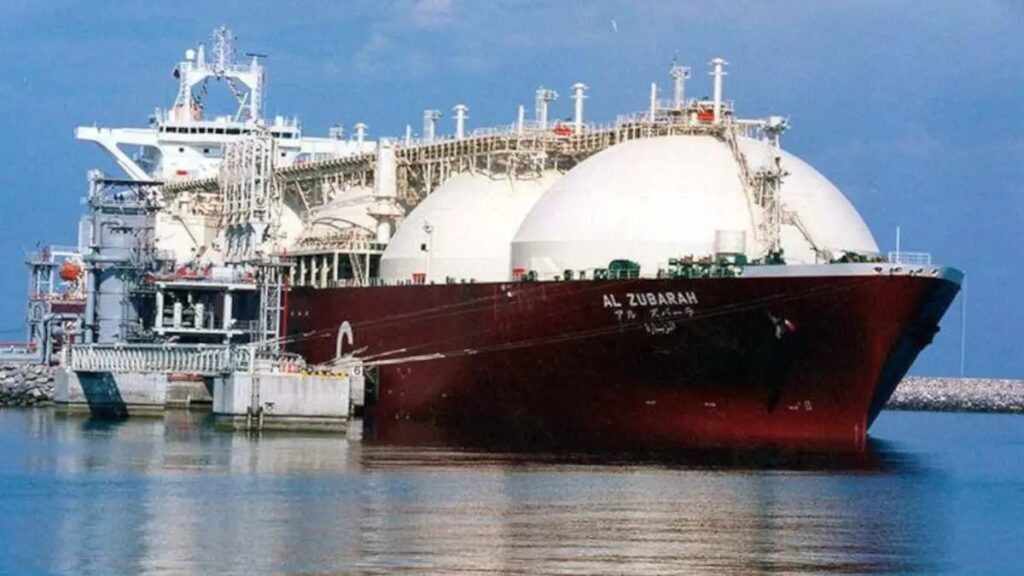
New Delhi: The first liquefied natural gas (LNG) shipment since the West Asia conflict began on February 28 appears to have passed through the Strait of Hormuz, signalling a possible breakthrough at one of the world’s most critical energy transit routes, reports said on Tuesday, citing ship-tracking data.
The LNG tanker Mubaraz — which loaded cargo from Abu Dhabi National Oil Company’s Das Island facility in early March — was seen passing the southern tip of India, according to the tracking data.
The vessel had remained idle inside the Persian Gulf for several weeks and stopped transmitting signals around March 31, before reappearing west of India on Monday.
Global energy markets have been closely watching traffic through the Strait of Hormuz, a critical route through which around one-fifth of the world’s LNG trade passes. In 2024, about 20% of global LNG flows transited the strait, according to the U.S. Energy Information Administration.
Ship movements had also dropped to near zero over the previous two months as tensions escalated and reciprocal blockades imposed by Iran and the United States disrupted normal traffic through the waterway.
At the time, the Mubaraz was signalling a terminal in China as its destination and was expected to arrive by May 15, according to the tracking data.
Earlier in April, ship-tracking data had shown an empty LNG tanker exiting the Strait of Hormuz. However, no loaded LNG cargo had been confirmed to have completed the transit until then.
Several vessels carrying Qatari LNG had approached the strait in recent weeks but turned back due to ongoing geopolitical tensions and continued uncertainty in the region.
Earlier this month, the Indian merchant vessel Green Asha crossed the Strait of Hormuz and safely reached Jawaharlal Nehru Port Authority in Navi Mumbai carrying 15,400 tonnes of liquefied petroleum gas (LPG), according to the government.
Uncertainty over the geopolitical situation also remained, with Donald Trump reportedly dissatisfied with Iran’s proposal because it did not address the country’s nuclear programme.
“He doesn’t love the proposal,” a US official said.
Trump had discussed the proposal with his top national security advisers, while the conflict remained at a stalemate and energy supplies from the region continued to be affected.
However, Iran has reportedly offered to reopen the Strait of Hormuz if the US lifts its blockade and hostilities come to an end.
Oil prices also remained elevated, with Brent crude rising nearly 1 per cent to around $109.3 per barrel, while US West Texas Intermediate (WTI) gained about 1 per cent to $97.3 per barrel, reflecting continued concerns over disrupted energy supplies in the region.

