

The 4.5km upgrade includes four intersections, wider roads, and a doubling of traffic capacity.
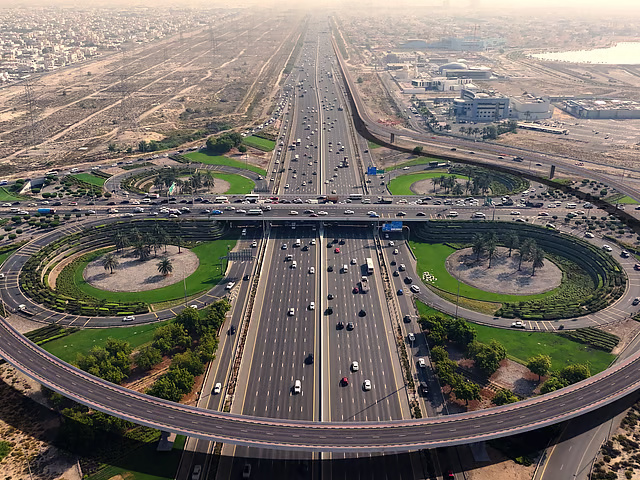
One of Dubai’s most congested corridors has undergone a major transformation, with the Roads and Transport Authority (RTA) completing the full scope of work on the Hessa Street Development Project between Sheikh Zayed Road and Al Khail Road.
The result is one of the city’s most visible traffic improvement stories: travel time between Sheikh Zayed Road and Al Khail Road has dropped from 15 minutes to just 4 minutes, while road capacity has doubled to 16,000 vehicles per hour in both directions.
For tens of thousands of daily commuters who depend on Hessa Street, the impact is immediate — shorter journeys and significantly smoother traffic flow.
Hessa Street is one of Dubai’s most strategic roads, connecting major highways such as Sheikh Zayed Road, Al Khail Road, and onward routes to Emirates Road. It also serves key communities including Al Sufouh 2, Al Barsha, Jumeirah Village Circle (JVC), Dubai Hills, and Jumeirah Lakes Towers.
With the population across areas served by the corridor expected to exceed 640,000 by 2030, the need for long-term infrastructure expansion had become increasingly urgent.
The project widened Hessa Street from two lanes to four lanes in each direction along a 4.5km stretch between Sheikh Zayed Road and Al Khail Road, effectively doubling traffic capacity and preparing the corridor for future demand.
Four intersections unlock traffic
Rather than simply expanding road width, the Roads and Transport Authority (RTA) redesigned four major intersections to eliminate key bottlenecks.
From Sheikh Zayed Road, RTA built a new two-lane directional ramp above the Dubai Metro Red Line, allowing right-turning vehicles to move directly onto eastbound Hessa Street without stopping at traffic signals.
The existing Hessa Street bridge linking to First Al Khail Street was widened from three lanes to four lanes in each direction, easing one of the corridor’s most common congestion points.
Signal-controlled junction improvements below the bridge have also helped optimise traffic flow, reducing waiting times and improving throughput.
At Al Asayel Street, RTA constructed a new bridge parallel to the existing one, expanding capacity from two lanes to four lanes in each direction. Combined with traffic signal enhancements, this has improved movement between communities such as JVC, Barsha Heights, and nearby commercial zones.
At the eastern end, the project introduced a direct two-lane ramp carrying traffic from Hessa Street to northbound Al Khail Road towards Sharjah.
Additional bridges were also added at the existing interchange to support vehicles heading toward Deira.
Engineering in a live environment
Delivering a project of this scale on one of Dubai’s busiest roads required complex coordination. Construction continued while the road remained fully operational, with teams working around live intersections, active bridges, and densely populated residential communities.
According to RTA officials, proactive diversion plans, 24-hour construction schedules, and noise management measures were introduced to minimise disruption.
As a result, many motorists experienced the transformation with relatively limited inconvenience despite the large-scale bridge widening, new ramps, and road reconstruction taking place around them.
Improvement in quality of life
The benefits of the Hessa Street upgrade extend beyond reducing congestion.
For residents of JVC, Dubai Hills, Al Barsha, and neighbouring communities, the project means less time spent in traffic and more efficient daily commutes. For fast-growing master developments along the corridor, stronger road connectivity also improves appeal for homeowners, tenants, and investors.
The upgrade forms part of Dubai’s wider strategy to stay ahead of population growth through continuous infrastructure investment.
Phase two — covering the stretch from the Al Khail Road intersection to the junction with Sheikh Mohammed Bin Zayed Road across 3km — is already under way and is expected to deliver further mobility improvements.
But for the hundreds of thousands who use Hessa Street every day, the most important figure is not 16,000 vehicles per hour or 4.5 kilometres of upgraded road — it is the 11 minutes saved on every journey.

