

Unseasonal heatwave grips the UAE as temperatures soar past 40°C in April.
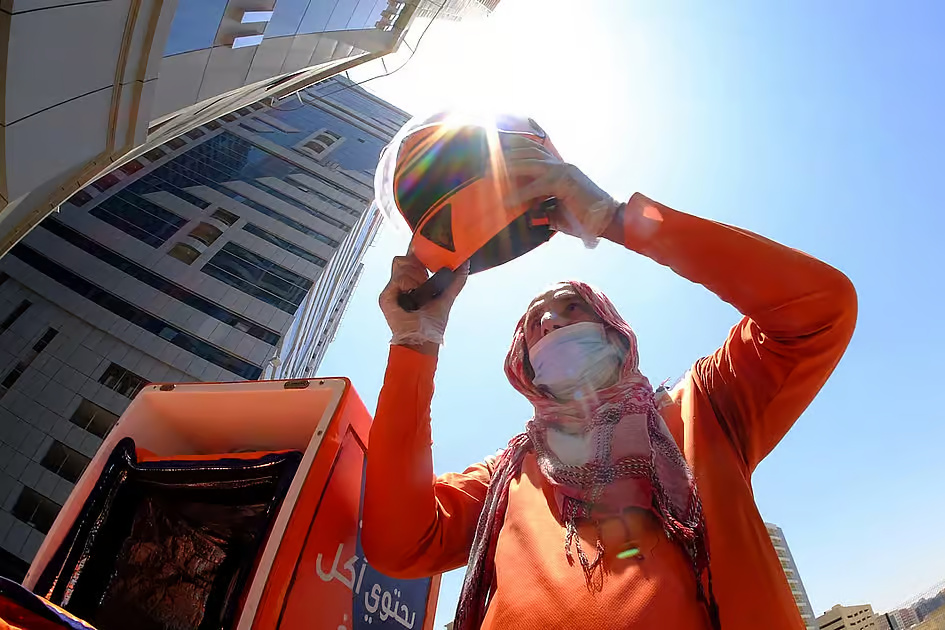
Dubai: Across the UAE, temperatures have surged well above what is typical for April, catching many residents off guard after weeks of surprisingly mild and even cool weather. The mercury has already crossed 44°C in some inland parts of the country this week, and the National Centre of Meteorology (NCM) says the heat is not done climbing yet.
Where the thermometer stands today, April 24
Nationwide, the National Centre of Meteorology (NCM) forecasts temperatures ranging between 23°C and 41°C on Friday, April 24. But those numbers do not tell the full story — conditions vary sharply depending on where you are in the country.
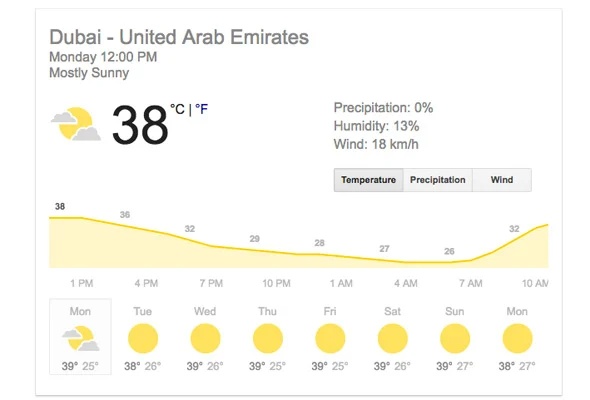
Dubai: Highs of up to 36°C, with overnight lows of around 23°C. AccuWeather’s RealFeel today sits at 35°C (95°F), with humidity making it feel even hotter in coastal areas.
Abu Dhabi: The capital is among the warmest coastal cities today, with temperatures climbing to 38°C, reflecting its more southerly and inland-facing location.
Sharjah: Closely tracking Dubai, with temperatures hovering around 36–37°C during peak afternoon hours.
Al Ain: The inland garden city, historically one of the UAE’s hottest spots, has seen sharp fluctuations this week, with afternoon highs nudging 40°C.
Ras Al Khaimah and Fujairah (East Coast): Slightly more temperate conditions thanks to coastal breezes, with temperatures generally ranging between 33°C and 35°C.
Al Dhafra Region: The country’s consistent heat champion. On April 22, the town of Mezaira recorded a scorching 44°C, according to the National Centre of Meteorology (NCM) — the highest temperature logged in the UAE this week. A day earlier, on April 21, the nearby station of Owtaid hit 42.9°C at 2pm.
Why is it this hot in April? The science behind the spike
April is usually a transitional month in the UAE — no longer the pleasant cool of winter, but not yet the full intensity of summer. Average highs during this period typically range between 32°C and 34°C along the coast, and 34°C to 36°C inland. So when temperatures push past 40°C, it marks a noticeable departure from the seasonal norm.
Several factors are coming together to drive temperatures higher than usual:
1. The Sarrayat season is in full swing
The UAE is currently in what meteorologists and locals call the Sarrayat season — a transitional weather phase that usually runs from mid-March to early May. This period is known for sharp and unpredictable swings in conditions: one day may bring cool breezes, cloud cover, and pleasant temperatures, while the next can see the mercury jump dramatically within hours.
This year has followed that exact pattern, with some coastal cities staying below 30°C in early April before rapidly climbing past 40°C just days later.
According to Ibrahim Al Jarwan, Chairman of the Emirates Astronomical Society and a member of the Arab Union for Astronomy and Space Sciences, this year’s pattern signals that the season is shifting decisively out of spring.
“This is part of the transitional phase,” Al Jarwan noted, explaining that such fluctuations are typical during this period and can sometimes extend into early May depending on the wider regional weather system.
2. A low-pressure system over the Arabian Peninsula
A low-pressure system centred over central Arabia — particularly across parts of Saudi Arabia — has been driving atmospheric instability across the region. While the UAE has not been directly hit by the strongest disruptions, the indirect effects have been clear: rising temperatures, increased cloud formation, and in some areas, brief spells of dust and light rain.
This is the same system behind the National Centre of Meteorology (NCM) weather alert issued between April 21 and April 23 for parts of Dubai, Abu Dhabi, and Fujairah.
3. The sun is moving north
Every day, the sun’s apparent position moves closer to the Tropic of Cancer, which lies almost directly above the UAE. This means stronger and more direct solar radiation hits the ground, heating the landscape faster and pushing afternoon temperatures sharply higher.
The effect is even stronger over low-albedo surfaces — darker desert terrain that absorbs more sunlight instead of reflecting it. Areas like the sand dunes of Al Dhafra Region and the rocky terrain of Al Ain heat up especially quickly, intensifying the daytime heat.
What AccuWeather and the NCM say about the days ahead
According to AccuWeather’s monthly forecast for Dubai, temperatures are on a clear upward path through the rest of April. After today’s high of around 35°C, forecasts show 36°C on April 25, followed by a further rise to 36–37°C around April 26–27, before a slight dip to around 33–34°C later next week.
The National Centre of Meteorology’s (NCM) five-day bulletin supports the same trend. From April 24 to April 28, weather conditions are expected to remain generally stable, with fair to partly cloudy skies on most days. More importantly, temperatures are forecast to rise gradually into early next week, with partly cloudy to cloudy conditions possible, especially across northern areas.
Winds are expected to stay light to moderate, occasionally freshening enough to cause blowing dust, while sea conditions in the Arabian Gulf are likely to remain slight to moderate.
Stable weather — but not cooler weather
While “stable” may sound comforting, it does not mean cooler conditions. It simply means fewer dramatic weather events such as rain or storms.
In fact, stable weather often allows temperatures to rise more aggressively. Clear skies, light winds, and limited cloud cover create ideal conditions for afternoon heat to build unchecked. Without clouds to block solar radiation or strong sea breezes to cool coastal areas, the hottest part of the day — especially between noon and 4pm — can feel significantly more intense.Every day, the sun’s apparent position moves closer to the Tropic of Cancer, which lies almost directly above the UAE. This means stronger and more direct solar radiation hits the ground, heating the landscape faster and pushing afternoon temperatures sharply higher.
The effect is even stronger over low-albedo surfaces — darker desert terrain that absorbs more sunlight instead of reflecting it. Areas like the sand dunes of Al Dhafra Region and the rocky terrain of Al Ain heat up especially quickly, intensifying the daytime heat.
What AccuWeather and the NCM say about the days ahead
According to AccuWeather’s monthly forecast for Dubai, temperatures are on a clear upward path through the rest of April. After today’s high of around 35°C, forecasts show 36°C on April 25, followed by a further rise to 36–37°C around April 26–27, before a slight dip to around 33–34°C later next week.
The National Centre of Meteorology’s (NCM) five-day bulletin supports the same trend. From April 24 to April 28, weather conditions are expected to remain generally stable, with fair to partly cloudy skies on most days. More importantly, temperatures are forecast to rise gradually into early next week, with partly cloudy to cloudy conditions possible, especially across northern areas.
Winds are expected to stay light to moderate, occasionally freshening enough to cause blowing dust, while sea conditions in the Arabian Gulf are likely to remain slight to moderate.
Stable weather — but not cooler weather
While “stable” may sound comforting, it does not mean cooler conditions. It simply means fewer dramatic weather events such as rain or storms.
In fact, stable weather often allows temperatures to rise more aggressively. Clear skies, light winds, and limited cloud cover create ideal conditions for afternoon heat to build unchecked. Without clouds to block solar radiation or strong sea breezes to cool coastal areas, the hottest part of the day — especially between noon and 4pm — can feel significantly more intense.
Outdoor workers, children, and people with respiratory conditions should try to limit exposure during peak afternoon heat hours, even when the skies appear calm and clear.
What’s next: The march towards summer
According to Ibrahim Al Jarwan and regional meteorologists, the major seasonal shift usually begins from mid-May, when the Indian monsoon low-pressure system — a powerful climatic driver across the wider region — starts to strengthen.
This system pulls large masses of hot, increasingly humid air into the Gulf, steadily raising temperatures across the UAE. Once it becomes established, it dominates weather patterns across the region for months.
By then, temperatures are expected to consistently exceed 40°C across much of the country. Southern and deep inland areas — especially the Al Dhafra Region and desert stretches near Al Ain and Sweihan — could see peak temperatures nearing 50°C during the height of summer.
In 2024, the National Centre of Meteorology (NCM) confirmed that some parts of the UAE crossed the 50°C mark, a level the country has increasingly faced during the hottest Julys in recent years.
Astronomically, summer officially begins on June 21, 2026 — the summer solstice — when the UAE experiences its longest day, with approximately 13 hours and 43 minutes of daylight.
But for residents, summer usually arrives much earlier. By June, afternoon temperatures across Dubai, Abu Dhabi, and Sharjah are typically already hovering between 41°C and 43°C, while nighttime temperatures often remain warm at 26°C to 29°C, offering only limited relief.
The El Niño factor: Could summer 2026 be worse than usual?
There is also an important wildcard on the horizon. Meteorological agencies including the National Oceanic and Atmospheric Administration (NOAA) and the European Centre for Medium-Range Weather Forecasts (ECMWF) have indicated a 61 per cent chance of El Niño developing between May and July 2026, with the event expected to peak during autumn and early winter 2026–2027.
El Niño conditions often strengthen existing heat patterns across the Gulf, contributing to warmer-than-average sea surface temperatures, more intense summer heat, and the potential for heavier-than-normal rainfall during certain parts of the year.
If that forecast materialises, summer 2026 could become one of the more intense on record for the UAE, increasing pressure on heat safety measures, electricity demand, and outdoor work regulations.
What should residents do right now?
The heat this week, while unusually strong for April, is still technically within the manageable end of the UAE’s annual weather cycle. But it serves as an important reminder to take precautions early:
- Stay hydrated by drinking water regularly throughout the day, even if you do not feel thirsty.
- Avoid outdoor activity between noon and 3pm, especially for outdoor workers covered under the Ministry of Human Resources and Emiratisation’s summer midday work ban regulations.
- Monitor official National Centre of Meteorology (NCM) channels for real-time weather alerts, particularly for dust storms, which can reduce visibility quickly and create hazardous driving conditions.

