

The remarks came after Donald Trump said the US was considering financial cooperation measures with the United Arab Emirates, including a potential “currency swap” arrangement.
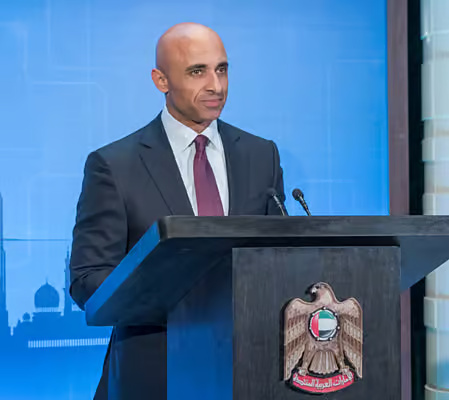
Yousef Al Otaiba, the United Arab Emirates Ambassador to the United States, on Tuesday (April 21) pushed back against suggestions that the Emirates requires “external financial backing.”
“Any suggestion that the United Arab Emirates requires external financial backing misreads the facts,” said Yousef Al Otaiba.
In his statement, Al Otaiba stressed that the UAE is “one of the world’s most financially resilient economies,” pointing to more than $2 trillion (Dh7.34 trillion) in sovereign investment assets, over $300 billion (Dh1.10 trillion) in foreign currency reserves held by the Central Bank of the United Arab Emirates, and a banking sector with around $1.5 trillion (approximately Dh5.51 trillion) in deposits.
“That strength is precisely why the United Arab Emirates has already invested more than $1 trillion in the US economy, with a clear pathway for that figure to grow significantly,” Yousef Al Otaiba said on social media platform X.
“The UAE and the United States will continue to prosper together for decades to come, not because one depends on the other for support, but because both benefit from one of the world’s most important economic partnerships,” he added.
The remarks followed comments by Donald Trump, who said Washington was considering financial cooperation measures with the UAE, including a potential “currency swap” arrangement.
“It is,” Trump told CNBC when asked whether a currency swap with the UAE was under consideration, describing the Emirates as a strong ally.
“They’re really led by incredible people… I mean, I’m surprised, because they are really rich,” he said.
“If I could help them, I would. I mean, we’re helping them much more with what we’re doing with the war,” Trump added, referring to the US and Israel’s conflict with Iran.

