

According to the Bangko Sentral ng Pilipinas, remittances through banks climbed to $3.02 billion in January but dropped 7.7% to $2.79 billion in February, marking the lowest level since May 2025.
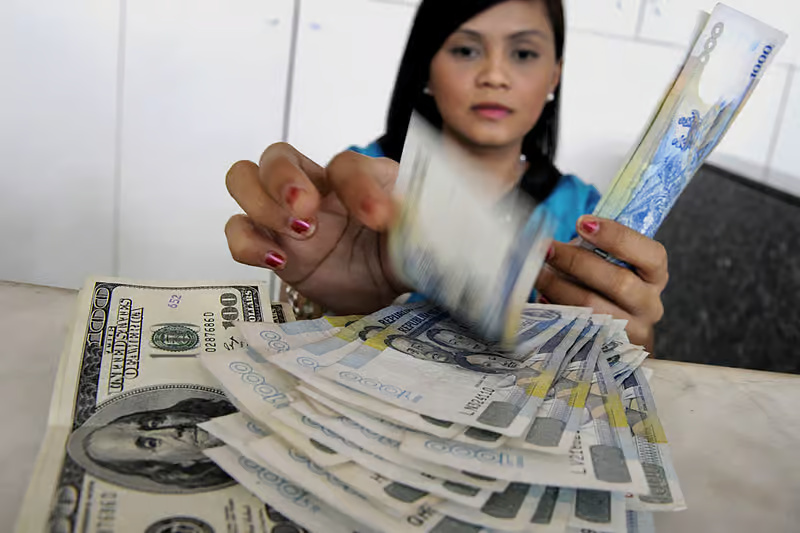
Cash remittances from Filipinos abroad dropped to a nine-month low in February, the Philippine central bank said. Bank remittances rose to $3.02 billion in January before falling 7.7 per cent to $2.79 billion in February, the BSP said.
The figure represented the weakest level of bank-based remittances since the $2.66 billion inflow in May 2025. According to the BSP, land-based overseas Filipino workers remitted $2.25 billion in February, while sea-based workers contributed $530 million.
The bank said the drop may reflect higher remittances sent during the Christmas and New Year period in December and January.
The BSP said the United States was the top source of cash remittances in January–February 2026, accounting for 40 per cent of the total, followed by Singapore and Saudi Arabia.
Other sources included Singapore (7.6%), Saudi Arabia (6.1%), Japan (5.3%), the UK (4.7%), the UAE (4.2%), Canada (3.1%), Taiwan (3%), Qatar (2.9%), and Hong Kong (2.7%).
Personal remittances—sent via banks, digital apps, remittance centres, informal channels, and in-kind transfers—rose 2.6 per cent to $3.1 billion in February from $3.02 billion a year earlier, BSP said.
For January–February, inflows grew 3.1 per cent to $6.46 billion from $6.27 billion a year ago.
DepDEV warned that Middle East tensions could weigh on OFW remittances in 2026, with Secretary Arsenio Balisacan saying losses could reach P167.45 billion if conflict triggers job losses and repatriations.
OFW remittances, from 10–15 million Filipinos abroad, account for up to 10 per cent of GDP and are the country’s main source of foreign exchange.

