

The framework establishes regulations for school canteens and suppliers, including a list of prohibited food items.
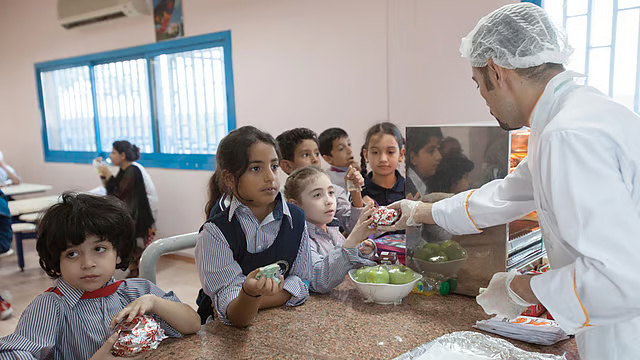
The UAE’s health authorities have issued the National Guide for Food and Beverages in the School Environment, aimed at supporting school administrations, food suppliers, and service providers in making informed choices that ensure students have access to a wide range of healthy and nutritious food and beverages throughout the school day.
The guide is designed to help students develop healthy eating habits while ensuring they receive the energy and nutrients needed for academic performance. It highlights the importance of providing age-appropriate, nutritious food options that support both physical and cognitive development.
By promoting balanced meals, the guide seeks to improve concentration and memory, enhance academic achievement, reduce obesity and malnutrition, and encourage long-term healthy eating habits.
In addition, the guide provides practical, evidence-based information on key nutrition concepts and recommendations to promote healthy eating habits among students. It sets clear standards and requirements for the sourcing, preparation, and storage of food and beverages to ensure both their nutritional value and safety.
School food and beverage framework
The guide introduces a structured system for managing all food and beverages sold, provided, or promoted within school premises. It also ensures coordination among relevant authorities without conflicting with existing national and local food safety regulations, which remain under the jurisdiction of the competent bodies.
It standardises criteria across all schools and educational institutions in the UAE and establishes mechanisms to monitor implementation, with the aim of improving students’ health and nutrition outcomes.
The guide also clearly defines the roles and responsibilities of both local and federal authorities across the implementation, oversight, and evaluation stages.
Guidelines applicable to all educational institutions
The document confirms that its guiding principles apply to public, private, independent, and vocational schools, as well as centres for People of Determination across the UAE. It also extends to food suppliers and any entities responsible for managing or operating school canteen services.
Local authorities are assigned four key responsibilities:
- Supervising schools’ compliance with health and nutrition standards
- Designating entities responsible for monitoring and inspection within each emirate
- Establishing appropriate procedures and penalties to ensure compliance
- Following up on corrective actions in cases of violations
They are also responsible for collecting and analysing data on implementation and submitting periodic reports to the Ministry of Health and Prevention. These reports must include compliance levels, inspection findings, corrective measures taken, recorded violations, and proposed initiatives to further improve implementation.
Three types of school canteens
The guide classifies school canteens into three categories:
- Canteens that sell and distribute pre-packaged food items
- Cafeterias that prepare sandwiches
- Full-service kitchens (school restaurants)
Responsibilities assigned to schools
Schools are assigned 13 key responsibilities, including full compliance with all food service standards and requirements. School canteens must adhere to strict specifications related to food safety, hygiene, and quality. Staff working in canteens must also receive appropriate training in nutrition and hygiene standards.
Food suppliers must hold valid permits issued by local municipalities and comply with all prescribed standards. School administrations are also required to regularly ensure that all products meet the specified nutritional guidelines.
Parents are granted access to canteen menus, and all food-related complaints must be properly recorded along with the actions taken. Schools are also required to regularly review the roles and responsibilities outlined in the national guide.
Responsibilities of food suppliers
The guide sets strict obligations for food suppliers, including:
- Obtaining and maintaining valid permits
- Continuous compliance with nutritional standards
- Conducting nutritional assessments for all food items based on ingredients and portion sizes
- Providing relevant information to schools and regulatory authorities when required
Nutritional data must be updated whenever there are changes to products, ingredients, proportions, or portion sizes. Suppliers are also required to comply with contractual obligations and coordinate with schools to address students’ individual dietary needs. In addition, all food handlers must meet health fitness requirements set by the relevant authorities.
List of prohibited foods and beverages in schools
The guide strictly bans a range of unhealthy and allergen-related items within school environments, including:
- All sugary drinks such as soft drinks, energy drinks, and flavoured beverages
- Tea and coffee
- Hard and soft candies, gum, and lollipops
- Chocolate and chocolate-coated biscuits
- Fried foods, potato chips, French fries, cakes, and doughnuts
- Nuts and products containing traces of nuts, including nut pastes and nut-based biscuits
- Processed meats such as mortadella and sausages
This landmark guide represents a significant step towards creating a healthier school environment across the UAE, reinforcing the country’s commitment to student well-being and long-term public health.

