

Cooler weather persists across the UAE as the seasonal transition toward summer begins.
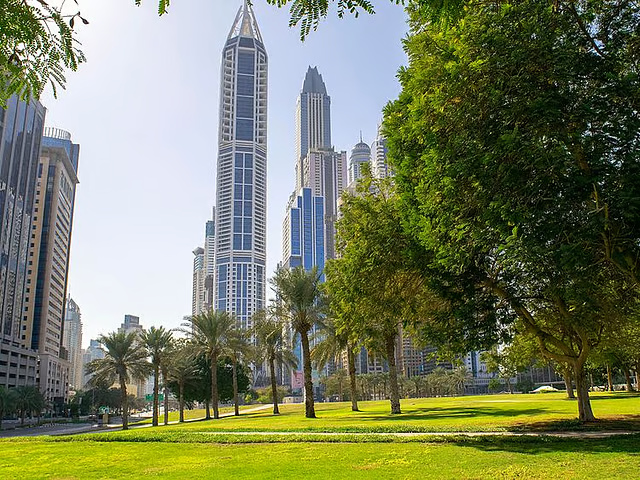
Dubai: It is mid-spring in the UAE, yet the weather continues to feel distinctly wintry. Cooler temperatures, fresh winds, and recent rainfall have extended what many residents perceive as an unusually long winter—but has it finally ended?
The short answer, according to experts, is not yet, though it is nearing its close.
A spring that still feels like winter
Despite the seasonal shift into spring, recent conditions across the UAE have remained milder than usual. Since last Thursday, the country has been influenced by a combination of atmospheric systems, including a surface low-pressure extension from the east and a high-pressure system from the west, supported by an upper-level ridge.
This interaction has resulted in relatively cool and stable conditions, with intermittent cloud cover and rainfall, extending pleasant weather well into April.
But the underlying cause lies deeper in the atmosphere.
At this time of year, the UAE lies at the intersection of cooler northern air masses and warmer southern air flows. The interaction and balance between these systems determine the weather patterns from one week to the next.
“When colder air masses dominate, temperatures drop and conditions become more unstable, sometimes bringing rainfall,” meteorologists explain. “When warmer air masses prevail, temperatures rise rapidly.”
Currently, cooler air masses are dominating, which is why conditions still feel more like winter than summer.
Many residents are not mistaken; this year’s winter has felt longer than usual. Temperatures have remained below seasonal averages, extending the period of pleasant weather further into spring.
That said, this prolonged mild spell remains within the normal range of seasonal variability for the region.
From a meteorological standpoint, winter has already concluded, and the UAE is currently in spring—a transitional season that continues until June 21, when summer officially begins.
After that, temperatures typically rise sharply, with summer highs ranging between 40°C and 45°C, and occasionally exceeding 50°C in inland and desert areas.
The key question is whether more cooler weather is expected. The answer is: possibly, but only briefly.
According to Ibrahim Al Jarwan, Chairman of the Board of Directors of the Emirates Astronomical Society and a member of the Arab Union for Astronomy and Space Sciences, there is still scope for weather fluctuations, including low-pressure systems, until around the first week of May.
This period is known for seasonal disturbances such as “Sarayat”, which can bring sudden weather changes, including thunderstorms and rainfall.
Late April may also experience what are locally known as “Thuraya rains”, often linked to short but sometimes intense bouts of weather activity.
Al Jarwan also noted the possibility of a brief early heatwave in the coming days, with temperatures potentially reaching around 40°C, before easing back to typical spring levels above 35°C.
What happens after early May?
Once the first week of May passes, the seasonal transition becomes more pronounced.
Temperatures begin to rise steadily, while the influence of cooler northern air masses gradually weakens. At the same time, a key seasonal driver starts to take hold—the Indian monsoon low-pressure system.
This large-scale thermal system develops over the Indian subcontinent from April and intensifies through June and July. As it expands, it draws hotter air across the Arabian Peninsula, gradually shaping the UAE’s characteristic summer weather pattern.
For now, the UAE remains in a transitional phase, where cooler days, cloud cover, and occasional rain are still possible, but are increasingly mixed with warmer and more humid conditions.
So while winter has not ended abruptly, its influence is gradually diminishing.
In the coming weeks, a mix of lingering spring variability and steadily rising temperatures is expected. By the time May arrives, the seasonal shift will become clearly noticeable.

