

From feeder vessels to cold-chain hubs, DP World is mapping out new supply routes to ensure the steady movement of essential goods.
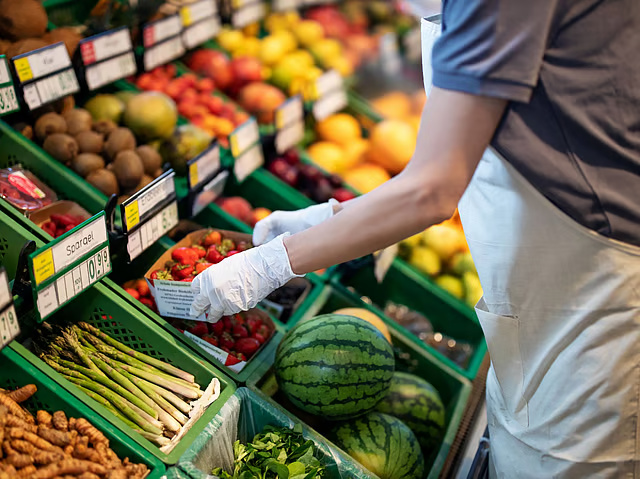
DUBAI: Keeping supermarket shelves stocked has become a complex logistics operation spanning ports, highways, and international trade corridors, as operators adjust supply chains to ensure the continuous flow of food and essential goods into the United Arab Emirates without disruption.
At the heart of these efforts is DP World, which has been prioritising essential cargo from the outset and coordinating closely with government bodies, traders, and manufacturers to ensure imports continue to flow smoothly, even as conventional shipping routes come under strain.
In an exclusive interview with Gulf News, Ahmad Yousef Al Hassan said the approach is based on a clear priority system, beginning with essential goods such as food, pharmaceuticals, and agricultural inputs before extending to industrial supply chains that support local production.
He noted that close coordination with government entities is central to ensuring the steady flow of critical supplies into the United Arab Emirates.
“We work very closely with the government, especially many ministries, on essential goods for the UAE. These include food and beverages, as well as categories such as milk, rice, animal feed, and pharmaceuticals,” he said.
Jebel Ali Port alone handled around 750,000 TEUs of essential goods last year, with approximately two-thirds consisting of food and beverage shipments, highlighting the scale of cargo that must be safeguarded during periods of disruption.
Mapping supply, not stockpiling
Instead of building large inventories, the focus has shifted toward mapping demand and ensuring uninterrupted supply flows. Traders and manufacturers are being encouraged to identify their most critical imports so that cargo can be prioritised and routed through the fastest available channels.
“There are sufficient essential goods; there is no panic,” Ahmad Yousef Al Hassan said, adding that the priority is to keep trade moving smoothly rather than accumulating excess stock.
That approach also applies to sourcing, where alternative supply markets in countries such as India and Pakistan are being activated when traditional suppliers experience delays. Feeder vessels are being used to rapidly transport goods into ports across the United Arab Emirates.
Other feeder operators are also being encouraged to adopt similar prioritisation strategies to reduce congestion and improve turnaround times across key shipping routes.
Cold chain receives additional support
Fresh food supply chains have required extra intervention, especially on longer inland transport routes. DP World has expanded refrigerated container capacity and introduced stopover facilities to maintain consistent temperature control.
A dedicated inland facility has also been set up, allowing refrigerated containers to plug into power and stabilise before continuing their journey, helping reduce the risk of spoilage during extended transit.
“We have this reefer pit stop that will help out as well,” Ahmad Yousef Al Hassan said, highlighting efforts to reassure traders that temperature-sensitive cargo can be handled reliably.
He added that additional generator units have been deployed to power refrigerated containers on trucks, providing logistics teams with greater flexibility across transport corridors.
Global network support
DP World is leveraging its international network to reroute cargo flows, using ports in India and Pakistan as staging points for transshipment and helping prevent congestion at eastern Gulf hubs. For food and beverage shipments alone, these two countries account for nearly 30% of imports through Jebel Ali Port.
The company is also using its integrated logistics and shipping solutions to design alternative routes and ensure the smooth movement of critical cargo across markets.
Jebel Ali remains the region’s gateway hub
How food continues to reach the UAE despite regional tensions was explained by Ahmad Yousef Al Hassan, who said the company’s global logistics network enables customers to seek real-time solutions for moving construction materials, raw materials, and food-related agricultural goods.
He noted that this integrated network is driving demand for rapid response solutions across global supply chains.
Expanding regional trade corridors
Multiple trade routes are being activated to maintain the flow of goods. Corridors through Fujairah Port and Khorfakkan Port are already in operation, while discussions are ongoing with Sohar Port to expand capacity and streamline logistics processes.
Further north, DP World’s terminal in Jeddah Islamic Port is being used to handle additional cargo, supported by discussions between UAE and Saudi authorities on creating a bonded corridor to enable smoother movement of goods between the two markets.
Each additional route increases flexibility for traders, reducing dependence on any single port or shipping lane.
Managing congestion to control costs
While supply levels remain stable, shipping and logistics costs are facing wider market pressure due to changing diesel prices, insurance premiums, freight rates, and other operational cost factors.
Ahmad Yousef Al Hassan said the focus for DP World is to keep trade moving efficiently while easing congestion across key logistics corridors.
Faster clearance processes, improved routing, and coordinated planning are helping ease pressure across the broader supply chain and reduce potential knock-on effects on end consumers.
Authorities are also closely monitoring prices, using mechanisms developed during earlier disruptions to maintain oversight across key essential categories.
Keeping the system balanced
The challenge extends beyond food logistics, with industrial supply chains also needing to remain operational—from raw materials for manufacturing to equipment required for ongoing projects.
Balancing these competing demands has required continuous coordination between regulators, port operators, and private-sector stakeholders to ensure essential goods are prioritised while still maintaining capacity for wider trade flows.
So far, the system has remained stable, supported by strong planning, robust infrastructure, and fast decision-making.
According to Ahmad Yousef Al Hassan, this coordinated approach is what ensures supermarket shelves remain stocked without panic or shortages, even under a challenging operating environment.

