

Relief rally gains momentum on ceasefire optimism, though shipping and energy risks continue to linger.
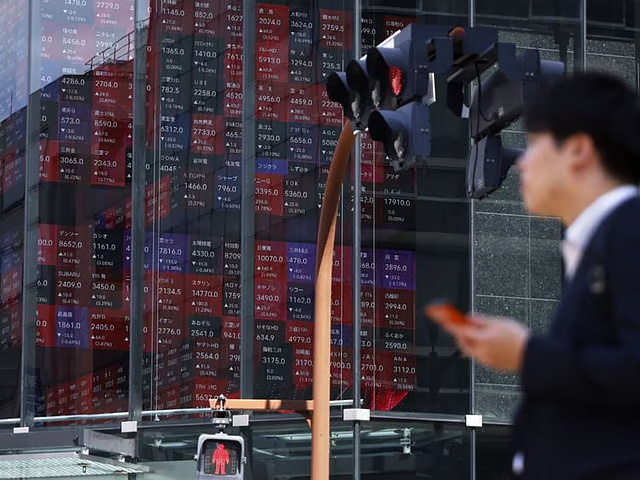
Dubai: Asian equities climbed on Friday, extending their first weekly gain since the outbreak of the Middle East conflict, as investors leaned into optimism ahead of scheduled US–Iran talks this weekend.
The MSCI Asia Pacific Index rose 0.8%, while a 1.7% gain in South Korea underscored continued demand for technology stocks, which are viewed as relatively less exposed to geopolitical disruptions. US equity futures also reversed earlier losses to trade higher, alongside European contracts, pointing to a broader recovery in market sentiment.
US President Donald Trump said he was “optimistic” about reaching a deal with Iran, while also warning Tehran over shipping-related tensions in the Strait of Hormuz. The mixed messaging left markets balancing hopes for de-escalation with ongoing caution over regional risks.
Oil markets are easing on reduced near-term fears, with Brent crude trading around $96.53 a barrel and heading for its steepest weekly decline in nine months. The move suggests traders are currently pricing in a lower risk of immediate supply disruption, even as underlying concerns persist.
Yet conditions on the ground remain far more constrained. Shipping through the Strait of Hormuz is still sharply reduced, with activity estimated at less than 10% of normal levels and only a handful of vessels transiting daily, compared to typical flows of around 45 ships.
This widening gap between improving market sentiment and restricted physical flows continues to drive uncertainty across energy markets and global supply chains.
Relief, not resolution
The current market reaction is being seen largely as a short-term relief move rather than a full resolution of risk.
Lale Akoner, Global Market Analyst at eToro, noted that while the ceasefire may calm immediate panic, it does not eliminate underlying risks. She added that “market prices adjust much faster than physical flows,” and that shipping firms may require time to rebuild confidence, with port activity potentially taking around two months to normalise.
Recovery in inventories is expected to take longer. Energy analysts estimate that it could take around four months for OECD stockpiles to return to more comfortable levels. She also noted that lower crude prices may not quickly translate into cheaper fuel for consumers, due to delays in supply chains as well as higher insurance and rerouting costs.
She added that while “today’s market euphoria is understandable,” it is more likely to represent a relief-driven rally rather than a sustained signal of stability or an “all-clear” for markets.
Gold is steadying after a volatile period, as markets reassess shifting geopolitical risks.
Ahmad Assiri, Research Strategist at Pepperstone, said price action has largely been driven by shifting perceptions of geopolitical risk. He noted that gold is showing signs of stabilisation after a volatile phase, with recent movements reflecting a repricing of risk rather than any other fundamental factor.
The metal briefly moved above $4,800 following the ceasefire before easing back, while still holding above $4,700. Key levels remain in focus, with resistance around $4,800 and support between $4,700 and $4,720.
He added that volatility has eased over the past two days, potentially signalling a phase of accumulation, suggesting the market is pausing rather than reversing direction.
Dollar weakens as risk appetite improves
The US dollar is on track for its biggest weekly decline since January, reversing earlier gains made during the peak of the conflict. A softer dollar is supporting commodities and equities, reinforcing the broader risk-on sentiment across markets.
Still, geopolitical signals remain mixed. Israel has agreed to enter talks with Lebanon, while reports of fresh drone activity in Kuwait underscore how fragile the ceasefire remains and the risk of renewed escalation.
What comes next
Attention now turns to negotiations in Islamabad, which are expected to shape market direction in the week ahead.
Recent gains in equities and the easing in oil prices reflect improving sentiment, but underlying pressures remain—driven by disrupted shipping flows, the need to rebuild inventories, and ongoing geopolitical uncertainty.
Markets are likely to stay headline-driven, with developments in energy supply routes and political negotiations continuing to set the tone for moves across asset classes.

