

The regulations include guidelines on pricing, licensing, waiting fees, and penalties for misuse at charging stations.
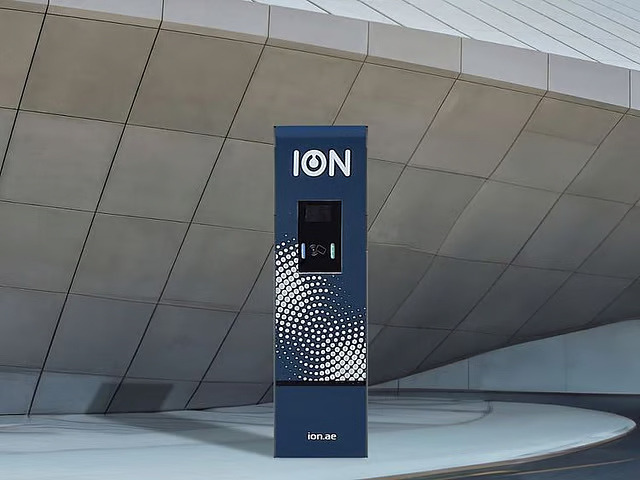
Sharjah has rolled out a comprehensive regulatory framework for electric vehicle (EV) charging infrastructure, establishing clear rules on pricing, licensing, and penalties as the emirate pushes forward with its sustainable mobility agenda.
Issued under Executive Council Resolution No. 15 of 2026, the law covers all areas of Sharjah, including free zones and private developments, and requires full compliance from both operators and users.
The regulation prohibits installing or operating EV charging stations without prior approval, imposing fines of up to Dh10,000 for unlicensed operations. Operators who fail to meet approved safety and technical standards face penalties of Dh5,000.
Standardised pricing and waiting fees
The regulation introduces unified charging rates across Sharjah, with slow AC charging set at Dh0.7 per kilowatt-hour and fast DC charging at Dh1.2 per kilowatt-hour, both inclusive of VAT.
Drivers receive a 10-minute grace period once charging is complete. After that, a waiting fee of Dh2 per minute applies, capped at 60 minutes.
Penalties for overstaying and clear rules for charging
Authorities have warned that vehicles left connected beyond the 10-minute grace period could face additional fines of Dh1,000.
Public and private charging regulations
Public charging stations must be located in accessible areas with equitable geographic coverage, feature digital payment and remote monitoring systems, and include clearly marked EV-only parking spaces.
Private entities, including property owners and developers, may install charging points on their premises, provided they obtain the necessary approvals and comply with technical standards.
Strict penalties for misuse
Non-electric vehicles occupying EV charging spots or blocking access face fines of Dh1,000, while any damage to charging infrastructure carries a Dh2,000 fine in addition to repair costs.
Impounding and multi-agency oversight
Under the new rules, Sharjah Police are authorized to impound any vehicle—electric or non-electric—left in EV charging spaces for more than 24 hours, with owners responsible for all towing and storage fees.
Coordinated implementation
The framework will be enforced by multiple government entities, including Sharjah Roads and Transport Authority, Bee’ah Group, local municipalities, Sharjah Electricity, Water and Gas Authority (SEWA), and the Department of Economic Development.
Authorities are also empowered to issue additional technical guidelines to ensure safety, service quality, and readiness of the EV charging infrastructure.

