

The UAE’s National Center of Meteorology warned of rain in scattered areas nationwide.
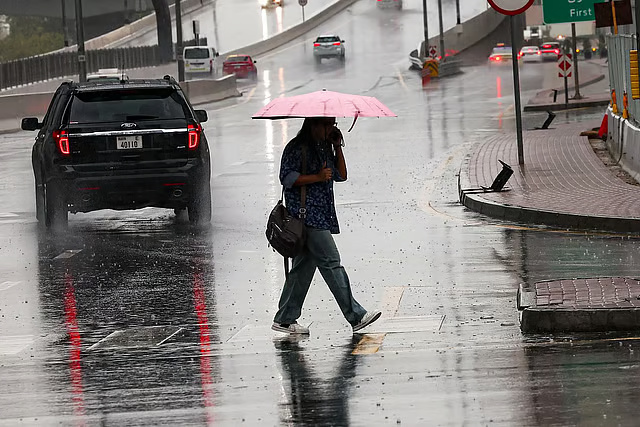
Dubai: Showers have affected parts of the UAE, including Dubai, Sharjah, and Abu Dhabi, with authorities urging drivers to exercise caution.
The National Center of Meteorology (NCM) has issued a rain alert for scattered areas across the country, warning residents of convective cloud formations bringing light to moderate rainfall, occasionally heavy, accompanied by fresh to strong winds that may stir up dust.
Scattered showers have been reported across Umm Al Quwain and Sharjah, while Dubai is experiencing light rainfall in several areas, including DIP 2, Al Quoz, Dubai Silicon Oasis, and Al Warsan.
Residents in affected areas are advised to exercise caution on the roads, as wet conditions combined with reduced visibility from dust can make driving especially hazardous.
The alert is in effect from 7:20 a.m. on Tuesday, March 31, 2026, until 12:20 a.m. on Wednesday, April 1, 2026.
This morning, the lowest temperature recorded in the UAE was 12°C at Jais Mountain, Ras Al Khaimah, at 12:30 UAE local time.
Dubai Police welcomed the rainfall but reminded drivers that road safety is a shared responsibility. Motorists are urged to:
Driving during rainy weather
Residents and motorists are advised to exercise caution as wet conditions affect road safety across the UAE:
- Check your vehicle before setting off.
- Monitor speed and maintain safe distances.
- Follow traffic rules and drive attentively in rainy conditions.
Abu Dhabi Police urged motorists to adhere to changing speed limits displayed on electronic boards and emphasized the importance of safe driving in wet weather.
Sharjah Police called on drivers to reduce speed, maintain safe distances, and avoid valleys and dams during rain.
Authorities across the UAE continue to monitor weather conditions, and the public is advised to stay alert while traveling during the rainy period.


Essential tips for driving in rainy weather
Ensure your vehicle is road-ready:
- Check that brakes, tires, and lights are functioning properly.
- Verify windshield washer fluid levels.
- Ensure wipers are in good condition.
- Clean windows, mirrors, and headlights to improve visibility.
Maintain safe distances:
- Increase the gap between your vehicle and the one ahead to allow more reaction time.
Drive carefully and control speed:
- Keep within speed limits and reduce speed gradually on wet roads.
- Avoid overtaking or sudden acceleration; wet surfaces reduce brake efficiency.
Follow traffic rules:
- Obey traffic lights and avoid sudden starts at green signals.
- Pay attention to emergency or warning signs, particularly near tunnels or areas prone to flooding.
Use lights wisely:
- Switch on headlights when visibility is reduced, but avoid using high beams in heavy rain.
Use lights wisely:
- Turn on headlights and allow extra space for other vehicles.
- Use fog lights if necessary, but avoid high beams in fog or rain.
- Hazard/quad lights should be used only in emergencies.
Plan for delays:
- Be patient and allow extra travel time, as rain can slow traffic.
Avoid flooded areas:
- Steer clear of stagnant or flowing water; it may be deeper than it appears.
- If water is too deep or flowing rapidly, turn back and find an alternative route.
Parking and stopping:
- Do not stop on the road or near traffic lanes to avoid collisions from vehicles behind.
Intersection caution:
- Exercise extra care at junctions, as wet surfaces and reduced visibility increase the risk of accidents.
Watch for slippery surfaces:
- Be alert at junctions and other areas where oil may mix with water, creating slippery conditions.
Tunnels and wet areas:
- Stay in your lane in tunnels, as road markings may be difficult to see.
- After passing through deep water or wet tunnels, test your brakes at low speed to ensure they are working effectively.
