

Since acquiring the club in 2021, Saudi PIF has not had the impact they may have anticipated.
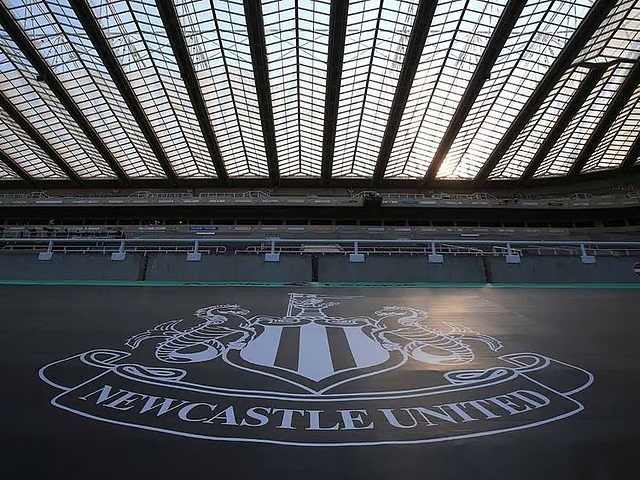
When news emerged that the Saudi Public Investment Fund (SPIF) had acquired Newcastle United in 2021, fans took to the streets in celebration, hopeful that the club’s newfound financial backing would elevate them into football’s elite.
With an estimated value of around $620 billion, SPIF became the Premier League’s wealthiest owners by a significant margin. Considering the success Manchester City achieved following their Middle Eastern takeover in 2008, Newcastle supporters had every reason to be optimistic.
Five years on, the Magpies have seen some success, including winning their first trophy in over 50 years with the 2025 EFL Cup triumph. However, Newcastle still seem a long way from achieving the elite status chief executive David Hopkinson had envisioned for 2030.
Howe explained: “The club is eager to be ambitious, but there’s a limit to what we can spend. I think the rules have made it very difficult; I’m not sure how we can get around that system.”
How SPIF is being held back
The Premier League’s Profit and Sustainability Rules (PSR), introduced in 2013, serve as the league’s version of financial fair play, designed to ensure clubs spend within their means and maintain financial stability.
The rules are designed to prevent overspending that could jeopardize a club’s long-term stability, ensuring teams do not spend significantly more than they earn in pursuit of success.
Under these regulations, clubs can report a pre-tax loss, but only up to a set threshold—recently around £105 million over three seasons. Owner contributions to cover losses are capped, and clubs must submit audited financial statements to show they are managing their spending responsibly.
While clubs like Manchester City were able to invest freely to expand their operations, the introduction of the PSR has limited Newcastle’s Saudi owners, preventing them from achieving the same level of financial impact under the current Premier League framework.
The PSR has required Newcastle to balance ambition with financial compliance, restricting large short-term spending on transfers and wages.
This has slowed the club’s ability to compete with Europe’s elite, making long-term growth reliant on strategic recruitment and sustainable investment rather than sheer financial power.
A clear example of the PSR’s impact is the sale of academy graduate Elliot Anderson, who has since become an England regular. After spending £404.7 million in the first three years while generating only £50.4 million from player sales, SPIF faced the realities of the PSR and were compelled to sell Anderson to Nottingham Forest to avoid a points deduction.
What’s the solution?
The new Squad Cost Ratio (SCR) rule, set to replace PSR on July 1, is expected to provide Newcastle and their Saudi owners with more flexibility.
Unlike PSR, which focused on capping losses, SCR is based on income: the more a club generates, the more it can spend. This should benefit Newcastle by allowing greater investment in the squad relative to their revenue, rather than being constrained by the old multi-year loss limits under PSR.
While SCR offers SPIF more leeway to invest, it is unlikely to be transformational, particularly when rival clubs enjoy higher spending power thanks to larger commercial and matchday revenues.
One clear way for SPIF to increase spending power is by boosting matchday revenue through stadium investment, as these costs are excluded from SCR calculations.
Newcastle’s matchday revenue stood at £50 million in 2023–24, compared with £102 million for Liverpool and £137 million for Manchester United.
With St James’ Park capped at 52,000 seats, the club will need a major redevelopment—or potentially a new stadium funded by the owners—if they hope to close the gap with the Premier League’s so-called “big six.”

