

Increases in freight costs, insurance charges, and shipping delays are contributing to higher prices for everyday essentials.
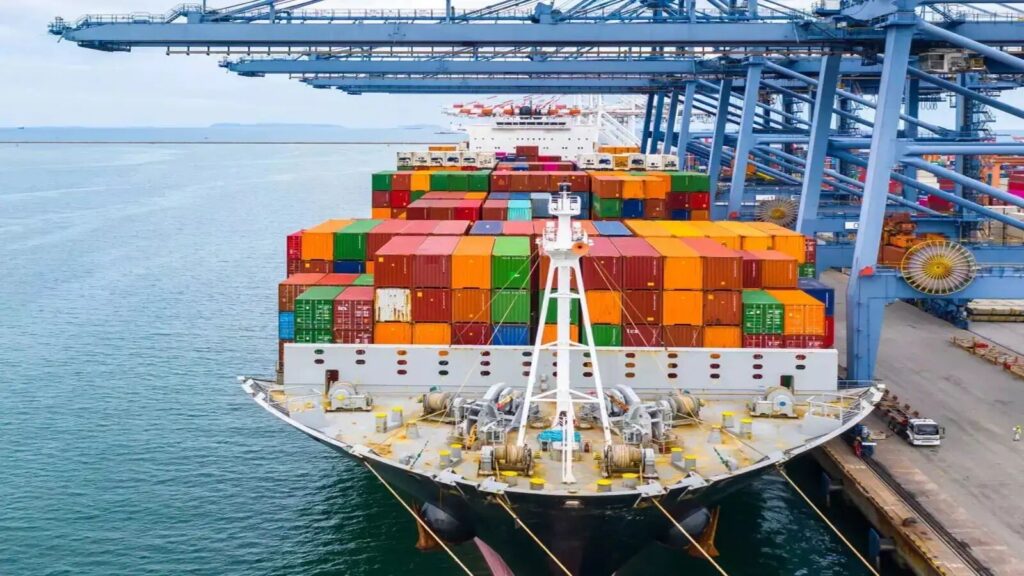
Dubai: Disruptions thousands of kilometres away are starting to impact consumers directly, as rising shipping risks across the Gulf drive up the costs of everyday essentials, electronics, and even construction materials at the checkout counter.
Logistics experts monitoring vessel movements say the pressure is mounting through a familiar chain reaction: insurance premiums rise first, shipping routes become uncertain, transit times lengthen, and freight costs increase. What starts at sea eventually translates into higher retail prices.
“Shipping companies continuously assess risks in coordination with maritime authorities and insurers,” said Sheikh Haris, CEO of Gallop Shipping in Dubai. “Any disruption around critical chokepoints naturally impacts operations. Transit times can be extended, and freight rates tend to increase due to higher insurance costs, additional security measures, and potential congestion at ports.”
The Strait of Hormuz remains a pivotal factor in this dynamic, serving as the main gateway to the Gulf’s import-dependent economy.
Rerouting costs time and money: Shipping lines are already adjusting operations, with some vessels slowing down or changing schedules, while others take longer routes to avoid high-risk areas.
Dr. Sathya Menon, Chairman and Managing Director of Blue Ocean Corporation, noted that rerouting is no minor adjustment. “In some cases, vessels are being redirected via longer routes, such as around the Cape of Good Hope, which can significantly extend transit times,” he said, adding that delays of up to 20–25 days are being recorded on certain routes.
These changes reduce the number of voyages ships can complete annually, tightening capacity and pushing freight rates higher. Congestion at alternative ports adds further costs.
The region has made substantial investments in logistics resilience, including major port hubs like Jebel Ali Port, Hamad Port, Shuwaikh Port, King Abdulaziz Port, and Khalifa Bin Salman Port, alongside strategic stockpiles and diversified sourcing. While these measures help absorb short-term disruptions, prolonged disruptions would still drive up costs and create supply pressures.
Insurance becomes the biggest pressure point: The most pronounced cost increase is coming from insurance, which has emerged as a clear indicator of geopolitical risk.
“War-risk insurance is one of the first cost elements to react to geopolitical tensions,” said Sheikh Haris. “These premiums can rise sharply during periods of conflict, sometimes several times above normal levels.”
Shipping sector data illustrates the magnitude of the spike. Premiums that typically range from 0.2% to 0.5% of a vessel’s value have surged to as much as 3% under current conditions, according to Dr. Sathya Menon. In extreme cases, insurers have raised rates by over 1,000%.
For large tankers valued between $200 million and $300 million, this translates into millions of dollars per voyage. These costs are ultimately passed along the supply chain as war-risk surcharges, sometimes adding $1,500 to $4,000 per container.
Costs set to pass through to consumers: Rising shipping costs are already filtering through global supply chains, with industry leaders warning that consumers will ultimately feel the impact. Vincent Clerc, CEO of Maersk, explained that transport cost increases linked to the conflict are automatically passed on through fuel and logistics pricing mechanisms, meaning higher freight charges will be reflected in retail prices.
He added that fuel-driven cost increases alone are adding about $200 per container, resulting in freight hikes of roughly 15% to 20%, depending on routes and cargo. This reinforces expectations that everyday goods—from food to electronics—will gradually become more expensive.
Gulf supply chains hold, but pressure builds: Despite the strain, the region’s logistics infrastructure remains resilient. Years of investment in ports, inventory systems, and sourcing strategies are helping to cushion the immediate impact.
Major hubs like Jebel Ali Port continue to operate efficiently, and east coast facilities provide some operational flexibility. However, the volume and strategic importance of the Strait of Hormuz cannot be easily replaced, leaving the region vulnerable to ongoing pressure.
Industries such as automotive components, electronics, and construction materials may also face cost pressures as freight rates and logistics expenses rise. However, the Gulf has built strong logistics resilience over the years, supported by world-class ports, diversified sourcing, and robust inventory planning. “Logistics is not just the movement of cargo. It is the movement of economies. And in this industry, we don’t panic; we plan,” said Sheikh Haris, CEO of Gallop Shipping.
“The Strait of Hormuz is one of the world’s most critical maritime corridors,” he added. “It is more than a shipping lane — it is the gateway of the Gulf economy.”
Dr. Sathya Menon echoed this view, noting that while infrastructure investments help absorb short-term shocks, prolonged disruptions would still drive up costs and tighten supply conditions.
First signs of inflation will be gradual: Consumers are unlikely to encounter empty shelves in the near term. Instead, price increases are expected to appear gradually, driven primarily by rising logistics and energy costs.
“If disruptions continue for several weeks, the first sectors likely to feel the impact would typically be fast-moving consumer goods, food imports, and retail products that rely on consistent shipping cycles,” said Sheikh Haris.
Dr. Sathya Menon highlighted a wider range of sectors already under cost pressure, including fuel, petrochemicals, textiles, and electronics. He added that oil prices exceeding $100 per barrel are further driving up production and transport costs across industries.

