

Most countries are expected to observe Eid Al Fitr on Friday, March 20, based on astronomical calculations.
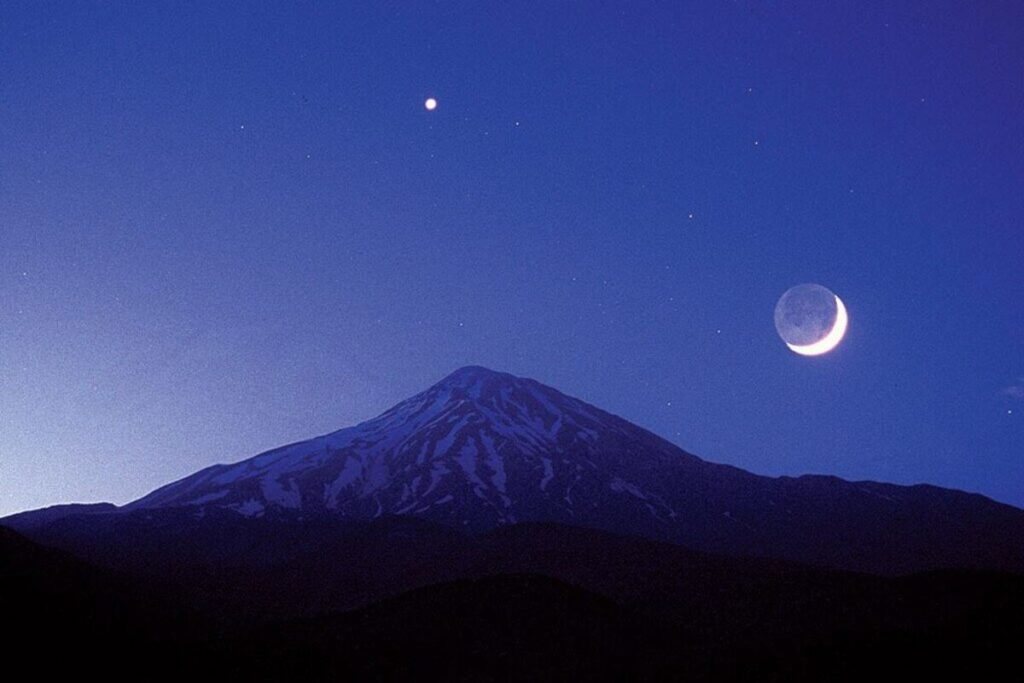
Dubai: The International Astronomy Centre has announced that sighting the crescent moon marking the start of Shawwal will be impossible on Wednesday, suggesting that Eid Al Fitr is astronomically expected to fall on Friday, March 20.
Engineer Mohammed Shawkat Odeh, Director of the Abu Dhabi-based International Astronomy Centre, explained that countries which began Ramadan on Wednesday, February 18, will attempt to sight the Eid crescent on Wednesday, March 18.
Meanwhile, countries that started Ramadan on Thursday, February 19, will observe the crescent on Thursday, March 19, marking the 29th day of Ramadan in those countries.
Odeh explained that sighting the Shawwal crescent on Wednesday, March 18 will be impossible because the moon will set before the sun, and the astronomical conjunction will occur after sunset.
As a result, these countries are expected to complete 30 days of Ramadan, making Friday, March 20, the first day of Eid Al Fitr.
Sighting
He added that for countries observing the crescent on Thursday, March 19, sighting will be impossible from the eastern parts of the world.
However, it may be possible, though difficult, to see the crescent with telescopes in parts of West Asia and central and northern Africa, and extremely difficult with the naked eye in western Europe and western Africa.
Where the crescent could be seen with the naked eye
The crescent could be seen relatively easily with the naked eye across most of North America.
“Accordingly, the majority of these countries are expected to announce Friday, March 20, as the first day of Eid Al Fitr,” Odeh said.
“Given the difficulty of observing the crescent on Thursday, March 19, from large parts of the Islamic world—particularly in the east and central regions—a considerable number of countries may not confirm the sighting, which could result in Saturday, March 21, being declared Eid in those areas,” Odeh said.
He also outlined the astronomical conditions of the crescent on Thursday in several global cities.
In Jakarta, the moon will set 10 minutes after sunset, with an age of 11 hours and 23 minutes and an angular separation from the sun of 5.2 degrees, making sighting impossible even with a telescope.
In Abu Dhabi, the moon will set 29 minutes after sunset, with an age of 14 hours and 12 minutes and an angular separation of 6.6 degrees, making observation possible only with a telescope and under exceptionally clear atmospheric conditions.
In Riyadh, the moon will set 30 minutes after sunset, with an age of 14 hours and 38 minutes and a separation of 6.9 degrees. In Amman and Jerusalem, it will set 36 minutes after sunset, with an age of 15 hours and 7 minutes and a separation of 7.3 degrees.
In Cairo, the moon will set 35 minutes after sunset, with an age of 15 hours and 19 minutes and a separation of 8.6 degrees. In all of these locations, visibility would only be possible using telescopes under very clear skies.
He noted that in Rabat, the moon will set 44 minutes after sunset, with an age of 17 hours and 11 minutes and an angular separation of 7.4 degrees, making sighting with the naked eye extremely difficult even in perfectly clear conditions.
In Amsterdam, the moon will set 57 minutes after sunset, with an age of 16 hours and 23 minutes and a separation of 8.4 degrees, making observation possible with a telescope but extremely difficult with the naked eye.
Odeh noted that the lowest recorded values for a crescent successfully seen with the naked eye were a lag time of 29 minutes after sunset, a moon age of 15 hours and 33 minutes, and an angular separation of 7.6 degrees.
He stressed, however, that exceeding these figures alone does not guarantee visibility, as crescent observation depends on multiple interrelated factors, including angular distance from the sun and altitude above the horizon, which must be assessed together.

