

Dubai’s property market remains robust, with high-value deals continuing despite some buyers adopting a “wait-and-see” stance. Does investor confidence remain steady?
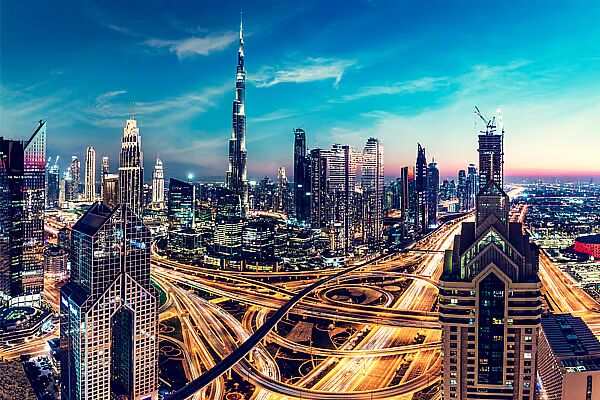
The UAE property sector continues to function normally despite regional tensions, with developers reporting uninterrupted operations and brokers noting that market fundamentals remain strong, even as some buyers take a cautious pause.
Real estate activity continues across the UAE, highlighted by a $100-million-plus property deal in Dubai this week, underscoring sustained investor interest despite regional geopolitical developments.
UAE Property Market Remains Stable Amid Regional Tensions
According to broker Ben Crompton, buyer sentiment in the UAE’s property market has grown more cautious in the short term, though transactions already underway continue to progress.
“Buyers who already signed MOUs are proceeding as normal, and some deals are still being negotiated,” Crompton said. “Most buyers are in a ‘wait-and-see’ mode, as you can imagine.”
He added that the broader market trajectory will depend on how quickly regional tensions stabilize. “If the current situation were resolved tomorrow, I think we would see prices flatten in the near term before heading back up toward the end of the year,” he said. Crompton also noted that property prices typically decline only during forced selling events, such as widespread job losses or sharp interest rate hikes—conditions not present in the UAE.
Overseas Investors Monitor Closely
International buyers, who make up a significant portion of UAE property purchasers, appear more cautious than local residents. A second broker, speaking anonymously, said market activity remains largely stable, with developers continuing new project launches despite regional tensions.
“There’s a project scheduled to launch next week, and the developers are going ahead as planned,” the broker said. “They are not postponing launches because of the current situation.”
The UAE property market—particularly in Abu Dhabi—is supported by a large base of long-term residents and families. “Abu Dhabi is very family-oriented. Many residents have lived here for years, with schools, jobs, and families established, so they still want to buy property,” the broker added.
Some international investors, especially from markets like the UK, US, and Germany, have become more cautious. However, periods of uncertainty can also present opportunities for cash-ready investors, who may acquire properties at discounted prices before values stabilize.
Certain market segments are more sensitive to sentiment shifts. Properties tied to short-term rentals, for example, are influenced by tourism flows, while secondary market units may see more negotiation. “Some owners have slightly reduced prices this week, usually those wanting to exit quickly,” the broker explained.
Developers Emphasize Stability
Developers have underscored that operations remain stable across the sector. Aldar Properties, for instance, confirmed that all residential, retail, commercial, and development sites continue to operate without interruption. The company highlighted its strong liquidity position—more than Dh30 billion in available funds—and said risk management and business continuity frameworks are in place to maintain services for residents, tenants, and investors.
Market participants also noted that developers have not changed launch pricing but are offering flexible payment plans to maintain investor confidence. “Instead of a 50-50 plan, they might offer 35-65 or 40-60, which reduces the upfront amount buyers need to pay,” the anonymous broker said.
Strong Economic Fundamentals Support Long-Term Growth
Despite short-term caution, the UAE property market remains underpinned by robust economic fundamentals. Population growth, continued international investment, and economic expansion in Abu Dhabi and Dubai support long-term demand. Key residential hubs such as Reem Island, Yas Island, and Saadiyat Island continue to attract buyers, with new infrastructure and lifestyle developments bolstering property values.
“There is still strong belief in the long-term prospects of the market,” the anonymous broker said. “Real estate in the UAE has historically moved upward over the long term, even if there are short-term fluctuations.” Crompton echoed this sentiment:
“The economic fundamentals are very strong. Capital hates uncertainty more than anything. The sooner there is long-term clarity, the sooner investors will feel comfortable committing again.”

