

When events are unpredictable, the brain exerts extra effort to fill in the gaps.
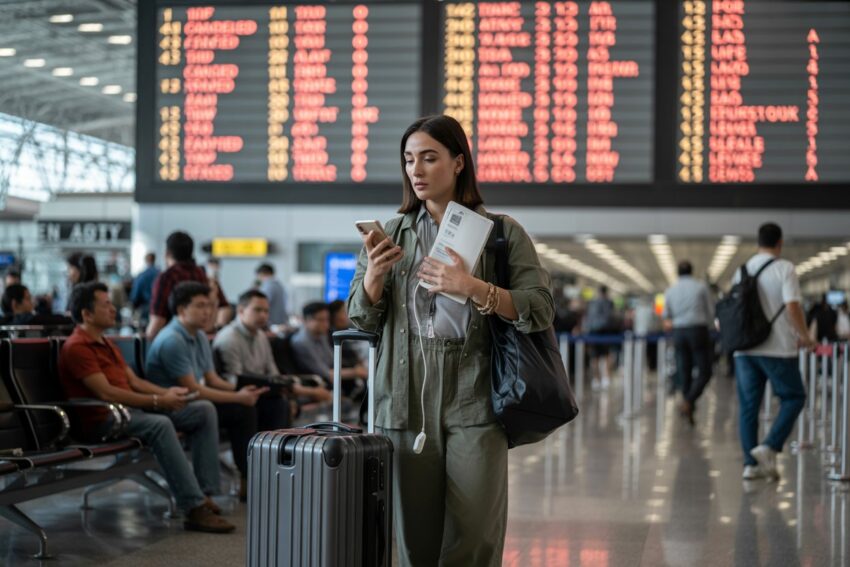
Over the past week, I’ve checked more flight updates than ever before. I kept refreshing, hoping to feel a little calmer when I saw “flight on time,” only to discover minutes later that it had been cancelled. Suddenly, I was scanning airline Twitter accounts, trying to make sense of a flood of updates while sketching out improbable routes back to the UAE—most of which weren’t realistic. At one point, I nearly impulsively booked a far-fetched flight back to Abu Dhabi before stopping myself.
You can find our latest flight updates [here].
That’s the effect of stress, and flight uncertainty is often the trigger. Waiting for a flight that may or may not happen brings a unique kind of tension.
During periods of geopolitical tension, when circumstances can shift at any moment, many of us feel stuck in an uncomfortable limbo—unable to leave, unable to return home, and dependent on a constant stream of fragmented updates to make sense of what comes next.
This isn’t just a logistical challenge. Psychologists note that uncertainty alone can put immense strain on the brain. The act of waiting becomes emotionally draining—not because of travel itself, but because of how the human brain is wired.
Why Uncertainty Feels So Overwhelming
Humans are wired to predict, whether for small decisions or life-changing events. The brain constantly imagines what’s coming next, a predictive ability that helps us navigate the world safely. When this system falters, anxiety quickly fills the void.
Dr. Olivia Pounds, Clinical Psychologist at The Hummingbird Clinic, explains that uncertainty disrupts one of the brain’s core functions:
“Our brains are remarkable prediction machines, constantly generating guesses about the future by comparing learnt expectations with new information. This design feature helps us navigate a complex, dynamic world with surprising accuracy, allowing us to survive and thrive.”
But when events become unpredictable, especially during global crises, the brain works harder to fill in missing pieces.
“In times of stress or danger, these predictive processes intensify, as our brains attempt to anticipate outcomes in novel and threatening situations,” says Dr. Pounds.
As clear answers remain elusive, emotional responses escalate.
“The lack of control over outcomes can feel overwhelming, triggering strong waves of anxiety and aversion to uncertainty. We naturally seek reassurance or ways to regain control, as our minds work overtime to reduce unpredictability and keep us safe.”
The Endless Refresh Cycle: Coping with Travel Uncertainty
Many travellers find themselves glued to flight updates—and there’s a psychological reason for it.
For those waiting on updates, the pattern is familiar: open the airline app, check the news, refresh the page, scroll through social media for clues. It feels like taking action, but often it leads to a spiraling cycle of stress.
Dr. Olivia Pounds, Clinical Psychologist at The Hummingbird Clinic, explains:
“When we try to reassure ourselves in times of uncertainty—constantly checking flights, reading updates, alerts, and refreshing information sources—our brains are seeking a sense of control in an environment where outcomes are highly uncertain. This behaviour is a natural response, as our minds are wired to detect threats and react quickly to protect ourselves.”
Understanding this instinct can help travellers recognize the urge to constantly refresh as a normal reaction—and take steps to manage stress rather than letting it escalate.
When Seeking Certainty Backfires
Unfortunately, the brain’s strategy of constantly checking for updates rarely works as intended. Information during crises is often incomplete, rapidly changing, or alarming. As Dr. Olivia Pounds explains:
“This behaviour often backfires, as the information sought out is usually incomplete or alarming.”
The result is a powerful anxiety loop. Uncertainty about safety leads to hyper-focus on information sources in an attempt to reassure oneself. Ironically, this behaviour meant to reduce stress can intensify it: the more the brain seeks certainty, the more it confronts how little certainty exists.
The Emotional Weight of Being Stuck
For many travellers, the worry goes beyond flight schedules—it’s about being unable to return home. This can trigger intense emotional responses.
Ezgi Firat, Psychologist at The Hummingbird Clinic, explains:
“Being unable to leave can feel frightening, while being unable to return home may create a strong sense of blockage, frustration, or even anger. In both cases, the weight of external reality becomes very tangible, producing a profound sense of helplessness.”
Coping with the Stress of Waiting
Waiting becomes especially difficult because the brain struggles to tolerate prolonged uncertainty. As Ezgi Firat, Psychologist at The Hummingbird Clinic, explains:
“When fear and anxiety intensify, it can feel as though the moment is endless and that the situation will never resolve. Waiting under these circumstances is particularly difficult.”
Yet Dr. Firat highlights an important reminder:
“Even though the uncertainty feels overwhelming, the situation is temporary.”
When reality feels out of our control, there’s a natural urge to constantly act to change it. However, this pressure can be exhausting—especially when there’s little that can actually be done. Letting go of unrealistic expectations of oneself can be a relief. During periods of waiting, it helps to remind yourself that this phase will eventually pass.
Reclaiming a Sense of Control
While people cannot control airspace closures or airline schedules, psychologists emphasize that they can influence how their mind responds to the situation. Focusing on manageable actions and maintaining perspective helps reduce anxiety and regain a sense of agency.
How to Cope with Travel Uncertainty: UAE Experts’ Advice
Focus on What You Can Control
Dr. Diana Maatouk, Clinical Psychologist, suggests starting with the simplest principle: focus on what remains within your control.
“While flight timings may be uncertain, small actions—like checking updates at set times rather than constantly refreshing, preparing alternative plans, or organizing practical matters—can restore a sense of agency.”
Even minor decisions matter. Regulating information exposure is equally important:
“Continuous monitoring of news or flight updates can intensify anxiety. Limiting information checking to specific times of the day and relying only on trusted sources helps prevent your mind from staying in a constant state of alert.”
ain travel can trap you in a loop of relief followed by disappointment. Dr. Maatouk explains:
“When people are waiting for uncertain outcomes, they often enter a psychological cycle of anticipation followed by disappointment.”
Strategies to step out of this cycle include:
- Shift from expectation to openness: Accept that plans may change—“this may happen, but it may also change.”
- Shorten the mental timeline: Focus on the next few hours or the next day rather than the distant outcome.
- Allow frustration to exist: Acknowledge feelings of disappointment without judgment to prevent added stress.
Calming the Mind When Plans Unravel
Carolyn Yaffe, Behavioural Therapist at Medcare Camali Clinic, advises that recognizing stress as normal can reduce its intensity.
“Try breaking your worries into small, manageable pieces and focus on practical steps. Having backup plans, keeping loved ones informed, and carving out time for self-care can help you feel more in control.”
Practical Tips from UAE Experts
- Schedule ‘status checks’: Avoid constant refreshing; check official airline apps every 3–4 hours.
- Stick to trusted sources: Rely on official airline apps, airport websites (DXB, AUH), or verified SMS alerts—avoid social media rumours.
- Avoid panic rebooking: Before booking expensive alternatives, call the airline or check rebooking/waiver policies.
- Shorten your horizon: Focus on immediate needs—next meal, call to family, or practical task.
- Prepare backup options: Knowing alternatives can restore a sense of control.
- Shift from expectation to openness: Accept that travel plans may change; reduce emotional swings.
- Acknowledge frustration: Feeling anxious or disappointed is a normal psychological response.
- Control the controllables: Stay organized, keep documents ready, maintain routines, and inform loved ones.

