

Dubai Financial Market and Abu Dhabi Securities Exchange reopen after a two-day trading halt amid escalating regional tensions and a surge in oil prices.
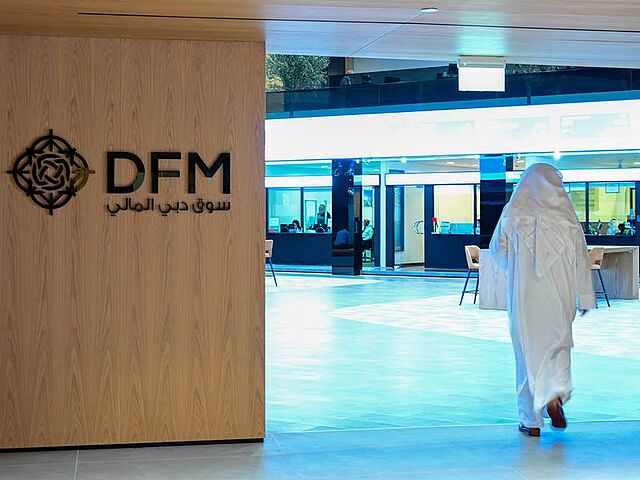
Dubai: Trading on the UAE’s main stock exchanges has resumed today after regulators enforced a two-day suspension aimed at protecting markets from heightened volatility amid escalating geopolitical tensions in the Middle East.
Investors will return to the Abu Dhabi Securities Exchange and the Dubai Financial Market on Wednesday following the precautionary halt announced earlier this week by regulators. Authorities suspended trading nationwide on Monday and Tuesday as they monitored rapidly unfolding developments in the region.
The temporary shutdown was intended to avert abrupt liquidity shocks and allow investors time to assess news of military developments involving Iran, the United States and Israel.
Market participants are now bracing for a phase of heightened price discovery as trading resumes.
Ahmad Assiri, Research Strategist at Pepperstone, said the market reopening is likely to start with heightened activity.
“Traders should anticipate a volatile price discovery phase during the first hour as the market absorbs two days’ worth of global and regional news. Trading volumes are expected to be significantly above average as pent-up orders are executed,” he added.
The two-day closure was a precautionary measure by the UAE Capital Market Authority to prevent a liquidity vacuum, give investors time to process news of regional escalations, and provide greater clarity.
Authorities described the suspension as a step to maintain financial stability amid rapidly unfolding developments across the region.
Temporary market closures are sometimes implemented by regulators during geopolitical or financial shocks to prevent disorderly trading conditions. Such pauses give investors and institutions time to evaluate developments before markets reopen.
“The signal to the market is clear, in my view: authorities are prioritizing orderly price discovery over a volatility rollercoaster,” Assiri said.
Over the past two days, market participants have been assessing regional developments while monitoring global markets and energy prices in response to the escalating conflict.
Saudi market provides a roadmap
Regional investors have closely observed the performance of the Saudi stock market during the UAE’s trading suspension.
The Saudi benchmark index initially fell sharply after tensions escalated, dropping about 5% on Sunday before stabilizing and posting gains by Tuesday.
Assiri believes this recovery pattern could influence the UAE market reopening.
“Because the Saudi market has already absorbed the initial shock—recovering from a 5% Sunday drop to post gains by Tuesday—the UAE reopening is expected to follow a similar recovery trajectory to some extent,” he said.
Investors are approaching the reopening with a mix of caution and optimism, closely evaluating sector-specific developments.
Energy and banks in focus
Attention is expected to center on sectors that typically provide stability during periods of uncertainty.
Energy companies may benefit from rising oil prices, which have surged amid concerns over potential supply disruptions near the Strait of Hormuz.
Assiri noted that the performance of major energy producers in the region could offer important signals for market direction.
“In Saudi Arabia, Aramco surged during the UAE market closure, indicating that ADNOC and TAQA may receive similar support,” Assiri said.
Banks are also likely to attract investor attention as a source of stability amid geopolitical stress.
GCC banking systems remain resilient, backed by strong capital buffers and reliable access to funding markets. Financial institutions across the region have consistently demonstrated the ability to maintain liquidity even during periods of market turbulence.
Assiri added that financial markets often need time to fully absorb such developments.
“The widening scope of conflict in the Middle East continues to cast a shadow over regional financial markets, exerting tangible pressure on multiple asset classes,” Assiri said.
Corporate earnings may eventually reflect these developments, depending on the duration of tensions and the industries most affected.
Oil and gold shape market sentiment
Energy markets remain a key driver of investor expectations.
Concerns over potential maritime disruptions through the Strait of Hormuz have heightened fears about global oil supply. A prolonged disruption could tighten energy markets worldwide and push prices higher.
Assiri noted that these dynamics could significantly influence investor behavior.
“The global energy market faces the risk of a supply crisis if maritime disruptions through the Strait of Hormuz persist and existing oil inventories on sailing vessels run low,” he said.
Gold markets have also responded to the geopolitical developments.
“The yellow metal received support from Asian buyers in the early session following a broad sell-off in assets, including commodities, which triggered the liquidation of some leveraged positions and caused a brief price dip near the $5,000 per ounce level,” Assiri added.
He added that prices quickly stabilized once buying resumed.
“Gold regained its footing, trading up to around $5,200, returning to the range seen last Friday before the recent geopolitical developments,” Assiri said.
Investors prepare for busy session
Market participants are gearing up for a busy trading session as the UAE exchanges reopen. Trading volumes are expected to rise as investors execute orders accumulated during the two-day suspension while reassessing regional risks and global market signals.
Assiri believes the broader outlook for UAE markets remains positive despite short-term volatility.
“The takeaway is that the UAE market remains fundamentally strong,” Assiri said.
He added that investors should consider the reopening within the broader regional context.
“By examining the Saudi market’s trajectory—where the initial sell-off was short-lived and followed by gains driven by oil prices—investors can approach the Dubai Financial Market and Abu Dhabi Securities Exchange reopening with a balanced perspective.”

