

“Once the Blue Line opens, commuting to work will be much easier and more affordable,” said residents who sold their cars following the introduction of paid parking.
It has been nearly a month since paid parking was introduced in Dubai’s International City, and residents say the change is already reshaping their travel habits.
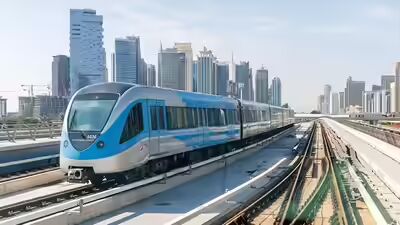
Some who sold their cars after the paid parking rollout said they are now eagerly awaiting the opening of the Dubai Metro Blue Line.
For residents who sold their cars, the Dubai Metro provides a sense of confidence and convenience.
Selling cars, adjusting temporarily
Shahid Ali, a resident of France Cluster for the past eight years, said the introduction of paid parking prompted his family to reconsider owning multiple vehicles.
“We had two cars earlier because parking was free. After paid parking started, we sold one car and decided to manage with a single vehicle until the metro comes,” he explained.
Shahid, who previously relied on the metro while working near Business Bay, said the experience reshaped his expectations of commuting.
“I parked my vehicle at the Centrepoint station and took the metro. You know exactly when you will reach office or home. Once the Blue Line connects this area, many people won’t need extra cars,” he added.
Metro, Dubai’s lifeline
Residents describe the Dubai Metro as the backbone of daily movement across the city, linking residential areas with business hubs and airports.
Shaver Khan, who previously lived near a metro station in Al Qusais, said commuting was much easier.
“I shifted to International City last year when I brought my car. Parking was very difficult. Now, we have parking but at added cost. Traveling by metro means no worries about traffic, fuel, or parking. Life used to feel organized when you relied on the metro,” he said.
Khan has now sold his car and relies on buses and carpooling with flatmates, but he views the wait for metro connectivity as temporary.
“The moment the Blue Line opens, commuting to work will become much simpler and cheaper,” he added.
Bachelors turn to carpooling
International City, known for shared accommodations, has many bachelors who find personal vehicles less practical.
Azzam Shareef, who recently sold his car, cited rising costs from paid parking as the main reason.
“Insurance, fuel, and parking all add up. For now, we share rides or use buses. Once the metro arrives, most of us plan to switch completely,” he said.
Nearly a month after paid parking reshaped habits in International City, residents say the next transformation they anticipate is improved public transport access.
“In Dubai, the metro is not just transport — it becomes part of your lifestyle,” said Khan.

