

Seasonal transition in the UAE: What residents need to be aware of.
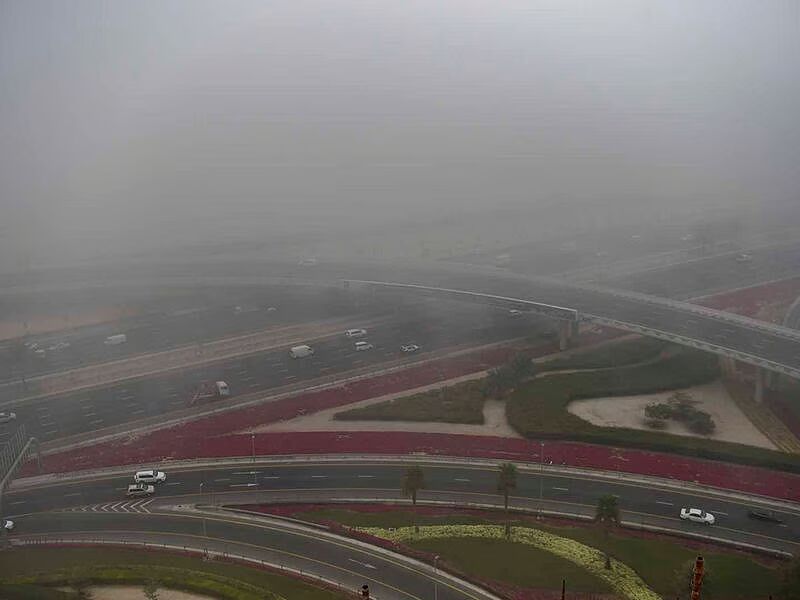
Dubai: If you stepped outside this morning and could barely see the car ahead, you’re not alone. Thick, dense fog has been covering much of the UAE, reducing visibility on major roads to just a few metres in some areas. But why is this happening, when will it clear, and does it signal the onset of summer? Here’s everything you need to know.
Why is the UAE so foggy right now?
The heavy fog enveloping the UAE this week is not unusual—it results from specific atmospheric conditions that often peak toward the end of winter.
According to the National Centre of Meteorology (NCM), the fog is caused by an extension of a surface high-pressure system combined with an upper-air high-pressure system over the region. This setup traps moisture near the ground overnight, and as temperatures drop in the early hours, the moisture condenses into dense, low-lying fog.
Add to that the Gulf region’s characteristic northerly and north-westerly winds—which become stronger from January through February—and their interaction with warm, humid air from coastal areas, and you get the perfect recipe for some of the thickest fog of the year.
When is fog most common in the UAE?
Fog season in the UAE typically spans from November to May, but the densest and most hazardous episodes usually occur between January and late February. Fog forms most often in the early morning hours and can linger past sunrise, generally between 3:00 am and 10:00 am.
The areas most affected include major highways such as E11 (Sheikh Zayed Road), E311 (Emirates Road), and E611, as well as open desert stretches where overnight cooling is rapid. Coastal cities like Dubai, Abu Dhabi, Sharjah, and Al Ain also frequently experience dense fog. Visibility can change drastically over short distances, so fog that seems light in one area may be much thicker just a few kilometres ahead.
When will the fog end? What does the NCM say?
For those hoping for clear, crisp mornings, the end is near. The National Centre of Meteorology (NCM)’s latest weekly forecast indicates that foggy conditions are expected to persist through February 28, 2026. After that, as temperatures rise in March, the atmospheric conditions that sustain dense morning fog will begin to dissipate.
Residents should remain cautious of near-zero visibility on roads over the next few mornings, with gradual improvement expected as the UAE heads into the first week of March.
Is a change in weather coming? Here’s what to expect
The current fog is a sign of seasonal transition, not just lingering winter conditions. The UAE is moving through what traditional Arabian meteorology calls the “Scorpion season,” a six-week period bridging winter and spring. According to Emirati astronomy expert Ibrahim Al Jarwan, this transitional phase began on February 6 and will continue until mid-March.
Forecast for the coming weeks:
Now through March 7: Daytime temperatures are expected to rise noticeably, while nights remain cool. Brief cold snaps may still occur as a reminder that winter has not fully passed. There are also some chances of rain, though less intense than earlier in the season.
March 8 to March 18: This period marks a clear shift away from winter. Daytime temperatures become consistently warmer, nights turn moderate, and daylight hours extend noticeably. By around March 20, spring weather patterns are expected to be fully established.
Currently, the UAE’s temperatures are in the late-winter range, with lows around 15°C and highs nearing 28°C. By the end of this transitional phase, temperatures are expected to rise to 18°C–30°C before climbing further into spring.
So, is summer just around the corner?
Not yet. While foggy mornings and cool nights are giving way to warmer, more pleasant spring conditions, this period represents a gradual transition—not an immediate leap into summer heat. Residents can expect a comfortable, steady warm-up through mid-March rather than sudden high temperatures.
True summer, with temperatures routinely exceeding 40°C and high coastal humidity, is still months away. For now, enjoy the cooler evenings and remember to use caution during foggy morning commutes—but don’t leave your hazard lights on the entire way.
Road safety reminder during fog
Authorities across the UAE are urging drivers to exercise extreme caution during foggy conditions. Key safety tips include:
- Reduce speed well below the posted limit
- Maintain a safe following distance
- Use fog lights instead of high beams
- Avoid sudden lane changes
Heavy traffic during early morning commute hours further increases the risk of chain-reaction collisions when visibility is low.

