

“The JLL report highlights the UAE’s rising prominence as a global trade and logistics hub, fueled by unprecedented population growth, expanding foreign trade, and fast-paced technological transformation.”
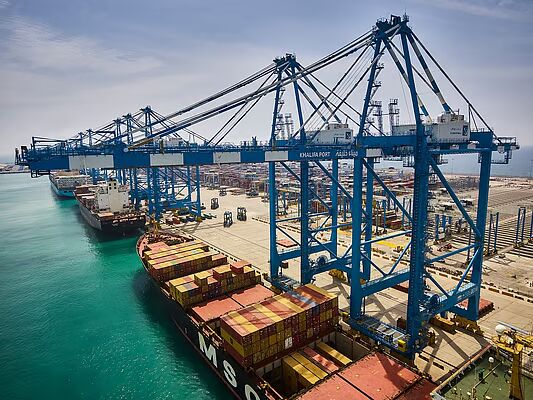
“The UAE’s industrial and logistics sector is entering a new phase of growth, driven by ambitious government strategies, major infrastructure investments, and strong economic fundamentals. A 2026 outlook report from JLL highlights the country’s rising status as a global trade and logistics hub, supported by record population growth, booming foreign trade, and rapid technological advancement.”
At the federal level, the Ministry of Industry and Advanced Technology’s Operation 300bn remains the cornerstone of the UAE’s industrial policy. The programme seeks to double the industrial sector’s GDP contribution from Dh133 billion in 2021 to Dh300 billion by 2031, focusing on SME growth, attracting foreign investment, and enhancing the competitiveness of locally manufactured products.
Meanwhile, Abu Dhabi’s Dh10 billion Industrial Strategy 2031 aims to double manufacturing output to Dh172 billion, create 13,600 specialised jobs, and increase non-oil exports to Dh178.8 billion.
In Dubai, industrial transformation is guided by the Dubai Industrial Strategy 2030, the Commercial and Logistics Land Transport Strategy 2030, and the Dubai 2040 Urban Master Plan. Together, these initiatives are designed to foster a knowledge-driven, innovation-led industrial ecosystem, optimise land use, enhance environmental resilience, and integrate advanced mobility technologies.
The UAE’s strategic push is reinforced by its world-class infrastructure network. The country features globally ranked ports and airports, an extensive road system, and the newly inaugurated Etihad Rail, a 900-kilometre freight network connecting all seven emirates from Ghuwaifat to Fujairah. The railway is expected to lower transport costs, reduce emissions, and strengthen supply-chain linkages between ports, industrial zones, and free zones. Plans are also underway to extend the network across the GCC, including connections to Oman and Saudi Arabia.
Economic fundamentals continue to support the sector’s growth. The UAE’s GDP reached Dh1.8 trillion in 2024 and is projected to climb to Dh2.1 trillion by 2028, with 2026 expected to see the fastest growth at 5.1%. Non-oil sectors now contribute 75.5% of GDP, reflecting deepening diversification. Foreign trade has surged, with imports reaching Dh1.63 trillion, non-oil exports Dh0.54 trillion, and re-exports Dh0.63 trillion in 2024, reinforcing the UAE’s role as the region’s primary redistribution hub.
This macroeconomic momentum is driving unprecedented demand for Grade A warehousing, cold storage facilities, last-mile logistics hubs, and build-to-suit industrial assets. Near-full occupancy in Dubai’s industrial districts is pushing occupiers to consider Abu Dhabi and the Northern Emirates. JLL reports that warehouse occupancy in several Dubai zones has reached 100%, while Abu Dhabi’s prime industrial clusters are approaching full capacity.
Developers are responding with major projects. In Dubai, Terralogix—a joint venture between Dutco and Sweid & Sweid—will become the emirate’s largest privately owned logistics park, spanning 306,000 sqm. Aldar and DP World are delivering a 144,000 sqm Grade A logistics centre by 2026, while JD Properties is adding 70,000 sqm of warehousing at ADAFZ. In Abu Dhabi, KEZAD is expanding aggressively, with projects ranging from the 350,000-ton Metal Park to new logistics parks, an aquaculture zone, and the Rahayel Auto City automotive hub.
Investor appetite is strong. Aldar, Brookfield, GFH Partners, Arcapita, and Musharaka REIT have completed significant acquisitions, reflecting confidence in the sector’s long-term income stability. Yields for prime and Grade A assets remain steady at 7.25–8.25%, demonstrating a mature, transparent, and low-risk investment environment.
With accelerated adoption of IoT, automation, and blockchain-enabled supply chains, the UAE’s industrial and logistics sector is poised for even greater sophistication. As mega-projects reshape the logistics landscape and regional integration deepens, the country is well-positioned to remain the Middle East’s industrial powerhouse throughout the decade.

