

The initiative has been held annually since 2004 under the patronage of the late Sheikh Zayed bin Sultan Al Nahyan.
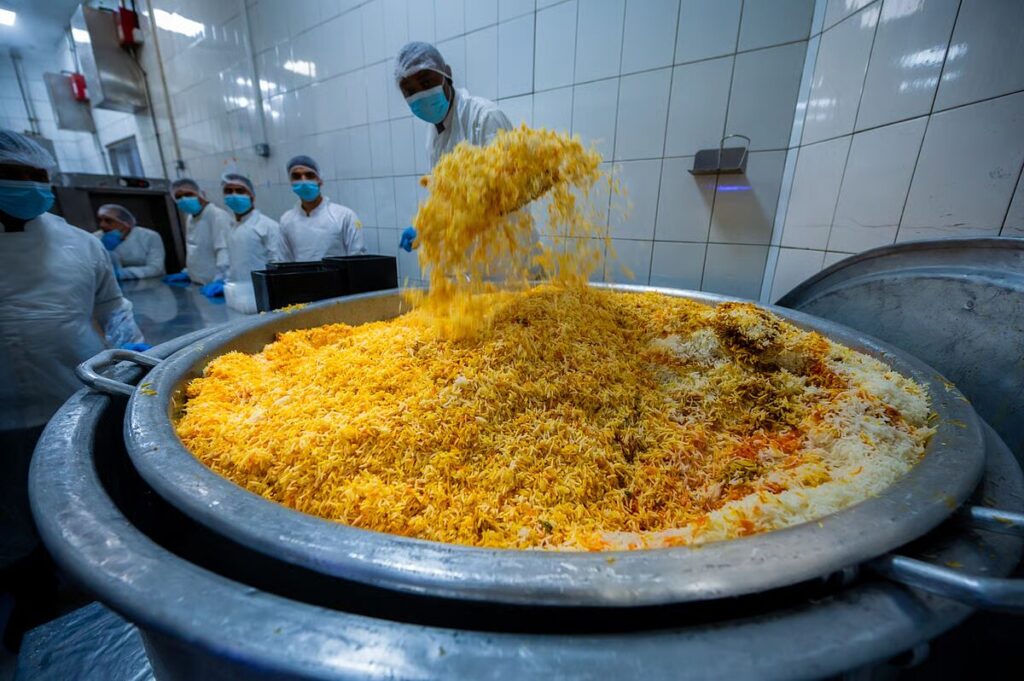
Hours before the Maghrib call to prayer reverberates through the marble courtyards of Sheikh Zayed Grand Mosque, a different rhythm takes over the capital’s industrial kitchens: the clang of ladles against giant pots, the steady hum of sealing machines, and the precise coordination of hundreds of workers racing against time.
Khaleej Times was granted access to the large-scale kitchens responsible for preparing daily iftar meals not only for the Grand Mosque, but also for Sheikh Khalifa Mosque and several labour accommodations across Abu Dhabi. The scale is staggering: up to 95,000 iftar meals are prepared each day, amounting to a total of 2.66 million meals over the course of the holy month.
A legacy of giving since 2004
The initiative has been held annually since 2004 under the patronage of the late Sheikh Zayed bin Sultan Al Nahyan. Organisers say they are honoured to continue supporting a Ramadan effort that embodies the UAE’s longstanding values of generosity and community service.
The 24-hour preparation cycle
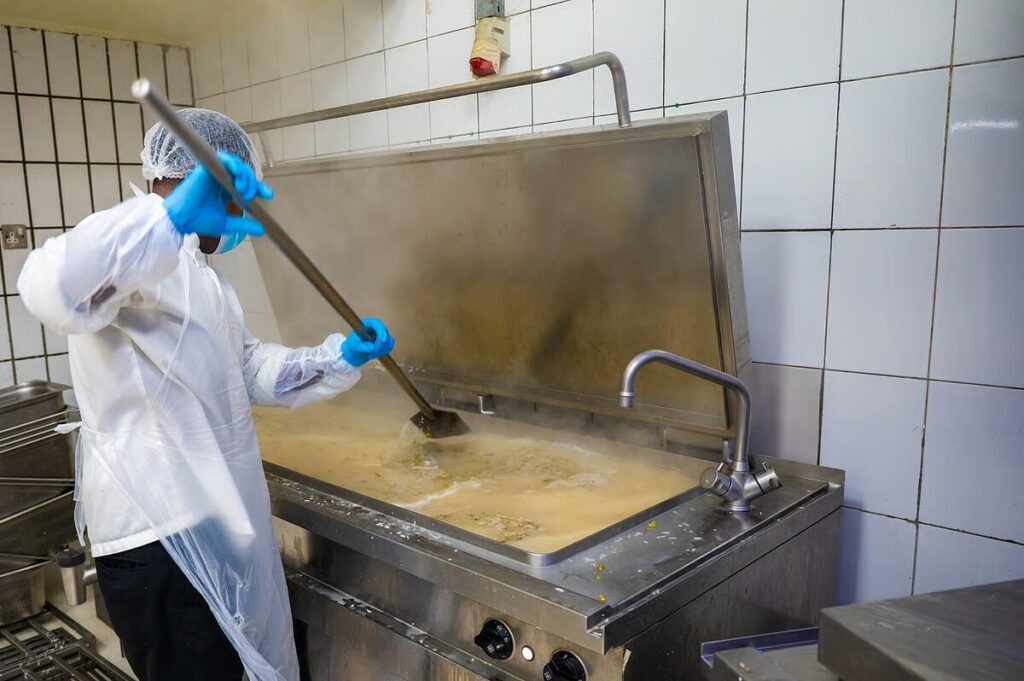
Meal preparation begins 24 hours before serving. Chefs start by washing, cleaning, and chopping thousands of kilograms of vegetables while marinating large quantities of chicken. Precision is key: every batch is measured and every tray clearly labelled.
The official shift kicks off at 5am, with teams preparing masala mixes for the rice and continuing to cut fresh salad ingredients. By 8am, industrial-sized pots and ovens are running at full capacity. Between 8am and 12 noon, chefs cook rice and chicken in multiple batches to ensure consistent quality and temperature control.
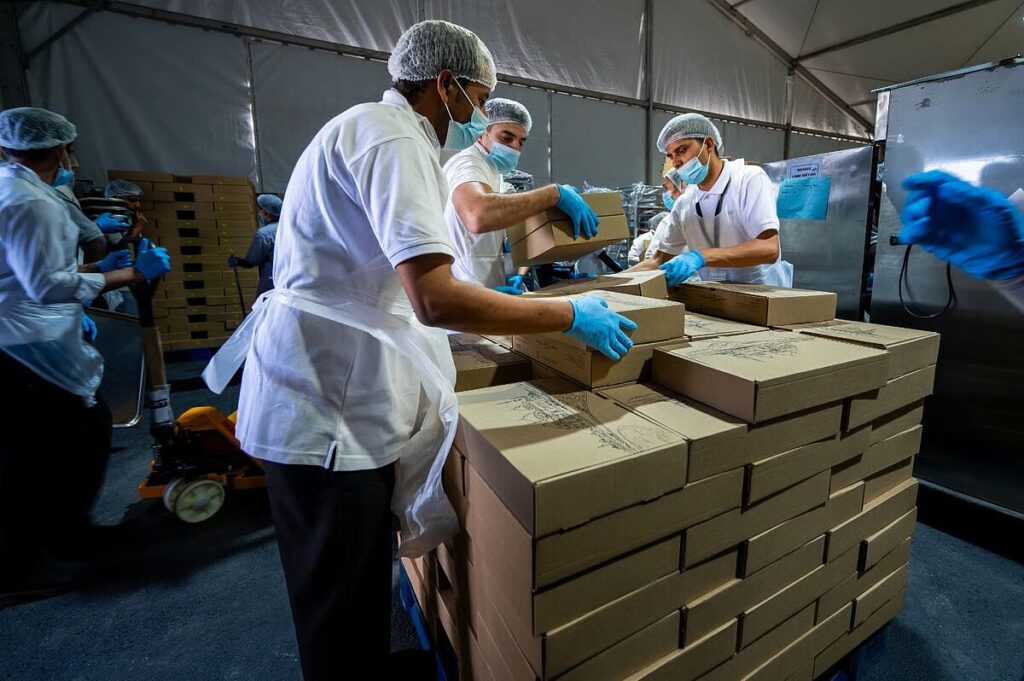
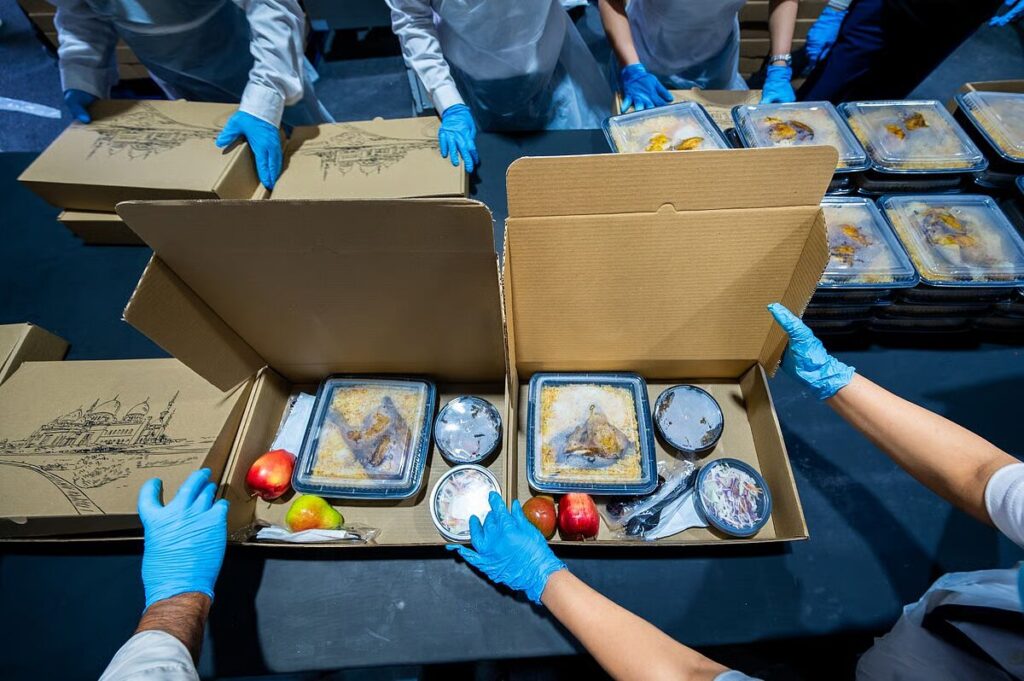
From 12 noon to 3pm, the focus shifts to portioning and assembling the meal boxes. Assembly lines span the facility as workers carefully place rice, roasted chicken, vegetable salona with dal, mixed salad, dates, laban, fruit juice, water, and a fresh apple into each box.
At 3:30pm sharp, dispatch operations begin. Delivery trucks line up outside the facility, and loading continues until 5pm, ensuring all meals reach their destinations in time for Maghrib.
The numbers behind a single day of iftar preparation highlight the massive scale of the operation. For just one day’s service, the kitchens use:
What goes into 95,000 meals a day
- 30,000 kg of chicken
- 15,000 kg of lamb
- 15,000 kg of rice
- 2,500 kg of dal
- 15,000 kg of locally sourced vegetables, including salad ingredients
- 750 kg of spices, such as cumin, coriander, black pepper, cinnamon, dried lemon, Arabic mixed masala, biryani masala, turmeric, and Madras spice blend
- 130 litres of oil
Each ingredient is meticulously measured and portioned across tens of thousands of boxes, ensuring every worshipper receives consistent quality and quantity.
The team powering the operation
Behind the scenes, more than 2,000 personnel are involved in the daily iftar operation. The workforce includes 400 chefs in Abu Dhabi, 150 in Al Ain, and 100 in Fujairah. Supporting them are 400 stewarding staff handling cleaning and sanitation, and 800 food packagers responsible for portioning and sealing.
Additionally, 200 drivers and logistics team members work around the clock to coordinate deliveries, with a fleet of 150 trucks ensuring meals reach mosques and labour accommodations efficiently.
Strict hygiene protocols are maintained throughout the process, including temperature checks, sanitisation stations, and regular quality inspections to ensure full compliance with food safety standards
A meal, a mission
As sunset approaches and worshippers gather inside Sheikh Zayed Grand Mosque, rows of meticulously arranged iftar boxes fill the courtyards.
For many, it is a simple meal shared in faith. But behind that moment is a 24-hour logistical operation, coordinated down to the minute, measured in tonnes, and driven by a spirit of service that has defined Ramadan in the UAE for over two decades.
From the first vegetable washed at dawn to the final truck dispatched before sunset, every step reflects a single goal: ensuring that no fasting worshipper breaks their fast without a warm, nourishing meal.

