

Designed for both adults and children, the HandTasker Rehabilitation Hand uses brain and muscle signals to retrain movement after injury
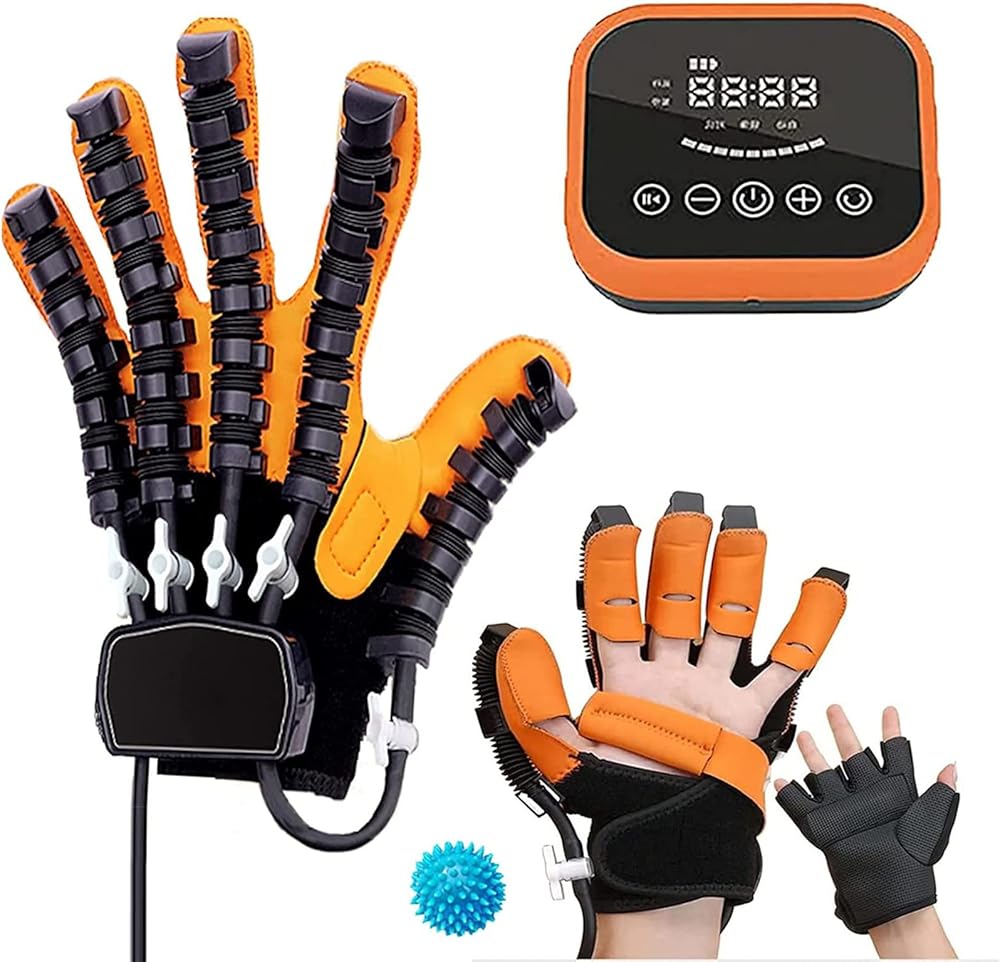
A soft robotic glove, weighing about the same as three eggs, is helping stroke survivors and children with cerebral palsy relearn a skill many take for granted: how to move their hands.
The device, called the HandTasker Rehabilitation Hand, is now being introduced in the UAE through collaborations with local care centres, bringing advanced rehabilitation technology from Hong Kong to patients across the region. Designed for both adults and children, the glove uses brain and muscle signals to retrain movement after injury, offering new hope for recovery.
“This is a robotic hand designed for rehabilitations. It can detect brainwaves from both the brain and the muscles,” Raymond KY Tong, professor, founding chairman Department of Biomedical Engineering, told Khaleej Times on the inaugural day of the World Health Expo (WHX) at Expo city on Monday.
He added, “For patients who have suffered a stroke and lost the ability to move, (this device) can help retrain the brain and help restore movement.”
How does the technology work?
The technology works by amplifying faint brain signals and translating them into movement through the robotic hand. Over repeated sessions, this process helps the brain form new pathways, bypassing damaged areas caused by stroke.
“After repeating this over time — perhaps around 10 sessions — the brain begins to form new pathways. These bypass the damaged tissue caused by the stroke, allowing the person to regain hand function,” explained Tong.
The innovation is especially meaningful in the UAE, where families often seek advanced rehabilitation options for loved ones recovering from stroke, brain injury, or living with lifelong conditions such as cerebral palsy.
“This is mainly for patients with brain injuries, such as stroke. But the brain is very smart — it can reroute signals through other network, allowing connections to be restored.”
The team has also created a version specifically for children in special schools, with smaller sizing, softer joints, and added padding for comfort. This paediatric adaptation has already been used in Asia, and the developers hope to bring similar programmes to the UAE.
“Even patients with cerebral palsy can use it. It’s suitable for paediatric patients,” the developer said. “We’ve worked with children as young as three to five years old. In fact, we’re currently implementing it in a special school in Hong Kong.”
How does it help children with special needs?
For young patients, the device turns therapy into something closer to play. Children can practise gripping objects, writing or holding toys, helping them stay motivated during recovery.
“We have different modes. Children can grab objects, like a pen. When they start to enjoy their handwriting, then they will keep using the hand so they will never forget.”
The glove is lightweight — just around 300 grams — and easy to use. It can be fitted in about a minute, with software calibration taking another minute, allowing patients to begin therapy almost immediately.
“We have five different size from a very small kids… like two to five years old to the adult.”
Unlike permanent medical devices, HandTasker is designed primarily as a training tool. Most patients only need it for one to two months, reducing long-term costs and making it accessible through rehabilitation centres rather than requiring families to purchase it.
The glove’s soft, waterproof material also makes it suitable for children and elderly patients, ensuring hygiene and comfort during daily use.
“You can hold any object as you like, and it’s very soft. It’s very powerful.”
Clinical trials in Hong Kong have already shown promising results, with more than 40 hospitals and centres using the technology.
“In Hong Kong, we have finished all the clinical trial, so now it’s more than 40 hospitals and center using it. Studies have seen improvement in 80 per cent of the patients.”

