

The metal’s steep pullback rattled investors, but strategists say it looks more like a pause than the end of gold’s powerful long-term rally
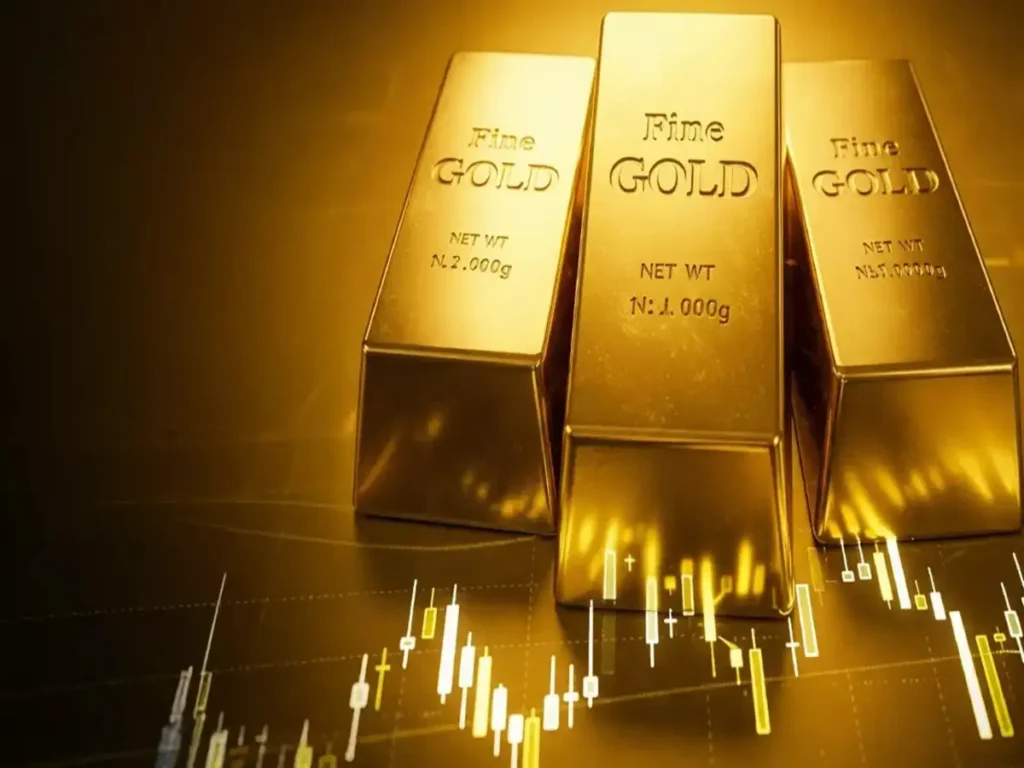
Turbulent trading in gold is a harsh reminder that prices don’t just go straight up, though the longer-term trend for the precious metal looks to be higher. After soaring for months, gold prices reversed course in the final days of January, falling more than 10 per cent during trading Friday, in what Bloomberg News termed the largest intraday decline since the early 1980s.
The turnaround came shortly after gold prices closed in on $5,6900 and had repeatedly broken above the targets of many forecasters. “It was a dramatic reversal,” said Katie Stockton, a technical strategist and founder of Fairlead Strategies. “It didn’t confirm any big sell signals, but it did allow for a short-term sell signal. Our assumption on this is it’s the start of a pullback, not necessarily a long corrective phase.”
The metal reversed some of those losses in just a few days. Gold gain 65 per cent in 2025, its best annual gain in nearly half a century. It has proven to be desirable in an uncertain world and is expected to remain so. “It has withstood the test of time as a stored value,” Stockton said.
Humans have been captivated by the shiny yellow metal for thousands of years. Even in ancient times, it was crafted into jewellery, used decoratively, traded as currency or held as a safe haven to protect wealth. Now, in these times of high-speed global trading of stocks, bonds, and digital currencies, many investors believe gold still has its place as an unparalleled safe haven. “The geopolitical risk climate… is certainly elevated on a sustained level compared to 10, 15, 20 years ago,” said Jim Steel, chief precious metals analyst at HSBC. “That dovetails into economic policy uncertainty.”
Steel said going back to when Russia invaded Ukraine in 2022, the gold market has been extremely sensitive to geopolitical tensions and has traded differently than it has in the past. “When geopolitical events occurred, which they certainly did, gold tended to give back its gains when they were addressed,” he said. “What’s happened in the last five years is gold is no longer giving back the gains it makes on geopolitical events. It’s retaining the bulk of the gains so when the next event comes, it can then
go further.”
The factors that have been driving gold besides geopolitical risk are policy uncertainty and concerns about trade wars, a weaker dollar, high fiscal deficits in the US and elsewhere, and concerns about the Federal Reserve’s independence. At the same time, strong buying by the world’s central banks has supported the price.
The onset of gold’s sell-off last week coincided with news that former Federal Reserve Governor Kevin Warsh was chosen by President Donald Trump to replace Jerome Powell when he steps down as chairman in May. Warsh’s appointment alleviated concerns about Fed independence. Warsh has historically been considered a hawk on inflation and is expected to resist calls to lower interest rates if he believes that would trigger inflation. “The decline (in gold prices) is very much related to profit-taking triggered by the White House announcement for Warsh as next Fed Chair,” noted Steel, adding “it is the reduction in uncertainty.”
Gold has rallied as the dollar slumped, but if Warsh’s chairmanship means fewer interest rate cuts than expected, the dollar could strengthen, a negative for gold.
What happens when markets are chaotic?
Speculators added to the frenzied buying since the start of the year. The CME in Chicago raised margin requirements for investors in its derivatives contracts as of Monday, forcing some investors to sell.
When markets are chaotic, many analysts turn to technical analysts for their ability to provide an unemotional roadmap of where prices might go based on history of price and volume.
Stockton, who studies charts and technical strategies, said the gold price could find support around the 50-day moving average, which was around $4,455 as of last Friday. Moving averages are watched by many investors as momentum signals. In this case, the 50-day would literally be the average of the last 50 closing prices, and if gold holds above it, that would be positive. If it breaks below and stays there, there are another set of road signs to watch at lower levels.
“The speed of the rally had been quite fast. It has surprised expectations,” said Suki Cooper, Standard Chartered head of global commodities research. “There was a lot of momentum behind the move higher so a correction would be healthy for the longer-term trend.” She had targeted below $4,000 per ounce as a potential floor for this year, and $5,500 an ounce as the top of the range, a level that was temporarily surpassed.
Gold strategists have said the gold rally had been overextended but because of the drivers behind the metal price, it was difficult to pinpoint when it would falter.
In October, Khaleej Times reported on gold forecasts, including one from Goldman Sachs that forecast gold could reach $4,900 an ounce this year. In the last two weeks, Goldman boosted that forecast to $5,400 per ounce, a number that was quickly surpassed.
Stockton said the pullback could last a couple of weeks, and she does not believe it is a longer-term issue for the market. She said if gold continues to weaken, there is another technical level of support at $3,924 an ounce and another at $3,775 an ounce. “Pullbacks are usually a little more fast and furious than up moves but maybe this is a little different because of how fast and furious that up move was,” said Stockton.
A source of support for the gold market is coming from the world’s central banks, and they are expected to continue buying. “Central banks that have released statements have said they want to strengthen their balance sheets, and are concerned about geopolitical risks in addition to the traditional objectives around wanting to obtain stability in reserves and have liquid assets that offer returns,” said Cooper. She said it appears the central banks are reducing holdings of currencies in favour of gold.
Central banks bought more than 863 tonnes of gold last year and will do the same this year, according to the World Gold Council. Cooper expects them to buy at a similar pace this year. Investors have been buying gold in many ways. Exchange traded funds are one way to invest in gold itself and also in gold mining companies. Gold bars, coins and jewellery are other ways to invest.
HSBC’s Steel said one traditional set of buyers is likely to be less active this year. “We’re seeing a lot of demand destruction. We forecast jewellery demand will be down double digits this year,” he said. China and India are the big markets for jewellery as consumers buy for the Lunar New Year coming up this month, Diwali and Indian wedding season in the fall. “Coins and small bars are down. What is up is large bars and that’s institutional and high net worth demand,” he said.
Cooper said Chinese buying around the Lunar New Year, February 17 could be the next test to see how much physical demand there is in the market.
Strategists also said there is less recycling of gold by consumers than might be expected with current high prices. “I am forecasting a significant increase in supply from recycling this year, but the market has to stabilise first,” said Steel.
As gold climbed higher, investors have been increasing their allocation, and some have favoured the metal over traditional safe havens like US Treasurys because of concerns about dollar debasement.
JP Morgan global strategist Nikolaos Panigirtzoglou was reported to have modelled a theoretical price for gold, based on in the idea that investors will increase their share of gold holdings. He said if allocations rose to 4.6 per cent of private sector portfolios from the current three per cent that would result in a gold price of $8,000 to $8,500 per ounce “over the coming years”.
For now, the gold market is unsettled after the rapid run higher in prices and then sharp move lower. It will take some time for global market to work through the shakeout. Strategists warn some newer investors who jumped in last summer and fall could be frightened by the volatility and join the sellers.
Cooper said retail buyers were among the newest entrants at some of the highest prices.
“Normally when we see these sorts of corrections, a lot of the weaker positioning tends to be flushed out,” said Cooper. “These weaker positions will be tested at these sorts of levels now…Over the longer term, a lot of the structural factors are still there.”

